
Respiratory syncytial virus (RSV) is a common and contagious disease. Explore wastewater data to see the trends in RSV circulation.1,2
RSV quick facts
What is RSV?
RSV is a common and highly contagious respiratory virus that can lead to lower respiratory tract infections and serious lung conditions, such as pneumonia and bronchiolitis, in neonates and infants. The pathogen belongs to the Pneumoviridae (genus orthopneumovirus), a family of negative-strand RNA viruses.3-5
Burden and risk
All infants in the United States are at risk of RSV LRTI. RSV infections are often mild, yet are particularly concerning due to being highly contagious and their potential to cause severe respiratory tract illness that may lead to hospitalization.4,6,7
Unpredictability of disease
We cannot predict which infants will develop RSV lower respiratory tract disease. Therefore, proactive preventative measures, such as infection control, monoclonal antibody prophylaxis, and caregiver education, are essential.4,5
Immunization coverage
Despite available options to help prevent serious lower respiratory tract RSV infections, infant RSV immunization coverage remains low.8
As of February 2026, in the CDC’s National Immunization Survey-Fall Respiratory Virus Module (NIS-FRVM), it is estimated that more than one-third of infants did not receive RSV protection (N=364).9*†‡

35% of infants have not been protected by either maternal or infant RSV immunization§

9.4% of mothers received the maternal RSV vaccine
*From a monthly interview conducted by the CDC in February 2026.9
†Estimates from the NIS-FRVM may differ from estimates based on other data sources, and in addition to random error associated with taking a sample, are subject to errors resulting from incomplete sample frame (exclusion of households without cell phones), selection bias (survey respondents may be more likely to be vaccinated than non-respondents), and errors in self-reported vaccination status. Estimates are weighted to selected sociodemographic characteristics of the US population to reduce possible bias from incomplete sample frame and selection bias.10
‡Receipt of RSV vaccination during pregnancy was assessed by the NIS-FRVM questionnaire among females 18–49 years who reported having an infant born since October 1, 2025.10
§Of the 35% who had not received either maternal immunization or infant RSV monoclonal antibody, 8.4% reported that they would definitely get infant monoclonal antibody, 17% reported that they would probably get infant monoclonal antibody, and 9.5% reported that they probably would not or definitely would not get infant monoclonal antibody.9

More can be done to close the gap in current immunization rates
Infants aged 6-11 months contribute to a high volume of outpatient visits11
Estimated MA RSV disease in the first year of life by month of age in the US, prior to the broad availability of prevention strategies11*

Adapted from Rainisch G et al. 2020.
*Historical data from a 2020 US study designed to estimate the impact of immunization strategies on RSV-associated MA LRTIs in various healthcare settings among infants <12 months. The study developed a modeling tool using, in part, data for all-risk infants with MA RSV infections obtained from population-based surveillance data published by the NVSN. Proportions of outpatient clinic and ED visits resulting in LRTI were based on the average proportion of laboratory-confirmed RSV visits in the NVSN from 2002-2009, with any of the following diagnoses: croup, bronchiolitis, bronchitis, pneumonia, or asthma (data from the US CDC, unpublished). All hospitalized patients were assumed to have an LRTI.11,12
†Total rate per 1,000 for outpatient visits: 2,770.8. Combined rate for those aged 6-11 months: 1,476.7.11
‡Total rate per 1,000 for ED visits: 793.8. Combined rate for those aged 6-11 months: 345.1.11
§Total rate per 1,000 for hospitalizations: 101.2. Combined rate for those aged 6-11 months: 23.5.11
Although inpatients visits decline, older infants still represent a high volume of outpatient visits11
RSV wastewater data
RSV wastewater data in 2025-2026
Trends in wastewater data show that high RSV circulation was observed later than usual in the 2025-2026 season.8*

These maps show interpolated wastewater concentrations for all US counties. Specific data are not available for every county. Values are based on actual samples from a subset of wastewater treatment facilities and modeled estimates for counties without direct measurements.
Wastewater (sewage) samples contain a mix of DNA and RNA from bacteria, viruses, animals, humans, and other living things.13
*Based on wastewater data as of April 29, 2026.
All wastewater data is presented as is and has not been verified by Sanofi. Wastewater activity should not be interpreted in isolation as the absence or presence of disease risk. Wastewater signals should not be used to assess individual patient risk level.
RSV transmission and characteristics

How does transmission occur?
Transmission occurs through the nasopharyngeal or conjunctival mucosa via respiratory secretions from infected individuals (ie, other children, older siblings, or other family members).14
What are the characteristics of RSV disease?
RSV shares similar characteristics with other respiratory viruses, including15,16:
- Runny nose
- Congestion
- Decrease in appetite
- Coughing
- Sneezing
- Fever (many young infants will not present with fever)
- Wheezing
However, in very young infants, symptoms may include4:
- Irritability
- Decreased activity
- Eating or drinking less
- Apnea (pauses in breathing for more than 10 seconds)
Incidence and hospitalization rates in infants

RSV is a prominent contributor to acute respiratory tract infections among young children.5,7
A recent meta-analysis found that US infants under 1 year of age had an annual hospitalization rate of 19.4 per 1,000 due to RSV.17
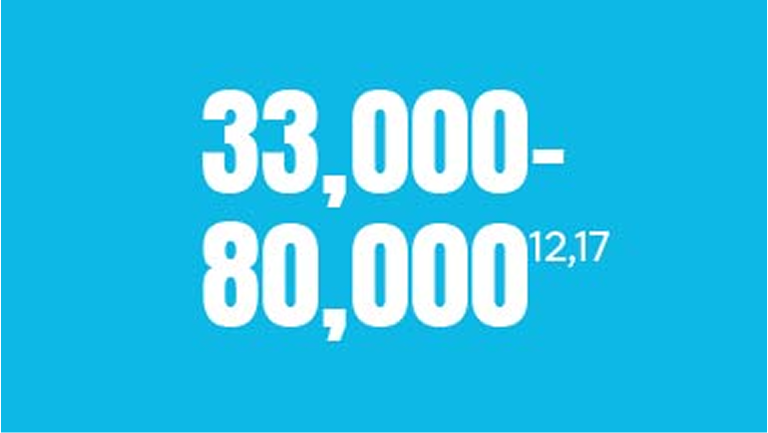
Historically, RSV led to hospitalization in 1–4 of every 100 US infants and caused approximately 80,000 hospitalizations each year.4,17*
*An analysis published in 2022 including studies conducted between 2000 and 2020, prior to the broad availability of prevention strategies. Annual hospitalization rates ranged from 8.4 to 40.8 per 1,000, with a pooled rate of 19.4.17
Historically, RSV has been a significant contributor to pneumonia admissions, accounting for up to 50% of cases among infants18
Current RSV hospitalizations in the US
More than half of infants will be infected with RSV by age 1.19
Historically, infants younger than 1 year were on average 16x more likely to be hospitalized due to RSV than for influenza.20
RSV hospitalization across age groups
Young infants under 6 months face an elevated risk of severe RSV, especially if born prematurely or with underlying conditions. Examples of such conditions include chronic lung disease, congenital heart disease, neurological issues, or immunodeficiency.21
However, pre-existing risk factors are recognized in only 22%-32% of total hospital admissions.5
Hospitalization rate for infants with RSV vs influenza
Infants under 1 year of age are much more likely to be hospitalized due to RSV than influenza. However, for children aged 5 years and older, influenza is more likely to lead to hospitalizations than RSV, highlighting the significant impact each virus has across different stages of life.20
These statistics on RSV hospitalization rates and incidence emphasize that RSV presents a risk to all infants, not just those born prematurely or with underlying medical conditions.20
RSV and bronchiolitis in infants
RSV is the primary cause of hospitalization in infants. It leads to hospitalizations by causing bronchiolitis and pneumonia. Acute bronchiolitis due to RSV accounted for ~10% of total infant hospitalizations.22
Bronchiolitis manifests with21:
- Respiratory distress
- Coughing
- Varying levels of hypoxia caused by airway blockage in older children and may present as apnea in infants
RSV pathophysiology
RSV symptoms can progress from an asymptomatic stage to severe. Below is a timeline of the typical RSV symptoms over the course of the disease*:
Days 1-2
Droplets containing RSV from an infected contact enter the infant's nasopharynx.
There is usually no manifestation of symptoms at this point.23
Days 3-5
Nasopharyngeal cells are sloughed off and may be aspirated, carrying RSV to lower respiratory tract cells.23
Symptoms can include:
- Congestion
- Runny nose
- Fever (many young infants will not present with fever)
- Irritability
- Poor feeding
Days 6-8
RSV-infected epithelial cells can travel
deeper into the infant's lungs, infecting the bronchioles and alveoli and causing bronchiolitis and/or pneumonia.14
Symptoms can include23:
- Cough
- Excess phlegm
- Rapid breathing (tachypnea)
- Wheezing and/or grunting noises
- Nasal flaring
- Abnormal chest movement when breathing
*This is one example of disease progression, which can vary among individual infants.
RSV oxygen (O2) therapy in cases of severe RSV
2 to 3 out of every 100 infants with RSV infection may need to be hospitalized; those who are hospitalized may require O2, IV fluids, intubation, and/or mechanical ventilation.4
O2 therapy in cases of severe RSV requires O2 levels given at a higher rate through a nasal cannula, known as “high flow.”24
Respiratory rate as an indicator of RSV severity
Parents should be informed that respiratory rate is a key indicator when deciding to seek medical attention.
The following respiratory rates by age could indicate lower respiratory complications.25
| Age | Respiratory rate |
| Under 2 months |
≥60 breaths/min |
| 2 to 11 months |
≥50 breaths/min |
| 1 to 5 years |
≥40 breaths/min |
Seasonality
Typical RSV season
RSV is seasonal, with infections peaking at certain times throughout the year. A typical RSV season runs roughly from fall through spring, with some exceptions, such as in Florida and Hawaii, where the season may start earlier.26-30
Recent changes in RSV seasonality
Shortly after the COVID-19 pandemic, RSV detection became more unpredictable in some regions, with off-season resurgences of cases. Epidemiology can help identify when local RSV seasons begin and end.21,31
Impact of birth month
Percentage of RSV-LRTI hospitalizations occurring in US infants born during the season and before the season32:
| Birth month | Percentage |
| October to February |
53% |
| March to September |
47% |
Infants born before the RSV season are at a similar risk as those born during it.
Take a deeper dive into RSV
Quality of life burden on United States infants and caregivers due to lower respiratory tract infection and adjusting for selective testing
A pilot prospective observational study estimating the quality of life (QoL) for otherwise healthy, term US infants with RSV-LRTI and their caregivers.
Infants admitted to US intensive care units for RSV infection during the 2022 seasonal peak
A surveillance study of 600 infants across 39 hospitals requiring intensive care for RSV infection found that most were born full term and were previously healthy.
Optimal site of care for administration of extended half-life RSV antibodies to infants in the United States (US)
A study to assess the time from birth hospitalization discharge to the first outpatient visit among US infants in order to determine the optimal site of administration of the extended half-life antibody.

Help prevent RSV-LRTI disease
Beyfortus is the monoclonal antibody with the longest half-life approved for the prevention of RSV-LRTI in infants28,33


CDC, Centers for Disease Control and Prevention; ED, emergency department; LRTI, lower respiratory tract infection; MA, medically attended; NVSN, New Vaccine Surveillance Network.
Important Safety Information
References: 1. Bianchini S, Silvestri E, Argentiero A, et al. Role of respiratory syncytial virus in pediatric pneumonia. Microorganisms. 2020;8(12):2048. 2. Glezen WP, Taber LH, Frank AL, et al. Risk of primary infection and reinfection with respiratory syncytial virus. Am J Dis Child. 1986;140(6):543-546. 3. Yamin D, Jones FK, DeVincenzo JP, et al. Vaccination strategies against respiratory syncytial virus. Proc Natl Acad Sci USA. 2016;113(46):13239-13244. 4. RSV in infants and young children. Centers for Disease Control and Prevention. Updated February 20, 2026. Accessed August 10, 2026. https://www.cdc.gov/rsv/infants-young-children/index.html 5. Baraldi E, Checcucci Lisi G, Costantino C, et al. RSV disease in infants and young children: can we see a brighter future? Hum Vaccin Immunother. 2022;18(4):2079322. 6. Arriola CS, Kim L, Langley G, et al. Estimated burden of community-onset respiratory syncytial virus-associated hospitalizations among children aged <2 years in the United States, 2014-15. J Pediatric Infect Dis Soc. 2020;9(5):587-595. 7. Reichert H, Suh M, Jiang X, et al. Mortality associated with respiratory syncytial virus, bronchiolitis, and influenza among infants in the United States: a birth cohort study from 1999 to 2018. J Infect Dis. 2022;226(suppl 2):S246-S254. 8. Data on File. Sanofi. 9. Weekly RSV vaccination dashboard. Centers for Disease Control and Prevention. Updated May 20, 2026. Accessed August 10, 2026. https://www.cdc.gov/rsvvaxview/dashboard/index.html 10. Infant protection against respiratory syncytial virus (RSV) by maternal RSV vaccination or receipt of RSV monoclonal antibody, and intent for RSV monoclonal antibody receipt, United States. Centers for Disease Control and Prevention. Updated March 11, 2026. Accessed September 9, 2026. https://www.cdc.gov/rsvvaxview/dashboard/monoclonal-antibody-coverage-infants.html 11. Rainisch G, Adhikari B, Meltzer MI, et al. Estimating the impact of multiple immunization products on medically-attended respiratory syncytial virus (RSV) infections in infants. Vaccine. 2020;38(2)(suppl):251-257. 12. Rainisch G, Adhikari B, Meltzer MI, et al. Estimating the impact of multiple immunization products on medically-attended respiratory syncytial virus (RSV) infections in infants. Vaccine. 2020;38(2):251-257. 13. About wastewater data. Centers for Disease Control and Prevention. Updated April 10, 2026. Accessed August 10, 2026. https://www.cdc.gov/nwss/about-data.html 14. Piedimonte G, Perez MK. Respiratory syncytial virus infection and bronchiolitis. Pediatr Rev. 2014;35(12):519-530. 15. Symptoms and care of RSV. Centers for Disease Control and Prevention. Updated July 8, 2025. Accessed August 10, 2026. https://www.cdc.gov/rsv/symptoms/index.html 16. How to tell the difference between flu, RSV, COVID-19, and the common cold. National Foundation for Infectious Diseases. Accessed August 10, 2026. https://www.nfid.org/resource/how-to-tell-the-difference-between-flu-rsv-covid-19-and-the-common-cold/ 17. McLaughlin JM, Khan F, Schmitt H-J, et al. Respiratory syncytial virus-associated hospitalization rates among US infants: a systematic review and meta-analysis. J Infect Dis. 2022;225(6):1100-1111. 18. Walsh EE, Hall CB. Respiratory syncytial virus (RSV). In: Bennett J, Dolin R, Blaser M, eds. Mandell, Douglas, and Bennett’s Principles and Practice of Infectious Diseases. 8th ed. Saunders; 2015:1948-1960.e3. 19. Cacho F, Gebretsadik T, Anderson LJ, et al. Respiratory syncytial virus prevalence and risk factors among healthy term infants, United States. Emerg Infect Dis. 2024;30(10):2199-2202. 20. Zhou H, Thompson WW, Viboud CG, et al. Hospitalizations associated with influenza and respiratory syncytial virus in the United States, 1993-2008. Clin Infect Dis. 2012;54(10):1427-1436. 21. Abu-Raya B, Paramo M, Reicherz F, et al. Why has the epidemiology of RSV changed during the COVID-19 pandemic? EClinicalMedicine. 2023;61:102089. 22. Suh M, Movva N, Jiang X, et al. Respiratory syncytial virus is the leading cause of United States infant hospitalizations, 2009-2019: a study of the National (Nationwide) Inpatient Sample. J Infect Dis. 2022;226(suppl 2):S154-S163. 23. Meissner HC. Viral bronchiolitis in children. N Engl J Med. 2016;374(1):62-72. 24. Schroeder A, Nicholson E. Patient education: bronchiolitis and RSV in infants and children (beyond the basics). UpToDate. Updated August 28, 2025. Accessed August 13, 2026. https://www.uptodate.com/contents/bronchiolitis-and-rsv-in-infants-and-children-beyond-the-basics 25. Clinical care of severe acute respiratory infections – tool kit. World Health Organization. Updated April 6, 2022. Accessed August 10, 2026. https://www.who.int/publications/i/item/clinical-care-of-severe-acute-respiratory-infections-tool-kit 26. Jones JM, Fleming-Dutra KE, Prill MM, et al. Use of nirsevimab for the prevention of respiratory syncytial virus disease among infants and young children: recommendations of the Advisory Committee on Immunization Practices—United States, 2023. MMWR Morb Mortal Wkly Rep. 2023;72(34):920-925. 27. Rose EB, Wheatley A, Langley G, et al. Respiratory syncytial virus seasonality—United States, 2014-2017. MMWR Morb Mortal Wkly Rep. 2018;67(2):71-76. 28. Beyfortus (nirsevimab-alip). Prescribing Information. Sanofi. 29. Immunizations to protect infants. Centers for Disease Control and Prevention. Updated August 18, 2025. Accessed August 10, 2026. https://www.cdc.gov/rsv/vaccines/protect-infants.html 30. The National Respiratory and Enteric Virus Surveillance System (NREVSS). Centers for Disease Control and Prevention. Updated June 18, 2025. Accessed August 10, 2026. https://www.cdc.gov/nrevss/php/dashboard/index.html 31. Obando-Pacheco P, Justicia-Grande AJ, Rivero-Calle I, et al. Respiratory syncytial virus seasonality: a global overview. J Infect Dis. 2018;217(9):1356-1364. 32. Kieffer A, Beuvelet M, Sardesai A, et al. Expected impact of universal immunization with nirsevimab against RSV-related outcomes and costs among all US infants in their first RSV season: a static model. J Infect Dis. 2022;226(suppl 2):S282-S292. 33. Enflonsia (clesrovimab-cfor). Prescribing Information. Merck & Co Inc.
