- Article
- Source: Campus Sanofi
- Aug 8, 2025
Bleeding in ITP

Immune thrombocytopenia (ITP), previously known as idiopathic thrombocytopenic purpura, is a type of thrombocytopenia involving immune-mediated reduction in platelet counts leading to defects in blood clotting.1 The resulting elevated bleeding risk has a direct impact on morbidity, mortality, and quality of life for people affected.2-5 This article will explore the causes, risk factors, symptoms, and management of bleeding in ITP, and discuss the wider impacts of ITP on affected individuals.
Mechanisms of thrombocytopenia
One of the central features of ITP is the production of IgG autoantibodies directed against platelet surface antigens (GP IIb/IIIa, Ib/IIa, and VI), which develop in the absence of another underlying disorder (“primary” ITP) or after exposure to an inciting event (“secondary” ITP)—including other autoimmune conditions, drugs or infections (including HIV, hepatitis C, cytomegalovirus, or varicella zoster).1,6
Antibody binding to platelet glycoproteins triggers platelet destruction through multiple pathways, involving both innate and adaptive responses as well as immunosuppressive cell defects. Today, it is now understood that abnormal T cell responses are also involved, promoting autoimmune activity against platelets and megakaryocytes.6 Learn more about the pathophysiology of ITP.
The destruction of platelets by autoimmune processes leads to impaired blood clotting and a heightened risk of bleeding, a hallmark of ITP.7 Bleeding, present in around two-thirds of adults with ITP, ranges in severity from mild petechiae and epistaxis to potentially life-threatening gastrointestinal, intracranial, or urinary tract haemorrhage.1
Beyond bleeding, ITP can increase risk of thrombosis and has numerous effects on patients’ lives that can be easily overlooked, including fatigue, anxiety, depression, and headaches.5 Patients with chronic ITP may become so accustomed to a life with reduced health-related quality of life (HRQoL) that they believe it is their “normal.” 5 Uncover the hidden impact of ITP on patient’s lives.
Risk factors for bleeding in ITP
Bleeding in ITP is highly variable and unpredictable, and—because of the heterogenous nature of ITP—there is no clear evidence of a direct correlation between platelet counts and bleeding symptoms, especially at lower platelet counts. This means that bleeding in patients with ITP, even with the same platelet levels, can present in bleeding that ranges in severity from mild to severe.8-10
Despite this heterogeneity, certain risk factors have been identified that can contribute to an increased risk of severe bleeding in ITP. These include8:
- The presence of severe thrombocytopenia (platelet count <10,000–20,000/μL)
- Previous minor bleeding
- Older age (older than 60 years)
- Concomitant medication use that predisposes patients to bleeding
- Male sex
While platelet levels remain an important aspect of treatment decisions in treatment guidelines,11 because of the complex combination of risk factors in ITP, some researchers argue that treatment decisions should not be dictated solely by platelet count alone. Various additional factors may help to define individual treatment needs, such as bleeding phenotype, lifestyle, comorbidities, medication, patient preferences and lifestyle of each individual—including activity level, pregnancy planning, disease anxiety, and adherence to treatment.8

Intracranial haemorrhage (ICH) and cerebral microbleeds (CMBs)
Intracranial haemorrhage refers to bleeding within the skull and is a severe bleeding event that can occur in 0.1 to 1% of patients with ITP, with most cases seen when platelet levels <10,000/μL.1,13,14
Unlike other types of bleeding events in ITP, ICH appears to be more common in adults than children, with its associated mortality being highest for patients over 60 years old.15-17 It also tends to occur during chronic ITP (longer than 12 months) while other critical bleeds are frequently seen at all stages of the disease.17,18
Cerebral microbleeds are small bleeds from blood vessels in the brain. Over time, the accumulation of the haemosiderin deposits can be associated with cognitive impairment in a range of conditions (eg, cerebral amyloid angiopathy). In a 2020 study, the incidence of CMBs was found to be higher in patients with ITP (43%) than in the control group (0%), demonstrating that CMBs are common in moderate to severe ITP and suggesting a potential cause for cognitive impairment observed in some ITP patients.19
Skin bleeding symptoms
- Petechiae: Petechiae are red or purple patches on the skin (“dry”) or mucous membranes (“wet”) that measure less than 2 mm in size. They are caused by bleeding into the dermis20,21
- Ecchymosis: Ecchymosis is defined as red or purple patches on the skin that have a size of more than 1 cm. They occur due to leakage of blood into subcutaneous tissue20,22,23
- Haematoma: Haematoma is a large bruise on the skin, caused by local accumulation of blood24
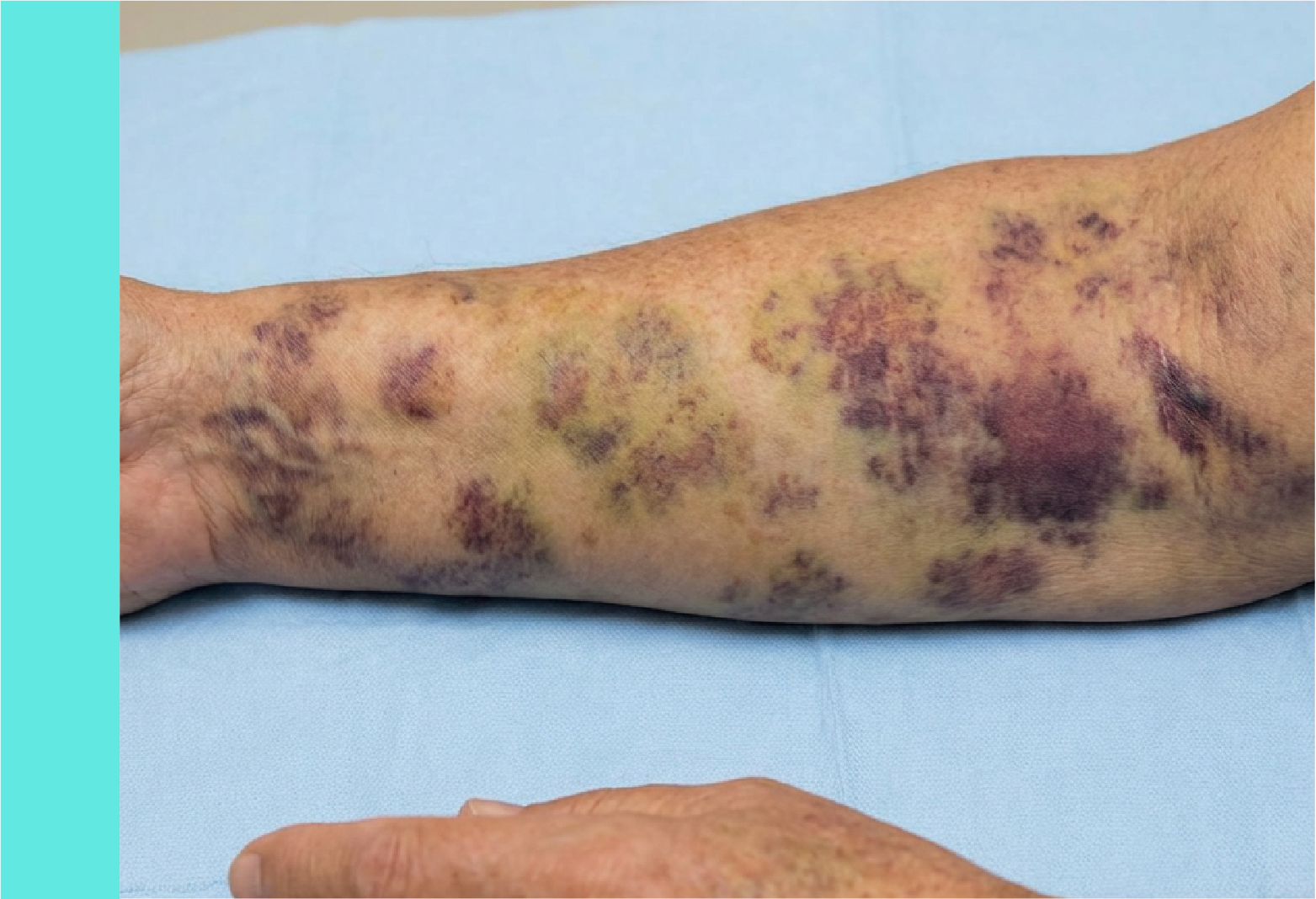
Ecchymosis
Large extravasation of blood into the skin.23
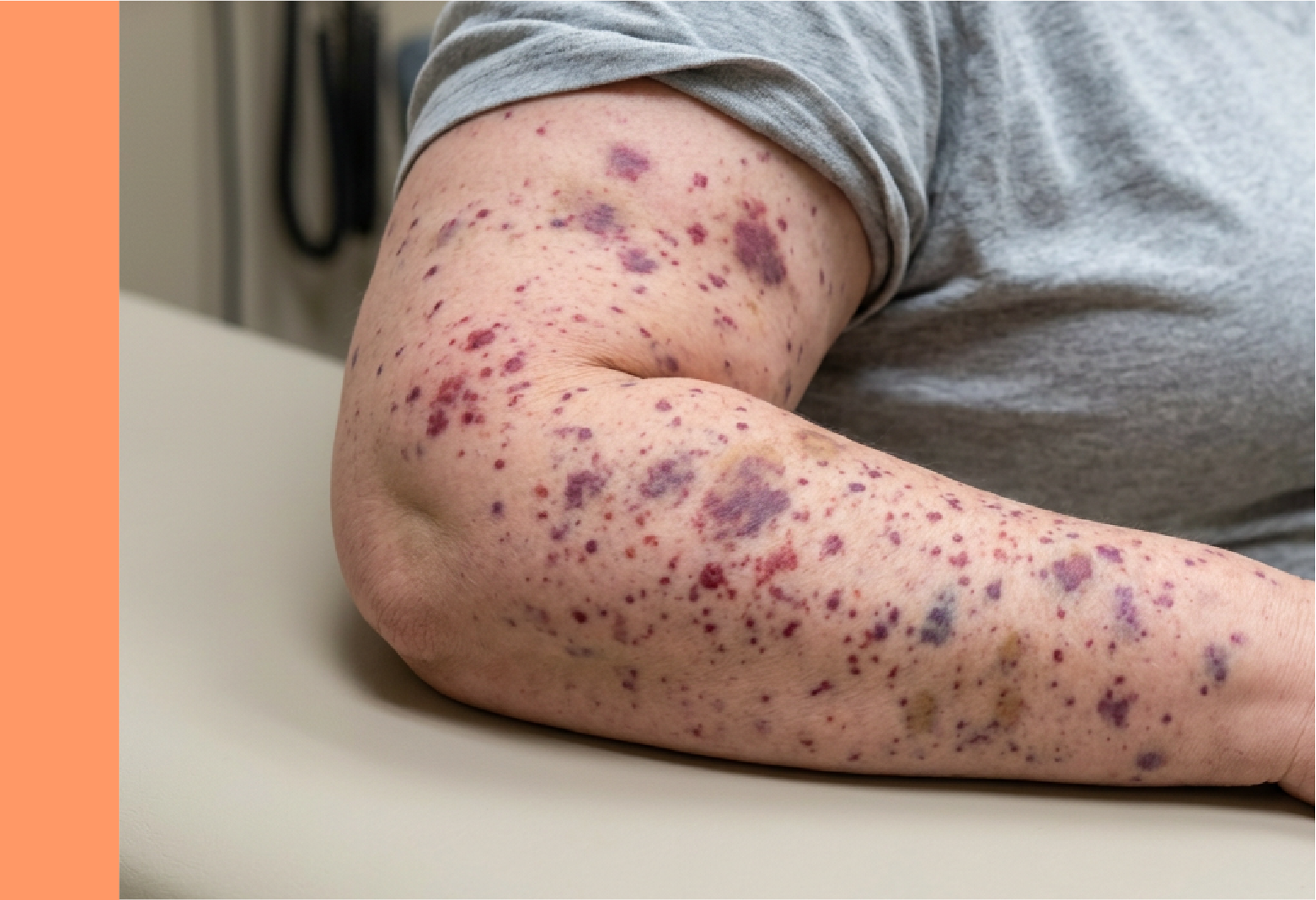
Purpura
Non-blanching violaceous haemorrhagic lesions that can be flat or raised.25
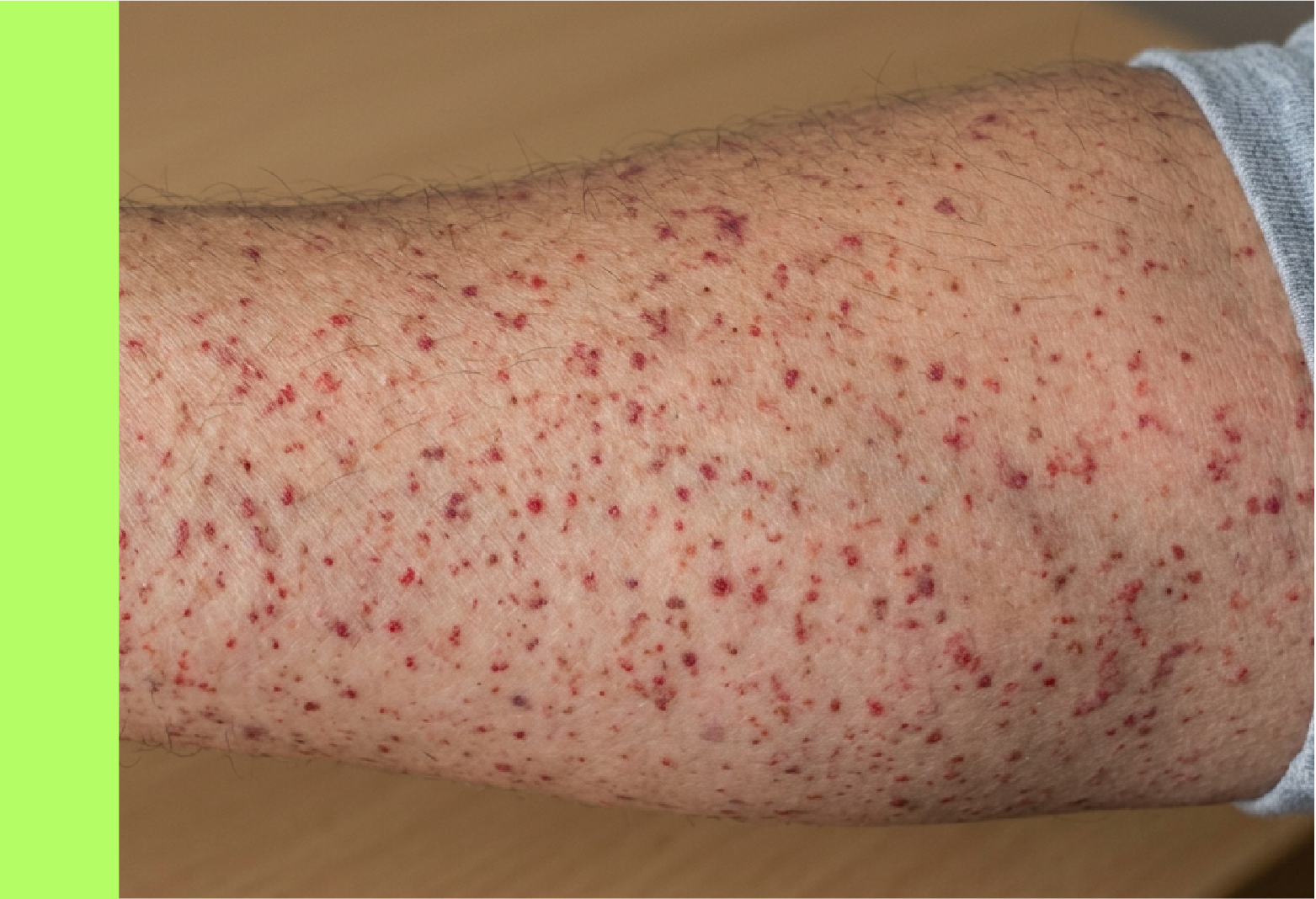
Petechiae
1-2 mm non-blanching reddish vascular macules (“tiny flat form of purpura”).25
Epistaxis and bleeding in mucous membranes
- Epistaxis: Epistaxis is a bleeding of the nose from blood vessels of the anterior nasal septum (most common) or the posterior nasal cavity (less common but often severe). They can be unilateral or bilateral, and can be due to local, systemic, environmental, or medication-induced causes26
- Gingival bleeding: Gingival bleeding refers to the bleeding of the gingival tissue (gums) caused by the inflammation of the gingiva. The inflammation usually results from gingivitis or other conditions associated with poor oral health. In patients with ITP, it can also be due to minor trauma (eg, toothbrushing) 27-29
- Subconjunctival haemorrhage: Subconjunctival haemorrhage manifests as redness beneath the conjunctiva resulting from an extravasation of blood in the area. It does not cause pain or impair vision and is usually caused by trauma, but may also be caused by systemic comorbidities (eg, hypertension) or medications30
Internal bleeding in organs
Gastrointestinal (GI) bleeding can be a serious complication encountered in patients with ITP, and may be especially common in patients on chronic anticoagulation and/or antiplatelet agents—emphasising the need for careful management of polypharmacy.31 The risk of severe gastrointestinal bleeding is less than 1% in ITP.32
Other forms of internal bleeding that can be observed during ITP include1,33,34:
- Pulmonary or tracheobronchial bleeding
- Intraocular bleeding
- Intraspinal bleeding
- Retroperitoneal bleeding
- Pericardial bleeding
- Intramuscular bleeding
- Bleed causing haemodynamic instability
- Genitourinary tract bleeding
Thrombosis and thromboembolic events (TEs)
Thrombosis is defined as a blood clot within an arterial (arterial thromboembolism or ATE) or venous (venous thromboembolism or VTE) blood vessel.35 Patients with ITP have a higher risk of thrombosis than the general population, including VTE such as deep-vein thrombosis (DVT) and pulmonary embolism (PE)36,37; epidemiologic studies suggest the risk of VTE may be elevated up to 2-fold.38
The increase in risk could be due to high rates of platelet activation with increased thrombin generation, ITP treatment, and comorbidities. As a result, the group most at risk to experience thrombosis with ITP are older patients who possibly have more comorbidities and have undergone several lines of secondary ITP treatment and received thrombopoietin receptor agonists (TPO-RAs).37
Thromboembolic events can refer to blood clots that have travelled to a distant site from where it was formed.39 The rate of TEs in patients with ITP is, for similar reasons as for thrombosis, three to four times higher than in the general population.40
Menstrual bleeding
In menstruating people of reproductive age, ITP can cause significant menstrual problems such as heavy menstrual bleeding (HMB), also known as menorrhagia. HMB is defined as abnormally heavy bleeding and/or prolonged bleeding for more than 7 days.41
Beyond its effects on patients’ quality of life (including impairment on physical, social, and general health), HMB can lead to iron deficiency and anaemia, further impacting quality of life, as well as impacting cognitive and physical functions. A 2022 study on premenopausal people with a uterus found that while 39% of patients in the sample experienced HMB, 78% had experienced clinical menstrual problems.41
The ITP Bleeding Scale (IBLS)
Historically, treatment decisions in ITP were driven primarily by platelet counts. However, it is now acknowledged that platelet counts alone do not adequately define bleeding, nor capture the comprehensive disease burden experienced by patients.20
The ITP Bleeding Scale (IBLS) is a disease-specific bleeding assessment tool that uses 11 site-specific grades ranging from 0 (none) to 2 (marked bleeding). It evaluates bleeding at 9 sites on the body based on patient history over the previous week, with skin and oral bleeding also assessed by physical examination. In addition, the most severe bleeding ever experienced at each site is graded using the same system, providing a structured framework for characterising bleeding severity in patients with ITP.42
|
|
Bleeding Grade | ||
|---|---|---|---|
|
Site |
0 |
1 |
2 |
|
Skin [physical examination (PE)] |
None |
1-5 bruises and/or scattered petechiae |
>5 bruises with size >2 cm and/or diffuse petechiae |
|
Oral (PE) |
None |
1 blood blister or >5 petechiae or gum bleeding that clears easily with rinsing |
Multiple blood blisters and/or gum bleeding |
|
Skin (Hx) |
None |
1-5 bruises and/or scattered petechiae |
>5 bruises with size >2 cm and/or diffuse petechiae |
|
Oral (Hx) |
None |
1 blood blister or >5 petechiae and/or gum bleeding <5 min |
Multiple blood blisters and/or gum bleeding >5 min |
|
Epistaxis |
None |
Blood when blowing nose and/or
|
Bleeding >5 min (per episode) |
|
Gastrointestinal (GI) |
None |
Occult blood |
Gross blood |
|
Urinary (U) |
None |
Microscopic (+ve dipstick) |
Macroscopic |
|
Gynecological (GYN) |
None (normal period) |
Spotting not at time of normal period |
Bleeding >spotting not at time of period or very heavy period |
|
Pulmonary |
None |
N/A |
Yes |
|
Intracranial haemorrhage |
None |
N/A |
Yes |
|
Subconjunctival haemorrhage |
None |
Yes |
N/A |
Adapted from Page LK, et al. Br J Haematol. 2007;138(2):245-248.42
Managing bleeding in ITP
ITP is a complex disorder, driven by underlying autoimmune pathophysiology that leads to reduced platelet levels and functioning in affected individuals, resulting in elevated bleeding risk.43
However, the impacts of ITP go beyond bleeding risk alone, with the disease having significant impacts on quality of life.43 It is now advised that treatment is highly personalised, taking into account the multiple individual characteristics, symptoms, experiences, and preferences of the patient.2,40
While current treatments are primarily focused on stopping or preventing bleeding, response rates for currently available ITP treatments vary widely from 18% to 80%, as measured by improved platelet counts.44,45 Furthermore, existing treatments may also be associated with unfavourable side effect profiles, dosing regimens, routes of administration, and dietary restrictions.44,46-48
There remains an unmet need for newer treatment options in ITP that address its underlying complex immune dysregulation, induce durable platelet responses, are well tolerated, and improve fatigue and overall quality of life for affected patients.43
GP, platelet glycoprotein; HIV, human immunodeficiency virus; Hx, history; IgG, immunoglobulin G.
References
1. Pietras NM, Gupta N, Justiz Vaillant AA, Pearson-Shaver AL. Immune Thrombocytopenia. In: StatPearls. Treasure Island (FL): StatPearls Publishing; May 5, 2024. 2. Psaila B, Petrovic A, Page LK, Menell J, Schonholz M, Bussel JB. Intracranial hemorrhage (ICH) in children with immune thrombocytopenia (ITP): study of 40 cases. Blood. 2009;114(23):4777-4783. 3. Trotter P, Hill QA. Immune thrombocytopenia: improving quality of life and patient outcomes. Patient Relat Outcome Meas. 2018;9:369-384. 4. Kruse C, Kruse A, DiRaimo J. Immune thrombocytopenia: the patient’s perspective. Ann Blood. 2021;6:9. https://aob.amegroups.org/article/view/6146/pdf 5. Cooper N, Kruse A, Kruse C, et al. Immune thrombocytopenia (ITP) World Impact Survey (iWISh): patient and physician perceptions of diagnosis, signs and symptoms, and treatment. Am J Hematol. 2021;96(2):188-198. 6. Li Q, Marcoux G, Hu Y, et al. Autoimmune effector mechanisms associated with a defective immunosuppressive axis in immune thrombocytopenia (ITP). Autoimmun Rev. 2024;23(12):103677. 7. National Heart, Lung, and Blood Institute. Platelet Disorders - Immune Thrombocytopenia (ITP). National Institutes of Health. Updated July 24, 2025. Accessed April 9, 2026. https://www.nhlbi.nih.gov/health/immune-thrombocytopenia 8. Mititelu A, Onisâi MC, Roșca A, Vlădăreanu AM. Current understanding of immune thrombocytopenia: a review of pathogenesis and treatment options. Int J Mol Sci. 2024;25(4):2163. 9. Neunert CE. Management of newly diagnosed immune thrombocytopenia: can we change outcomes? Blood Adv. 2017;1(24):2295-2301. 10. Gauer RL, Whitaker DJ. Thrombocytopenia: evaluation and management. Am Fam Physician. 2022;106(3):288-298. https://www.aafp.org/pubs/afp/issues/2022/0900/thrombocytopenia.html 11. McCrae K. Immune thrombocytopenia: no longer “idiopathic.” Cleve Clin J Med. 2011;78(6):358-373. 12. Kistangari G, McCrae KR. Immune thrombocytopenia. Hematol Oncol Clin North Am. 2013;27(3):495-520. 13. Diyora B, Purandare A, Devani K, Kale P, Shah V, Patankar R. Life-threatening intracerebral hemorrhage in adult with ITP: challenging entity. Asian J Neurosurg. 2023;18(2):391-395. 14. Merriam-Webster. Intracranial hemorrhage. Merriam-Webster.com dictionary. Accessed April 8, 2026. https://www.merriam-webster.com/medical/intracranial%20hemorrhage 15. Sirotich E, Chowdhury SR, Modi D, et al. Critical bleeding in adults and children with immune thrombocytopenia: a multicenter cohort study. Blood Adv. 2025;9(13):3238-3248. 16. Despotovic JM, Grimes AB. Pediatric ITP: is it different from adult ITP? Hematology Am Soc Hematol Educ Program. 2018;2018(1):405-411. 17. Neunert C, Noroozi N, Norman G, et al. Severe bleeding events in adults and children with primary immune thrombocytopenia: a systematic review. J Thromb Haemost. 2015;13(3):457-464. 18. Rodeghiero F, Stasi R, Gernsheimer T, et al. Standardization of terminology, definitions and outcome criteria in immune thrombocytopenic purpura of adults and children: report from an international working group. Blood. 2009;113(11):2386-2393. 19. Cooper N, Morrison MA, Vladescu C, et al. Identification of occult cerebral microbleeds in adults with immune thrombocytopenia. Blood. 2020;136(25):2875-2880. 20. Rodeghiero F, Michel M, Gernsheimer T, et al. Standardization of bleeding assessment in immune thrombocytopenia: report from the International Working Group. Blood. 2013;121(14):2596-2606. 21. McGrath A, Barrett MJ. Petechiae. In: StatPearls. Treasure Island (FL): StatPearls Publishing; September 4, 2023. 22. Zainal A, Salama A, Alweis R. Immune thrombocytopenic purpura. J Community Hosp Intern Med Perspect. 2019;9(1):59-61. 23. Gaurav V, Pandhi D, Kotru M. Ecchymosis: a subtle sign unmasking malignancy. Indian Dermatol Online J. 2022;13(2):262-265. 24. Immune thrombocytopenia. Cleveland Clinic. Updated August 24, 2023. Accessed April 14, 2026. https://my.clevelandclinic.org/health/diseases/5726-immune-thrombocytopenia 25. Charrot SC, Sellar RS, Manson JJ. Purpura. Br J Hosp Med (Lond). 2017;78(10):C147-C152. 26. Tabassom A, Dahlstrom JJ. Epistaxis. In: StatPearls. Treasure Island (FL): StatPearls Publishing; September 12, 2022. 27. Gasner NS, Schure RS. Periodontal Disease. In: StatPearls. Treasure Island (FL): StatPearls Publishing; May 12, 2025. 28. Daley JO, Jain P. Gingivitis. In: StatPearls. Treasure Island (FL): StatPearls Publishing; March 27, 2023. 29. Dunphy L, Williams R. Immune thrombocytopenic purpura presenting with spontaneous gingival haemorrhage in pregnancy. BMJ Case Rep. 2019;12(1):e228309. 30. Zeppieri M, Noohani T. Subconjunctival Hemorrhage. In: StatPearls. Treasure Island (FL): StatPearls Publishing; September 15, 2025. 31. Ghafoor H, Sharma NK, Alampoondi Venkataramanan SV, Hadley M. Post PCI severe gastrointestinal bleeding in the setting of idiopathic thrombocytopenic purpura: a treatment dilemma. BMJ Case Rep. 2021;14(6):e243706. 32. Sarode SG, Haider T, Hertan HI. Massive gastric hemorrhage in a young male with immune thrombocytopenic purpura. Am J Gastroenterol. 2021;116:S1049. Interventional Endoscopy—Clinical Vignette/Case Report abstract S2485. 33.Mithoowani S, Cervi A, Shah N, et al. Management of major bleeds in patients with immune thrombocytopenia. J Thromb Haemost. 2020;18(7):1783-1790. 34. Sirotich E, Guyatt G, Gabe C, et al. Definition of a critical bleed in patients with immune thrombocytopenia: communication from the ISTH SSC subcommittee on platelet immunology. J Thromb Haemost. 2021;19(8):2082-2088. 35. Ashorobi D, Ameer MA, Fernandez R. Thrombosis. In: StatPearls. Treasure Island (FL): StatPearls Publishing; February 12, 2024. 36. Yu J, Fu L, Jin G, et al. Immune thrombocytopenia increases the risk of thrombosis: a two-sample Mendelian randomization study. Int J Cardiol. 2024;414:132417. 37. Zhou F, Zhang S, Li R, et al. A retrospective study of risk factors for thrombosis in patients with ITP. Hematology. 2025;30(1):2472461. 38. Liebman HA. Thrombosis in immune thrombocytopenia. Clin Adv Hematol Oncol. 2025;23(2):87-89. 39. Vaqar S, Graber M. Thromboembolic Event. In: StatPearls. Treasure Island (FL): StatPearls Publishing; May 22, 2023. 40. Provan D, Thachil J, Álvarez Román MT. Addressing thrombosis concerns in immune thrombocytopenia: the role of fostamatinib in immune thrombocytopenia management. Expert Rev Hematol. 2024;17(1-3):55-66. 41. van Dijk WEM, Punt MC, van Galen KPM, van Leeuwen J, Lely AT, Schutgens REG. Menstrual problems in chronic immune thrombocytopenia: a monthly challenge - a cohort study and review. Br J Haematol. 2022;198(4):753-764. 42. Page LK, Psaila B, Provan D, et al. The immune thrombocytopenic purpura (ITP) bleeding score: assessment of bleeding in patients with ITP. Br J Haematol. 2007;138(2):245-248. 43. Kuter DJ, Ghanima W. Evaluating rilzabrutinib in the treatment of immune thrombocytopenia. Immunotherapy. 2025;17(11):767-782. 44. Cooper N, Ghanima W. Immune thrombocytopenia. N Engl J Med. 2019;381(10):945-955. 45. Bussel J, Arnold DM, Grossbard E, et al. Fostamatinib for the treatment of adult persistent and chronic immune thrombocytopenia: results of two phase 3, randomized, placebo-controlled trials. Am J Hematol. 2018;93(7):921-930. 46. Mingot-Castellano ME, Bastida JM, Caballero-Navarro G, et al. Novel therapies to address unmet needs in ITP. Pharmaceuticals (Basel). 2022;15(7):779. 47. PROMACTA. Prescribing information. Novartis; 2025. 48. Azevedo J, DiRaimo J, Neunert C, Cooper N, Grace RF. Treatment landscape in pediatric immune thrombocytopenia: addressing unmet needs. Pediatr Blood Cancer. 2025;72(7):e31758.
MAT-GLB-2500852-v2.0-05/2026