- Article
- Source: Campus Sanofi
- Dec 1, 2025
Diagnosing autoimmune T1D: When and How?

Key takeaway
What are the signs and symptoms of autoimmune T1D?
Autoimmune T1D is a complex multifactorial organ-specific autoimmune disease marked by the destruction of insulin-secreting pancreatic beta cells.5 This results in loss of beta cell mass and impaired insulin production, chronic hyperglycemia, and ultimately, symptomatic autoimmune T1D.6 Those at risk, especially with a family history of autoimmune T1D, are recommended to undergo regular screening to facilitate early diagnosis and treatment when required. A delay in screening could increase the risk of DKA, with newly diagnosed type 1 diabetes.7
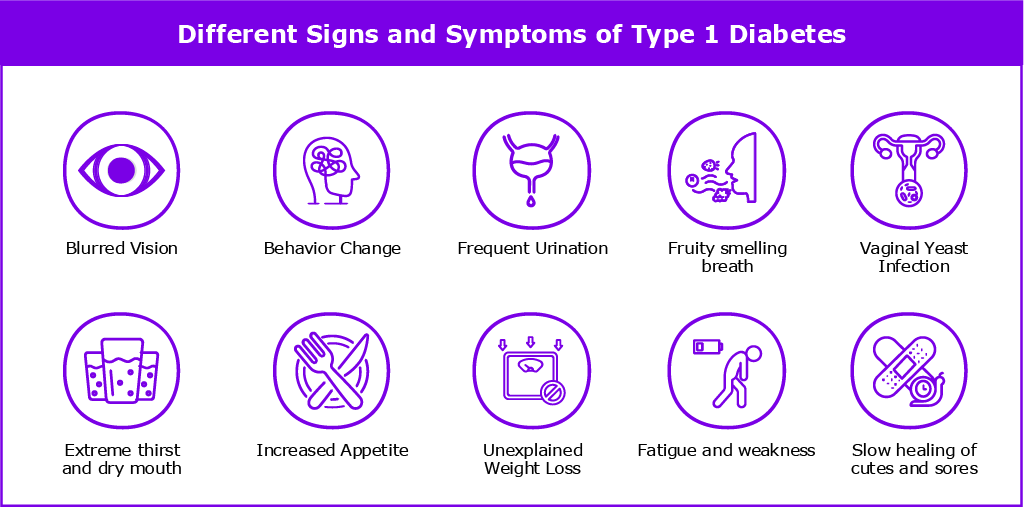
At diagnosis, children with symptomatic autoimmune T1D often present with symptoms of polyuria/polydipsia, and DKA.1 Adults may also present similar symptoms as seen in children but have a more gradual progression of autoimmune T1D.8 Initially the symptoms are mild and get severe as the disease progresses.9
Different signs/symptoms of symptomatic T1D.9
What are the current diagnostic recommendations from the ADA regarding T1D?
According to ADA, diabetes may be diagnosed based on HbA1C or plasma glucose criteria.1 Diagnostic criteria for diabetes include the following:
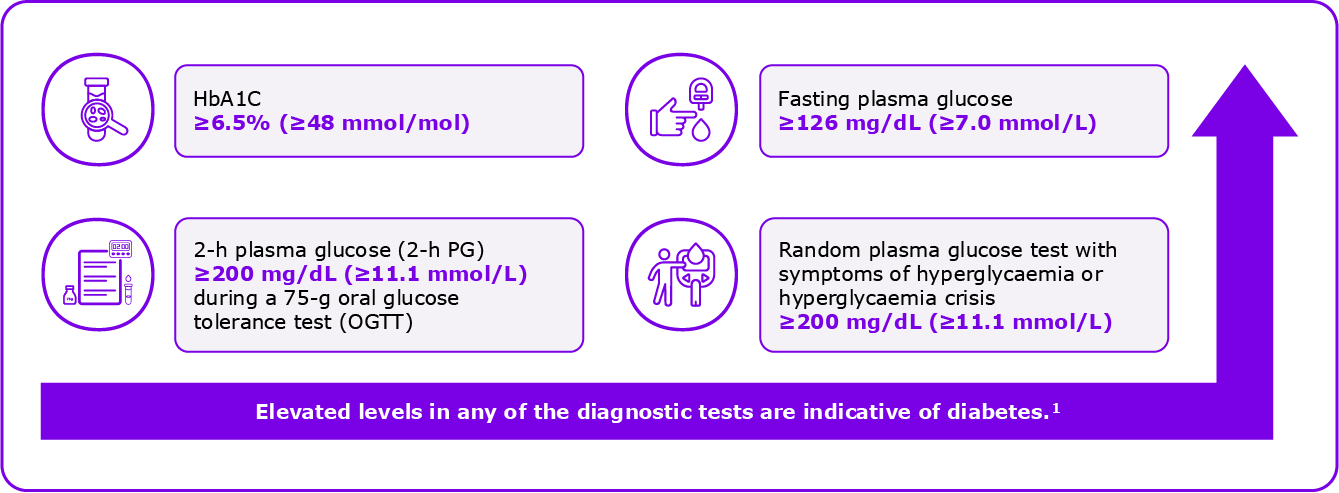
Distinguishing between autoimmune T1D and other forms of diabetes, mainly T2D is crucial.8 Persistent presence of ≥2 islet autoantibodies are highly predictive of autoimmune T1D.1 The ADA recommends autoantibody screening at risk individuals, including first- and second-degree relatives of autoimmune T1D individuals.
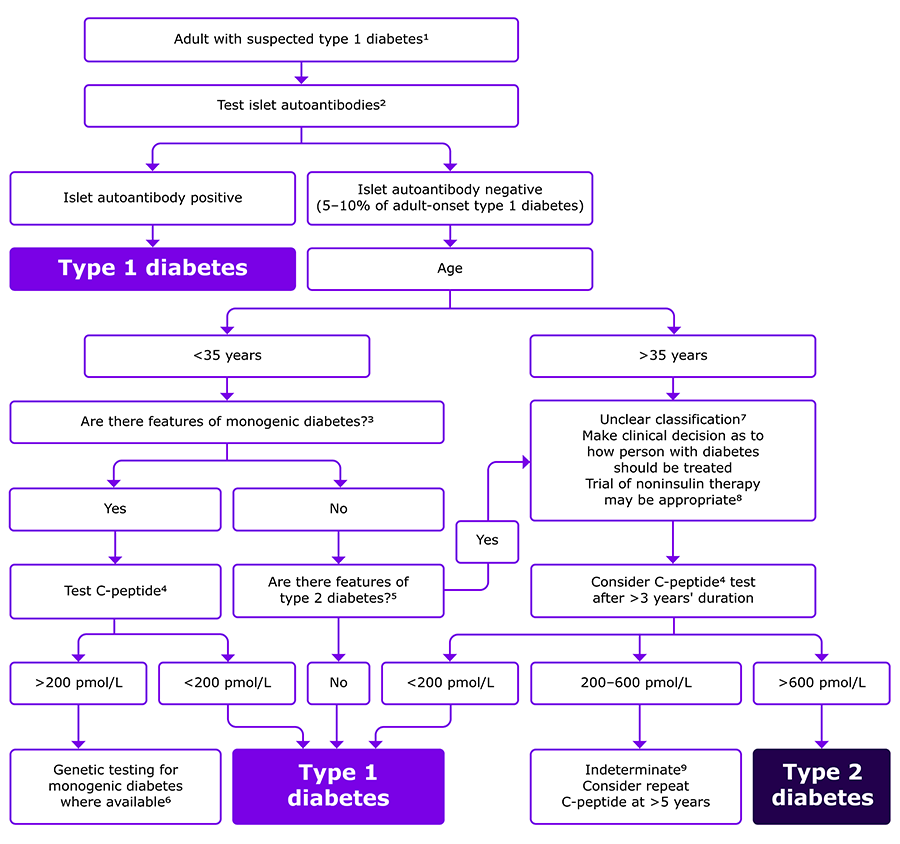
ADA guidelines provide a detailed algorithm for investigation of suspected autoimmune T1D in newly diagnosed adults.
Decision path for investigation of suspected T1D in newly diagnosed adults1
Can autoimmune T1D be diagnosed before onset of symptoms?
Symptoms of autoimmune T1D appear after 80–90% of the beta cells are destroyed.10 Circulating autoantibodies can be detected before the onset of clinical symptoms, serving as early indicators for risk prediction and prognosis.10 The identification of individuals at risk for autoimmune T1D at an early stage can facilitate intervention todelay or prevent the progression of the disease.10
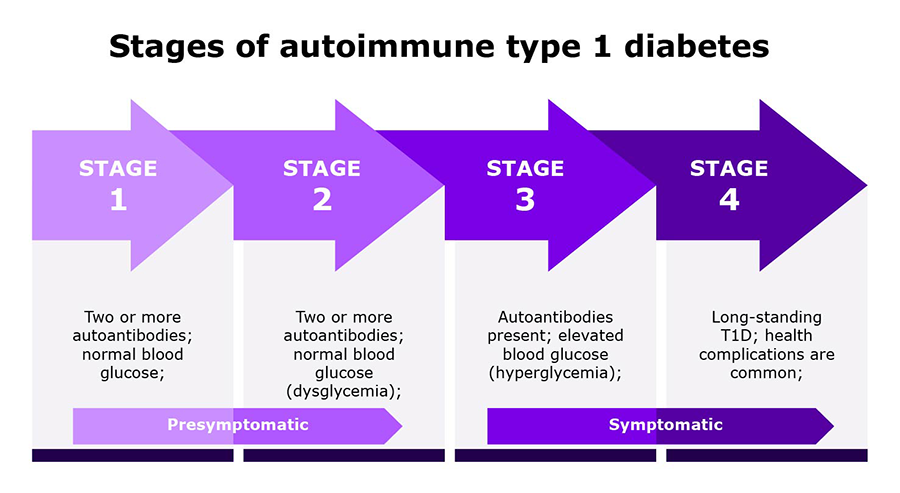
The stages, as shown in below Figure, provide a framework for understanding autoimmune T1D progression from the early presence of autoantibodies to the onset of clinical symptoms. Pre-clinical diagnosis through autoantibody screening is expected to identify individuals in the early stage 3, who still have a relatively high beta cell reserve.11
Stages of autoimmune T1D1,12

Please refer Table 1 for the recommendations from ADA on screening for antibodies in T1D
|
Table 1. ADA’s recommendations for screening of antibody among patients with T1D1 |
|
|
|
|

How should you monitor individuals who test positive for T1D autoantibodies?
Individuals who test positive for T1D autoantibodies should undergo regular screening for glycemic abnormalities. This helps in early detection of glucose intolerance or dysglycemia, which are indicative of progressing towards clinical diabetes.13
Monitoring should not be limited to glycemic control alone. Comprehensive health assessments, including monitoring for other autoimmune conditions and overall metabolic health, are crucial to manage the progression of T1D effectively.13
The consensus guidance published in June 2024 provides a detailed algorithm for monitoring of individuals who have been screened positive for islet autoantibodies.
Please Click here for more details on monitoring of individuals who test positive for T1D autoantibodies.
References
- American Diabetes Association Professional Practice Committee. 2. Diagnosis and Classification of Diabetes: Standards of Care in Diabetes-2025. Diabetes Care. 2025;48(Supplement_1):S27-S49. doi: 10.2337/dc25-S002.
- Popoviciu MS, Kaka N, Sethi Y, Patel N, Chopra H, Cavalu S. Type 1 Diabetes Mellitus and Autoimmune Diseases: A Critical Review of the Association and the Application of Personalized Medicine. J Pers Med. 2023;13(3):422. doi: 10.3390/jpm13030422.
- Insel RA, Dunne JL, Atkinson MA, et al. Staging presymptomatic type 1 diabetes: a scientific statement of JDRF, the Endocrine Society, and the American Diabetes Association. Diabetes Care. 2015;38(10):1964-1974. doi: 10.2337/dc15-1419.
- Nakhla M, Cuthbertson D, Becker DJ, et al. Diabetic Ketoacidosis at the Time of Diagnosis of Type 1 Diabetes in Children: Insights From TRIGR. JAMA Pediatr. 2021;175(5):518-520. doi: 10.1001/jamapediatrics.2020.5512.
- Pinheiro MM, Pinheiro FMM, Diniz SN, Fabbri A, Infante M. Combination of vitamin D and dipeptidyl peptidase-4 inhibitors (VIDPP-4i) as an immunomodulation therapy for autoimmune diabetes. Int Immunopharmacol. 2021;95:107518. doi: 10.1016/j.intimp.2021.107518.
- Marré ML, James EA, Piganelli JD. β cell ER stress and the implications for immunogenicity in type 1 diabetes. Front Cell Dev Biol. 2015;3:67. doi: 10.3389/fcell.2015.00067.
- Duca LM, Wang B, Rewers M, Rewers A. Diabetic Ketoacidosis at Diagnosis of Type 1 Diabetes Predicts Poor Long-term Glycemic Control. Diabetes Care. 2017;40(9):1249-1255. doi: 10.2337/dc17-0558.
- Lucier J, Mathias PM. Type 1 Diabetes. [Updated 2024 Oct 5]. In: StatPearls [Internet]. Treasure Island (FL): StatPearls Publishing; 2025 Jan-. Available from: https://www.ncbi.nlm.nih.gov/sites/books/NBK507713/4. Accessed: December 2025
- Type 1 Diabetes: Causes, Symptoms, Complications & Treatment. Cleveland Clinic. Accessed on December 2025. https://my.clevelandclinic.org/health/diseases/21500-type-1-diabetes. Accessed: December 2025
- Al-Mulla F, Alhomaidah D, Abu-Farha M, et al. Early autoantibody screening for type 1 diabetes: a Kuwaiti perspective on the advantages of multiplexing chemiluminescent assays. Front Immunol. 2023;14:1273476. doi: 10.3389/fimmu.2023.1273476.
- Wentworth JM, Oakey H, Craig ME, et al. Decreased occurrence of ketoacidosis and preservation of beta cell function in relatives screened and monitored for type 1 diabetes in Australia and New Zealand. Pediatr Diabetes. 2022;23(8):1594-1601. doi: 10.1111/pedi.13422.
- Haller MJ, Bell KJ, Besser REJ, et al. ISPAD Clinical Practice Consensus Guidelines 2024: Screening, Staging, and Strategies to Preserve Beta-Cell Function in Children and Adolescents with Type 1 Diabetes. Horm Res Paediatr. 2024;97(6):529-545. doi:10.1159/000543035
- Phillip M, Achenbach P, Addala A, et al. Consensus Guidance for Monitoring Individuals With Islet Autoantibody-Positive Pre-Stage 3 Type 1 Diabetes [published correction appears in Diabetes Care. Diabetes Care. 2024;47(8):1276-1298. doi:10.2337/dci24-0042
MAT-GLB-2503431-2.0 - 12/2025