- Article
- Source: Campus Sanofi
- Jun 22, 2026
Type 1 Diabetes Autoantibodies: Early Detection and Risk Prediction

Key Takeaways
What Are Type 1 Diabetes Autoantibodies?
Immune attack on pancreatic islet beta cells leads to progressive insulin deficiency and impaired glucose regulation. Islet-specific autoantibodies (such as GADA, IA-2A, IAA, and ZnT8A) typically emerge in early childhood often between 6 and 24 months of age, with insulin autoantibodies peaking at 1-2 years and GAD65 autoantibodies appearing after the first year. The presence of autoantibodies indicates the initiation of beta cell autoimmunity (Stage 1), marking the start of immune-mediated reduction that eventually leads to irregular glucose levels and symptomatic autoimmune T1D. Environmental factors and genetic predisposition particularly HLA-DR3-DQ2 and HLA-DR4-DQ8 haplotypes play a critical role in initiating and accelerating condition progression.1,3
Autoimmune T1D progresses through four stages defined by genetic risk, autoantibody presence, and changes in glucose levels and beta cell function:4,9
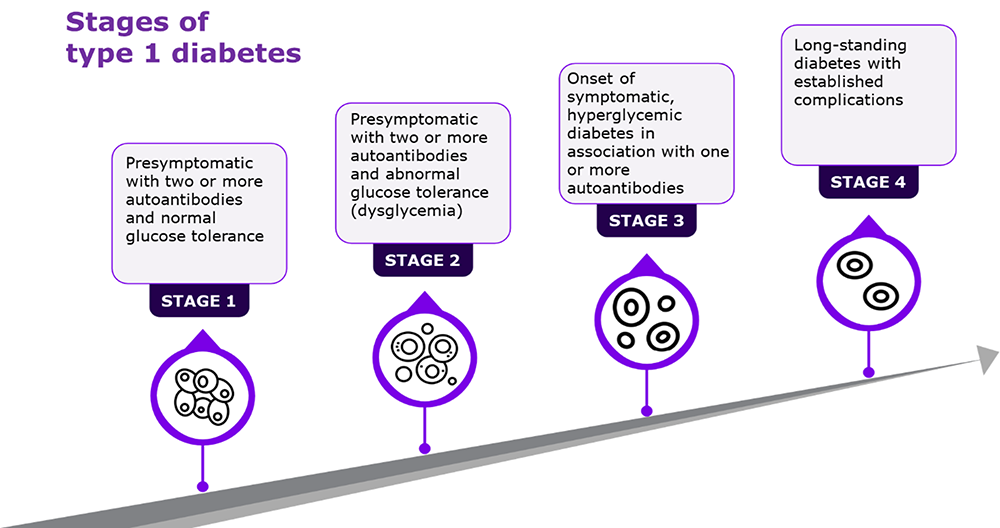
Fig. Stages of type 1 diabetes4
Key autoantibodies in T1D and their pancreatic targets
Autoantibodies serve as critical biomarkers for diagnosis, staging, and prediction of condition progression. Their sequential appearance and epitope specificity provide insights into beta cell reduction and the pathophysiological timeline of autoimmune T1D.
Table 1: Autoantibodies in type 1 diabetes4,5,9
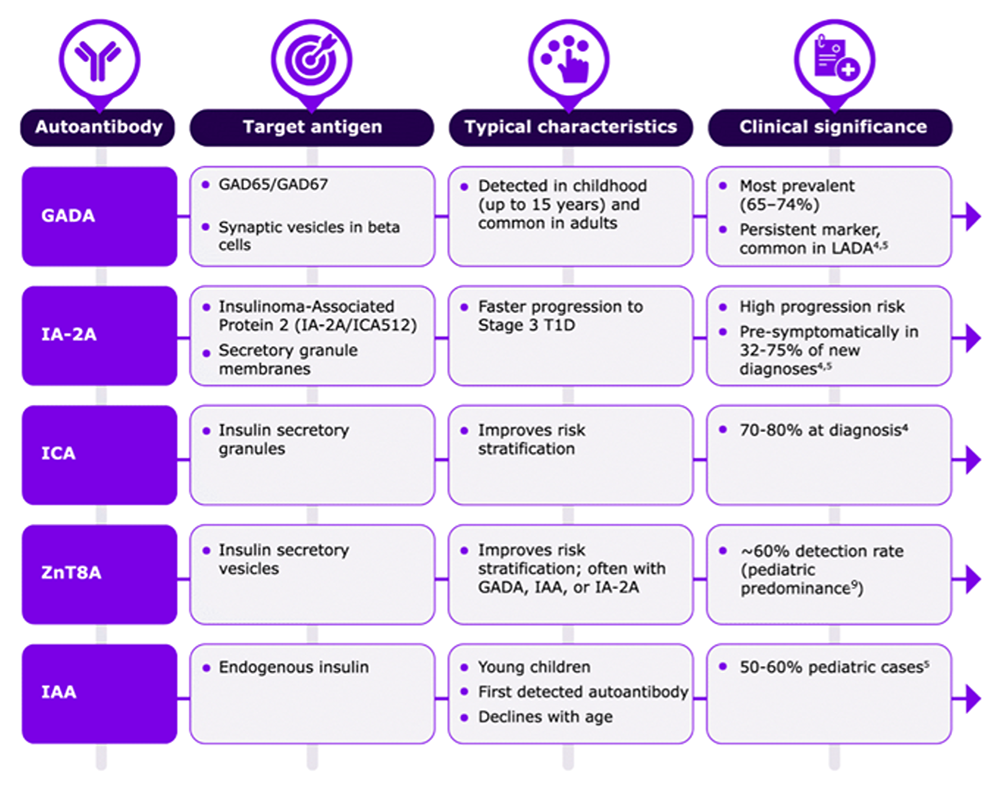
Table 2: Antibody Test Diabetes Type 1 and Common Detection Assays5,9,10
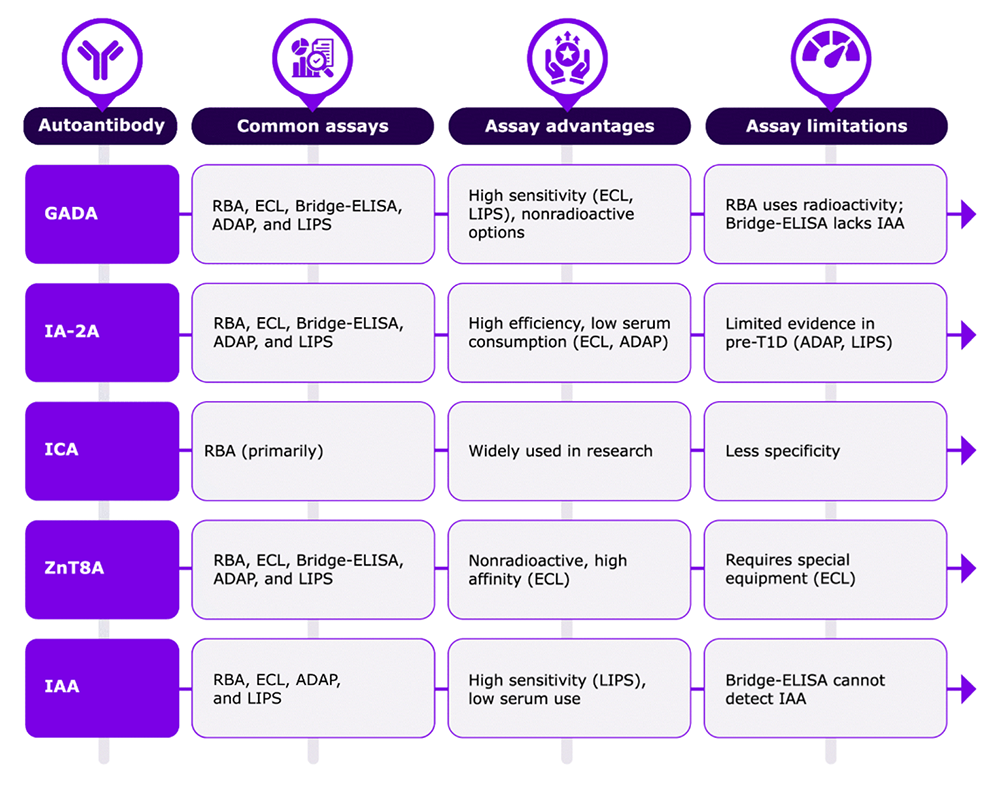
Abbreviations: ADAP, antibody detection by agglutination-PCR; ADA, American Diabetes Association; ECL, electrochemiluminescence; ELISA, enzyme-linked immunosorbent assay; LADA, latent autoimmune diabetes in adults; LIPS, luciferase immunoprecipitation system; PCR, polymerase chain reaction; RBA, radiobinding assay
Autoantibody-specific risk assessment2
While traditional risk stratification were focused primarily on autoantibody number and dysglycemia status, emerging evidence demonstrates that specific autoantibody types may have distinct prognostic implications for condition progression and clinical outcomes. Among these, IA-2A has emerged as one of the most clinically significant predictive markers, with recent data challenging conventional low-risk classifications for single autoantibody-positive individuals.
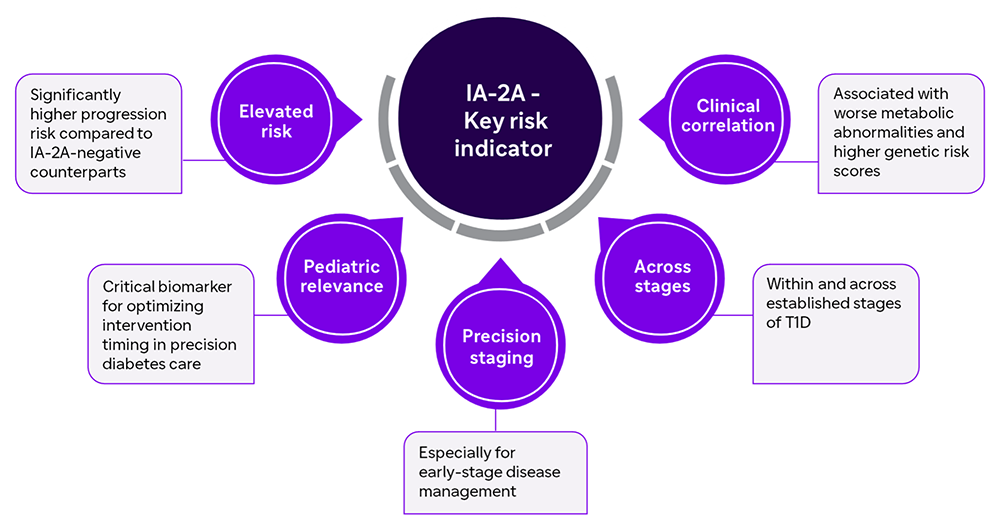
Fig. Autoantibody-specific risk assessment2
Screening strategies and early detection
Effective autoimmune T1D screening requires careful identification of high-risk groups and appropriate testing strategies. The ADA recommends prioritization of targeted screening in research settings over routine population-wide early detection of autoimmune type 1 diabetes through screening.7,8
Table 3: Screening recommendations by population
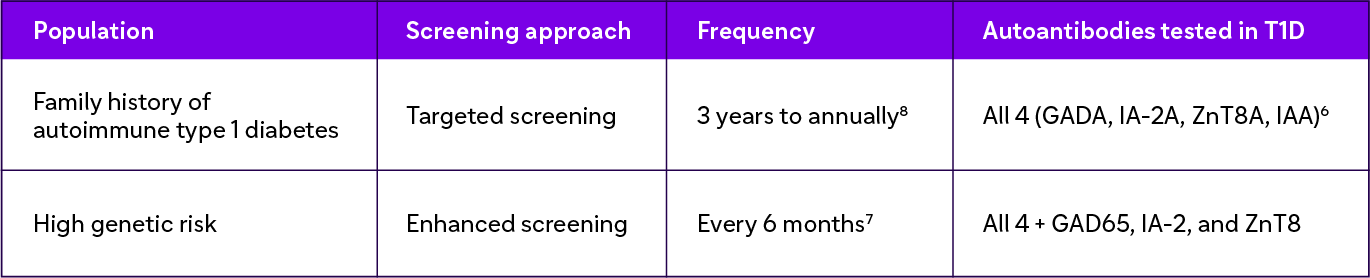
Screening for islet autoantibodies in T1D enables the early detection of individuals who are at increased chance of developing autoimmune T1D. This early identification facilitates timely clinical staging and tracking, allowing healthcare providers and families to anticipate condition progression and consider preventive or therapeutic interventions such as humanized immunoglobulin G1 (IgG1) kappa CD3-directed monoclonal antibody to potentially delay or mitigate the onset of clinical T1D.8,9
The reliability of early detection of autoimmune type 1 diabetes through screening in clinical practice
The reliability of autoantibody screening has improved through international standardization efforts. Current testing approaches achieve >95% specificity and >85% sensitivity when using multiple autoantibody panels.6
Standardization and Diagnostic performance:
Standardization efforts, such as those led by the Islet Autoantibody Standardization Program (IASP), have improved the consistency of autoantibody assays across laboratories. These initiatives enabled inter-laboratory comparability. Sequential testing strategies beginning with GADA and IA-2A, followed by expanded panels if positive optimize both detection rates and cost-effectiveness.6
Multi-autoantibody panels, superior detection:
Multi-autoantibody screening demonstrates superior diagnostic accuracy compared to single-marker approaches. Approximately 10% of GADA-negative patients present with other anti-islet autoantibodies, underscoring why comprehensive panels are essential to prevent missed diagnoses in clinical practice.5
Progression risk:
The number and combination of autoantibodies directly influence condition progression risk and clinical management strategies. Single autoantibody positivity represents heterogeneous outcomes. Isolated GADA positivity allows stable glucose metabolism for extended periods. IA-2A or ZnT8A positivity indicates higher progression risk requiring enhanced monitoring.6
Multiple autoantibody positivity (≥2 autoantibodies) indicates high risk for T1D progression, with five-year and ten-year risks of approximately 44% and 70%, respectively, and lifetime risk approaching 100%.5 Longitudinal studies demonstrate that approximately 85% of genetically at-risk children with multiple autoantibodies progressed to clinical autoimmune T1D within 15 years.6
Population-based screening programs:
Real-world screening programs such as TrialNet, Fr1da (>90,000 children), and ASK (>24,000 individuals) have expanded early detection of autoimmune T1D through screening both high-risk relatives and general population children, broadening reach beyond traditional research cohorts.6
Conclusions
Autoantibodies are biomarkers that indicate the stage and progression risk of autoimmune T1D. Their sequence of appearance and specific combinations reveal critical insights into the disease trajectory. While a single autoantibody may signal risk, the presence of multiple autoantibodies clearly indicates that the condition is progressive.
This predictive strength shapes clinical strategy and comprehensive multi-autoantibody panels deliver greater diagnostic accuracy than single-marker approaches, reducing missed diagnoses.
In essence, the sequential emergence and interplay of autoantibodies form the blueprint of autoimmune T1D. Recognizing this pattern early enables clinicians to stage disease precisely, anticipate progression confidently, and deploy preventive interventions proactively. By integrating standardized multi-autoantibody screening into practice, we move from reactive care to predictive precision reshaping the future of autoimmune T1D management.
*Human leukocyte antigen (HLA-DR3-DQ2, DR4-DQ8); DR3, DR4, DQ2, and DQ8 are the serotypes, or specific allelic variations (forms of the genes), present at these loci.
References
- Katsarou A, Gudbjörnsdottir S, Rawshani A, et al. Type 1 diabetes mellitus. Nat Rev Dis Primers. 2017;3:17016. doi:10.1038/nrdp.2017.16.
- Sims EK, Cuthbertson D, Ferrat LA, et al. IA-2A positivity increases risk of progression within and across established stages of type 1 diabetes. Diabetologia. 2025;68(5):993-1004. doi:10.1007/s00125-025-06382-x.
- Herold KC, Delong T, Perdigoto AL, Biru N, Brusko TM, Walker LSK. The immunology of type 1 diabetes. Nat Rev Immunol. 2024;24(6):435-451. doi:10.1038/s41577-023-00985-4.
- Sims EK, Besser REJ, Dayan C, et al. Screening for Type 1 Diabetes in the General Population: A Status Report and Perspective. Diabetes. 2022;71(4):610-623. doi:10.2337/dbi20-0054.
- Kawasaki E. Anti-Islet Autoantibodies in Type 1 Diabetes. Int J Mol Sci. 2023;24(12):10012. doi:10.3390/ijms241210012.
- So M, Speake C, Steck AK, et al. Advances in Type 1 Diabetes Prediction Using Islet Autoantibodies: Beyond a Simple Count. Endocr Rev. 2021;42(5):584-604. doi:10.1210/endrev/bnab013.
- Simmons KM, Sims EK. Screening and Prevention of Type 1 Diabetes: Where Are We? J Clin Endocrinol Metab. 2023;108(12):3067-3079. doi:10.1210/clinem/dgad328.
- Moore DJ, Leibel NI, Polonsky W, Rodriguez H. Recommendations for Screening and Monitoring the Stages of Type 1 Diabetes in the Immune Therapy Era. Int J Gen Med. 2024;17:3003-3014. doi:10.2147/IJGM.S438009.
- Phillip M, Achenbach P, Addala A, et al. Consensus guidance for monitoring individuals with islet autoantibody-positive pre-stage 3 type 1 diabetes. Diabetologia. 2024;67(9):1731-1759. doi:10.1007/s00125-024-06205-5.
- Jia X, Yu L. Understanding Islet Autoantibodies in Prediction of Type 1 Diabetes. J Endocr Soc. 2024;8(1):bvad160. doi:10.1210/jendso/bvad160.
MAT-GLB-2507093-2.0-07/2026