INDICATIONS AND USAGE with voiceover
Thyrogen (thyrotropin alfa) is used to help identify thyroid disease by testing the blood for a hormone called thyroglobulin in the follow up of patients with a certain type of thyroid cancer known as well differentiated thyroid cancer. It is used with or without a radiology test using a form of iodine.
Limitations of Use:
- The effect of Thyrogen on long term thyroid cancer outcomes has not been determined.
- When Thyrogen is used to help detect thyroid cancer, there is still a chance all or parts of the cancer could be missed.
Thyrogen is also used to help patients prepare for treatment with a form of iodine, called radioiodine, to remove leftover thyroid tissue in patients who have had surgery to take out the entire thyroid gland for patients with well differentiated thyroid cancer who do not have signs of thyroid cancer which has spread to other parts of the body.
Limitations of Use:
- In a study of people being prepared for treatment with a form of iodine after thyroid surgery, results were similar between those who received Thyrogen and those who stopped taking their thyroid hormone for up to 5 years after treatment. Researchers do not know if results would be similar over a longer period of time.
I. Introduction
My name is Stephanie Lee, I'm a professor of medicine at Boston Medical Center. My interest in primarily in thyroid disease, both thyroid nodules and thyroid cancer. I just realized I had my 30th anniversary after finishing my fellowship this year. I see a lot of patients per year, primarily all of the patients that I see are thyroid-related patients. I probably have about 700 or 800 thyroid cancer patients,
I will tell people that the thyroid hormone is your everyday cancer therapy because if the thyroid hormone is not taken and you're hypothyroid, endogenous TSH goes up. So I tell patients as the thyroid stimulating hormone, there's also thyroid cancer stimulating hormone. So our goal is to keep that as low as possible. And you can only achieve that if you take your medication regularly. So I think those are some of the things that are lessons to tell patients and not to scare the young patients quite so much.
II. Patient Selection - Thyrogen Treatment
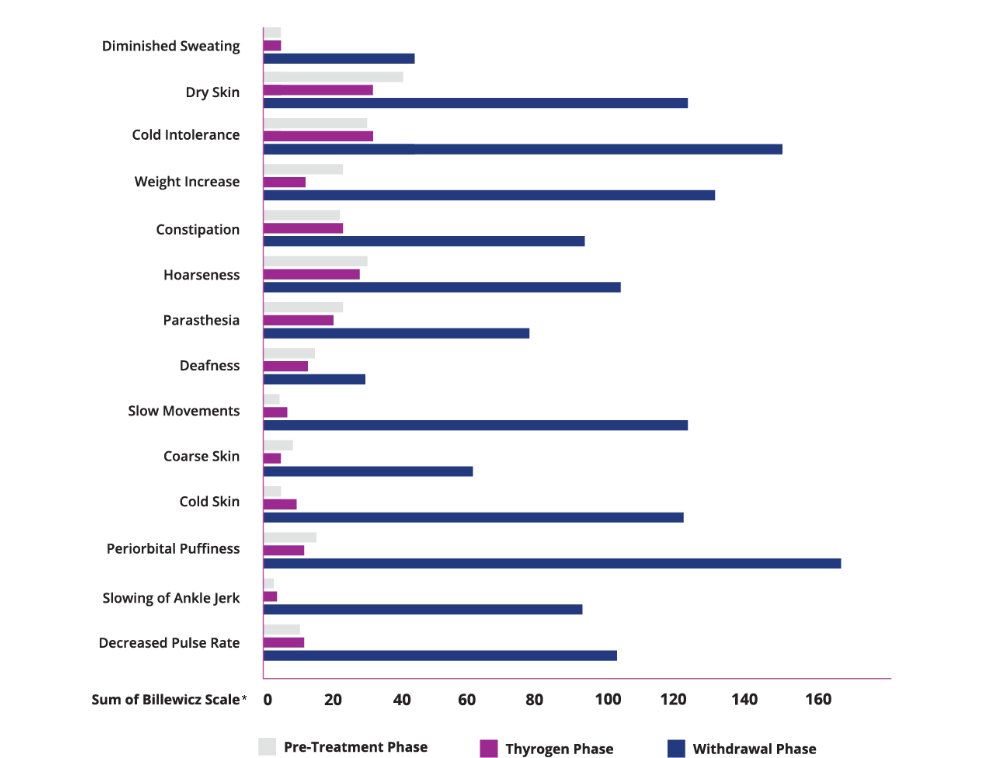
So the question is when do we use Thyrogen for radioactive iodine treatment and what patient might we consider actually taking them off thyroid hormone and making them hypothyroid? So the usual patient who gets therapy now is being stimulated using Thyrogen. The reason is there's been a number of hallmark papers published in the last five years looking at the equivalents of radioactive iodine where there's given 30 or 100 millicuries hypothyroid or with Thyrogen. And all four groups were actually identical in response. So because of that, in patients who have the usual thyroid cancer we will do the treatment with recombinant human TSH.
III. Understanding Thyrogen
Thyrogen actually is identical to a hormone made in your pituitary. And the pituitary and the thyroid work a little bit like a thermostat. So when the pituitary realizes there's not enough thyroid hormone, like the thyroid hormone levels are too low, it sends a pulse out to the thyroid and tells the thyroid to make more hormones. So that pulse is TSH, a thyroid stimulating hormone.
If, for some reason, the thyroid is making too much hormone, it feeds back to the brain. And the brain says, oh, I don’t need to make any more thyroid hormone. So the TSH goes down, and then it turns off the thyroid.
We can exploit that concept of the TSH stimulating the thyroid to take up iodine and to make thyroglobulin, which is part of the thyroid hormone molecule, for our use in thyroid cancer. So we use that hormone to stimulate the thyroid for two reasons. One is, if we just want to know if it's a residual tumor, you can do the two injections and just measure a blood test five days later for thyroglobulin. And if the thyroglobulin is less than 2.0 we consider that to be a negative test saying that there's unlikely to be significant residual tumor there. On the other hand, if we want to know where the thyroid cancer is, generally, in the usual, typical pathway carcinoma and follicular carcinoma, if we give a dose of radioactive iodine stimulated with the Thyrogen, it will go to the tumor cells, and they will take up the iodine, and then we can see it on a scan.
So those are the two diagnostic things we do.
IV. Thyrogen Treatment Experience
In fact, have to have someone who's been around for a while because we've done just the Thyrogen for so long that it's unusual to see someone who's been withdrawn. But I think it also depends of where you live in the country. So I will meet a patient who's had hypothyroid withdrawal versus Thyrogen.
So how do I tell my patients to prepare for the radioactive iodine therapy? So in the past, when we made them hypothyroid, I'd write them letters. I used to have an entire paragraph saying if you operate heavy equipment, if you feel like you're too drowsy, you shouldn’t be driving a car, you should not be doing anything that requires balance. And now, with the Thyrogen use, I no longer put that in my letters. I've taken that out or added in for those few patients who will get hypothyroid.
The rest of the preparation is really preparing them to reduce their iodine load, to come in for the injections and then the therapy and then the complications after therapy.
V. Dosing
There are two protocols to follow regarding Thyrogen injection. Diagnostic and ablation. The following protocol is recommended for diagnostic testing with Thyrogen.
Day 1 and 2.
- 0.9 mg IM Thyrogen dose q24 hours for 2 doses (days 1 and 2) Day 3
- If performing a whole-body scan (WBS), 4 mCi of 131I is given on day 3 (24 hours after the last Thyrogen injection)
Day 5
- Serum Tg is measured on day 5 (72 hours after the last Thyrogen injection) when average Tg levels peak
- WBS is performed on day 5 (72 hours after last Thyrogen injection
- WBS should be acquired for at least 30 minutes and/or should contain >140,000 counts
The following protocol is recommended for ablation with Thyrogen.
Day 1 and 2
- 0.9 mg IM Thyrogen dose q24 hours for 2 doses. Days 1 and 2 Day 3
- For remnant ablation with Thyrogen 131I is given on day 3 24 hours after the last Thyrogen injection. The dose of 131I is selected at the discretion of the physician.
Days 6-10
- A post ablation scan should be performed 3-7 days after the administration of 131I
Pretreatment with glucocorticoids should be considered for patients in whom tumor expansion may compromise vital anatomic structures.
VI. Scrolling ISI/with Professional Voiceover
IMPORTANT SAFETY INFORMATION
Patients should not use Thyrogen with radioiodine if they have a contraindication to the use of radioiodine. Please consult with your doctor for a list of contraindications for radioiodine.
Thyrogen can cause serious side effects, including:
Thyrogen-Induced Hyperthyroidism:
- There have been reports of events that led to death in patients who not had surgery to have their thyroid gland removed, and in patients with thyroid cancer cells that have spread to other parts of the body.
- Patients over 65 years old with large amounts of leftover thyroid tissue after surgery, or with a history of heart disease, should discuss with their physicians the risks and benefits of Thyrogen.
- Thyrogen can be administered in the hospital for patients at risk for complications from Thyrogen administration.
Stroke:
- Since Thyrogen was first approved for use, there have been reports of central nervous system problems such as stroke in young women who have a higher chance of having a stroke, and weakness on one side of the body. The relationship between Thyrogen administration and stroke is unknown. Patients should remain hydrated prior to treatment with Thyrogen.
Sudden Rapid Tumor Enlargement:
- Leftover thyroid tissue after surgery and cancer cells that have spread to other parts of the body can quickly grow and become painful after Thyrogen administration. Patients with cancer cells near their windpipe, in their central nervous system, or in their lungs may need treatment with a glucocorticoid (a medication to help prevent an increase in the size of the cancer cells before using Thyrogen.)
Risks Associated with Radioiodine Treatment:
- If THYROGEN is administered with radioiodine (RAI), the serious side effects for RAI apply to this combination regimen. Please consult with your doctor for a list of contraindications for radioiodine.
ADVERSE REACTIONS
In clinical studies, the most common side effects reported were nausea and headache.
USE IN SPECIFIC PATIENT POPULATIONS
Pregnant patients: Notify your healthcare provider immediately in the event of a pregnancy. If Thyrogen is administered with radioiodine, the combination regimen should not be used in pregnant women. Thyrogen should be given to a pregnant woman only if the doctor thinks there is a clear need for it.
Breastfeeding patients: If Thyrogen is administered with radioiodine, the combination regimen should not be used in breastfeeding women. It is not known whether Thyrogen can appear in human milk. Breastfeeding women should discuss the benefits and risks of Thyrogen with their physician.
Children: Safety and effectiveness in young patients (under the age of 18) have not been established.
Elderly: Studies do not show a difference in the safety and effectiveness of Thyrogen between adult patients less than 65 years and those over 65 years of age.
Patients with kidney disease: Thyrogen exits the body much slower in dialysis patients and can lead to longer high TSH levels.
Indications and Usage: Thyrogen (thyrotropin alfa) is used to help identify thyroid disease by testing the blood for a hormone called thyroglobulin in the follow up of patients with a certain type of thyroid cancer known as well differentiated thyroid cancer. It is used with or without a radiology test using a form of iodine.
Limitations of Use:
- The effect of Thyrogen on long term thyroid cancer outcomes has not been determined.
- When Thyrogen is used to help detect thyroid cancer, there is still a chance all or parts of the cancer could be missed.
Thyrogen is also used to help patients prepare for treatment with a form of iodine, called radioiodine, to remove leftover thyroid tissue in patients who have had surgery to take out the entire thyroid gland for patients with well differentiated thyroid cancer who do not have signs of thyroid cancer which has spread to other parts of the body.
Limitations of Use:
In a study of people being prepared for treatment with a form of iodine after thyroid surgery, results were similar between those who received Thyrogen and those who stopped taking their thyroid hormone for up to 5 years after treatment. Researchers do not know if results would be similar over a longer period of time.
Please visit www.thyrogen.com for full prescribing information
MAT-US-2006958
April 2020
© 2020 Genzyme Corporation. All rights reserved. Thyrogen, Sanofi and Genzyme are registered in the U.S. Patent and Trademark Office