Graphic with the text ‘Thymoglobulin® [Anti‑thymocyte Globulin (Rabbit)’] with an injection bottle icon on a green background with kidney line patterns behind an elderly man and a small disclaimer ‘Not an actual patient’.

Dosing


The Right Dose of Thymoglobulin® Offers Clinically Demonstrated Protection for Your Patient's New Kidney

Appropriate dosing for Thymoglobulin is different from dosing for other anti-thymocyte globulin (ATG) products, as protein composition and concentrations vary depending on the source of ATG used. Physicians should therefore exercise care to ensure that the dose prescribed is appropriate for the ATG product being administered.1
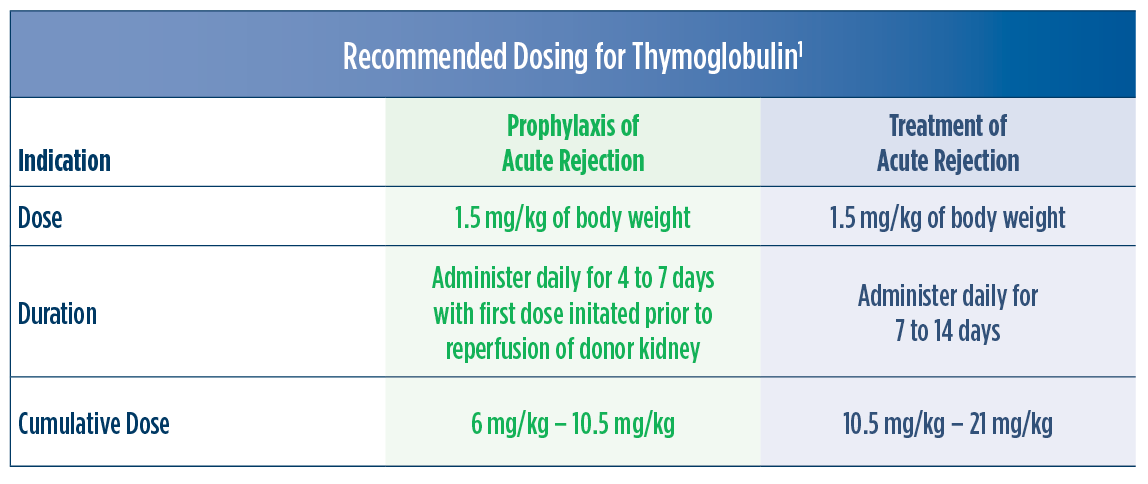
Recommended dosing chart for Thymoglobulin for both prophylaxis and treatment of acute kidney rejection
  • Thymoglobulin is used with concomitant immunosuppression. To prevent overimmunosuppression, physicians may wish to decrease the dose of the maintenance immunosuppression regimen during the period of Thymoglobulin use1
  • Thymoglobulin overdosage may result in leukopenia, including lymphopenia and neutropenia and/or thrombocytopenia, which can be managed with dose reductions1
An example dose calculation for a patient based on weight with the indicated dose of Thymoglobulin administered daily for 4-7 days.

Dosing Adjustments and Considerations

The immunodeficiency that results from immunosuppression predisposes patients to disorders of immune surveillance and response, including infection and malignancy. The increased risk of infection and malignancy are related more to the overall intensity of immunosuppression than to any specific agent.2,3

  • To prevent overimmunosuppression, physicians may wish to decrease the dose of maintenance immunosuppression regimen during the period of Thymoglobulin use1

During Thymoglobulin therapy, monitoring total lymphocyte count may help assess the degree of T-cell depletion.1

  • WBC and platelet counts should be monitored during and after therapy to assess the degree of neutropenia and thrombocytopenia, respectively1

Tailoring Thymoglobulin Dose Can Help Manage Your Patient’s Overall Immunosuppression1

In all appropriate patients, the Thymoglobulin dose should be reduced to prevent overimmunosuppression1,*

Recommended dose adjustments for Thymoglobulin chart
  • Low counts of WBCs and platelets are reversible following dose adjustments1

*Monitor for adverse reactions and total WBC and platelet counts to help identify appropriate patients.1

See How to Administer Thymoglobulin.

See Preinfusion Considerations and Storage Information.

Important Safety Information

Important Safety Information for Thymoglobulin [Anti-thymocyte Globulin (Rabbit)]:

CONTRAINDICATIONS

  • Thymoglobulin is contraindicated in patients with a history of allergy or anaphylaxis to rabbit proteins or to any product excipients, or who have active acute or chronic infections that contraindicate any additional immunosuppression.

WARNINGS AND PRECAUTIONS

  • Management of Immunosuppression: To prevent over-immunosuppression, physicians may wish to decrease the dose of the maintenance immunosuppression regimen during the period of Thymoglobulin use.
  • Hypersensitivity and Infusion-Related Reactions:  Severe hypersensitivity and infusion-related reactions, including fatal anaphylaxis and severe cytokine release syndrome (CRS), have been reported with the use of Thymoglobulin. Severe acute CRS can cause serious cardiorespiratory events and/or death. Close compliance with the recommended dosage and infusion time may reduce the incidence and severity of infusion-related reactions. Slowing the infusion rate may minimize the risk of infusion-related reactions. 
    If a hypersensitivity or infusion-related reaction occurs, terminate the infusion immediately and provide supportive treatment according to clinical practice.
  • Cytopenias: Cytopenias including anemia, neutropenia, and thrombocytopenia have occurred with Thymoglobulin administration. Monitor blood counts after Thymoglobulin administration. Adjust dose accordingly to reverse cytopenias.
  • Infection:  Thymoglobulin is routinely used in combination with other immunosuppressive agents. Infections (bacterial, fungal, viral and protozoal), reactivation of infection (particularly cytomegalovirus [CMV]) and sepsis have been reported after Thymoglobulin administration in combination with multiple immunosuppressive agents. These infections can be fatal.
    Monitor patients carefully and administer appropriate anti-infective treatment when indicated.
  • Malignancy: Malignancies with fatal outcomes have been reported in patients treated with Thymoglobulin. Use of immunosuppressive agents, including Thymoglobulin, may increase the risk of malignancies, including lymphoma or lymphoproliferative disorders.
  • Immunizations: The safety of immunization with attenuated live vaccines following Thymoglobulin therapy has not been studied; therefore, immunization with attenuated live vaccines is not recommended for patients who have recently received Thymoglobulin.
  • Laboratory Tests: Thymoglobulin may interfere with rabbit antibody–based immunoassays and with cross-match or panel-reactive antibody cytotoxicity assays. Thymoglobulin has not been shown to interfere with any routine clinical laboratory tests that do not use immunoglobulins.

ADVERSE REACTIONS

  • The most common adverse reactions and laboratory abnormalities (incidence >5% higher than comparator) are urinary tract infection, abdominal pain, hypertension, nausea, shortness of breath, fever, headache, anxiety, chills, increased potassium levels in the blood, and low counts of platelets and white blood cells.

The following postmarketing adverse reactions have been reported:  

  • Hepatobiliary Disorders: Hepatic dysfunction including transient reversible elevations in aminotransferases without any clinical signs or symptoms, hepatic failure, hyperbilirubinemia.
  • Blood and Lymphatic System Disorders: Febrile neutropenia, coagulopathy without clinical signs or symptoms of bleeding, disseminated intravascular coagulopathy, anemia including hemolytic anemia, thrombotic microangiopathy.
  • Immune System Disorders: Hypersensitivity reactions including anaphylaxis, CRS.

OVERDOSAGE

  • Thymoglobulin overdosage may result in leukopenia (including lymphopenia and neutropenia) and/ or thrombocytopenia, which can be managed with dose reduction.

INDICATION

Thymoglobulin® (anti-thymocyte globulin (rabbit)) is indicated for the prophylaxis and treatment of acute rejection in adult and pediatric patients receiving a kidney transplant in conjunction with concomitant immunosuppression. 

Important Safety Information

INDICATION

Abbreviations: WBC, white blood cell.

References:

1. Thymoglobulin [prescribing information]. Cambridge, MA: Genzyme Corporation; 2020.
2. Halloran PF. Immunosuppressive drugs for kidney transplantation. N Engl J Med. 2004;351(26):2715-2729.
3. Kahan BD. Individuality: the barrier to optimal immunosuppression. Nat Rev Immunol. 2003;3(10):831-838.

MAT-US-2017967-v2.0-09/2022