
Beta cell dysfunction can be measured using C-peptide1
C-peptide is secreted by beta cells in a 1:1 ratio with insulin and is used to assess beta cell function across both clinical and research settings1-3
- Insulin and C-peptide are secreted in equimolar amounts following the cleavage of proinsulin1,3
- Compared to insulin, C-peptide has a slower rate of degradation and a less variable rate of clearance, making it a more stable reflection of beta cell function1,3

Adapted from Yang Y, et al. 2010.2
Residual beta cell function in autoimmune T1D supports glycaemic control and can lower insulin requirements5-7
Greater residual beta cell function, as indicated by a higher urinary C-peptide-to-creatinine-ratio (UCPCR), correlates with longer time in range, lower HbA1c and lower total daily insulin dose*7
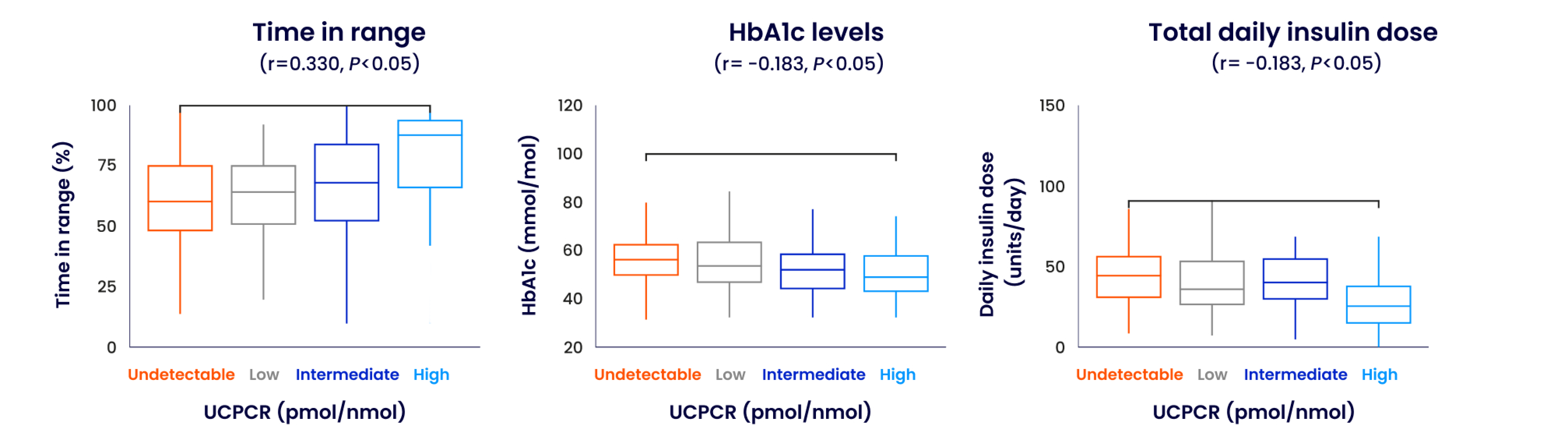
Adapted from Snethlage CMF, et al. 2024.7
There are currently no long-term data on the effect of beta-cell preservation, as measured by C-peptide, in patients with Stage 2 T1D.
Get in Touch with Us
Questions? Leave your details and we'll reach out to you at your preferred time.
Get in touchINDICATION: TZIELD is indicated to delay the onset of Stage 3 T1D in adult and paediatric patients 8 years of age and older with Stage 2 T1D.8
*Cross-sectional cohort study of 489 Dutch adults with autoimmune T1D (median duration 15 years) assessing associations between residual beta cell function (measured by UCPCR), alpha cell function (glucagon/glucose ratio) and CGM metrics, including time in range, variability, and hypoglycaemia. UCPCR values: undetectable: <0.01 nmol/mmol; low: 0.01-0.2 nmol/mmol; intermediate: 0.2-0.6 nmol/mmol; high: >0.6 nmol/mmol.7
CGM, continuous glucose monitor; HbA1c, glycated haemoglobin; T1D, Type 1 diabetes; UCPCR, urinary C-peptide-to-creatinine-ratio.