
Lantus is indicated for the teatment of diabetes mellitus in adults, adolescents and children aged 2 years and above.1
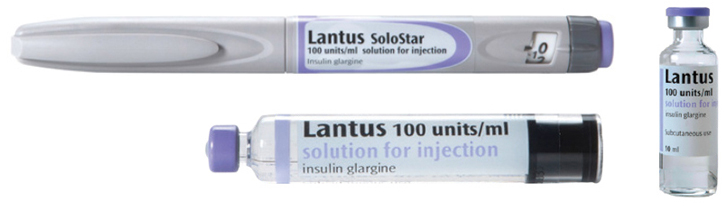
Originally marketed in 2000, Lantus is available in 3 different presentations to suit varying patient needs:1
- a 10ml vial
- cartridge, compatible with the Allstar (full units) Pro and Juniorstar Pro (half-units) device
- pre-filled pen
Switching from different basal insulins to Lantus
Close metabolic monitoring is recommended during the switch and in the initial weeks thereafter, with potential dose adjustments and adjustments required to the patients’ treatment regime.1
From twice daily NPH insulin
To reduce the risk of nocturnal and early morning hypoglycaemia, patients moving to a once daily regimen with Lantus should reduce their daily dose of basal insulin by 20-30% during the first weeks of treatment.1
From Toujeo (insulin glargine 300U/mL)
- Lantus and Toujeo (insulin glargine 300 units/ml) are not bioequivalent and are not directly interchangeable.
- To reduce the risk of hypoglycemia, patients should reduce their dose by approximately 20%.
- During the first weeks the reduction should, at least partially, be compensated by an increase in mealtime insulin, after this period the regimen should be adjusted individually.
Starting patients on Lantus
Lantus should be administered once daily at any time but at the same time each day. The dose regimen (dose and timing) should be individually adjusted.1
For elderly patients, patients with renal or hepatic impairment insulin requirements may be diminished. 1
In patients with type 2 diabetes mellitus, Lantus can also be given together with orally active antidiabetic medicinal products.1

.png)
- Sanofi. Lantus 100 units/mL solution for injection in a pre-filled pen - Summary of Product Characteristics (SmPC) 2021.
MAT-XU-2201444 (v7.0) Date of Preparation: March 2026