- Article
- Source: Campus Sanofi
- 15 Jul 2026
Dupilumab improves clinical outcomes in patients with severe asthma compared to other biologics
Take-home message1: |

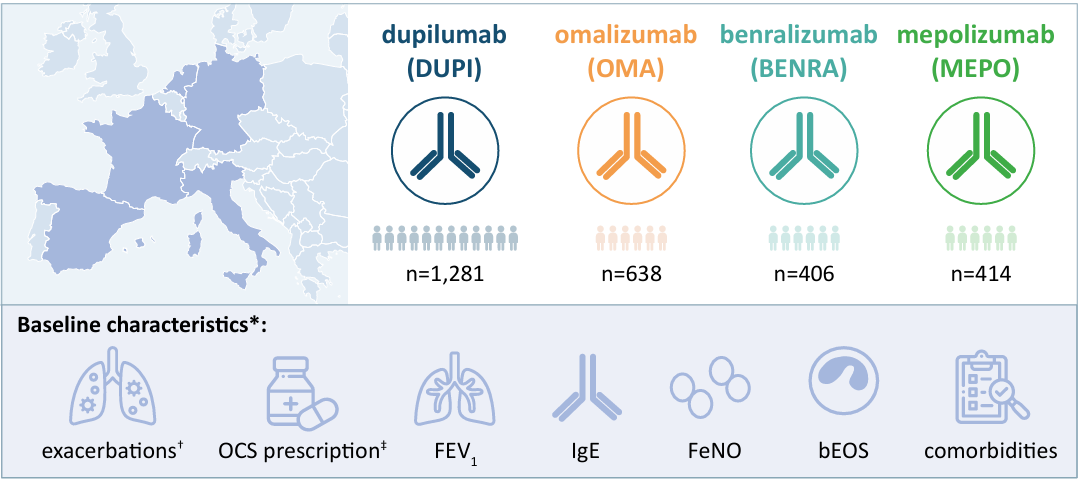
Patient Population1: |
European patients (Netherlands, Germany, France, Italy, Spain) ≥12 years of age with severe asthma and medical records extending 12 months before and after biologic initiation (24-month study period).
Study design1: |
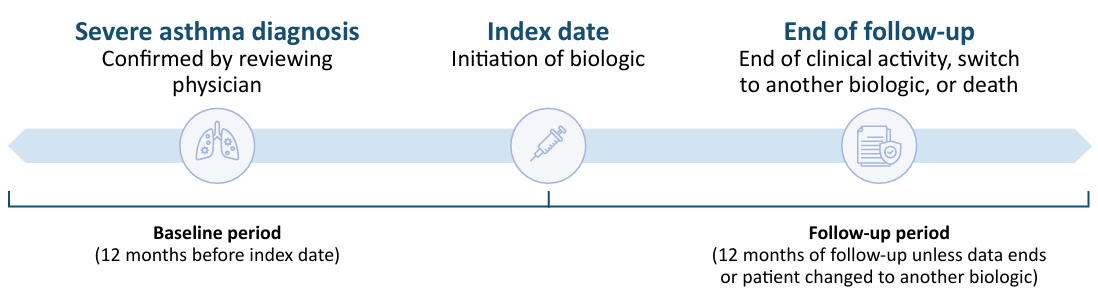
*Differences in baseline covariates were balanced with inverse probability of treatment weighting (IPTW) between dupilumab and other biologics. After IPTW, the differences were balanced (standardized difference <10%) for majority of the baseline covariates between dupilumab and other biologics.†Exacerbation defined as: (i) use of SCS for ≥3 and ≤14 days; or (ii) hospitalization or emergency department visit with asthma as a primary diagnosis; or (iii) asthma exacerbation recorded in the patient record. ‡OCS prescriptions defined as: rate of OCS prescriptions. bEOS, blood eosinophils; FeNO, fractional exhaled nitric oxide; FEV1, forced expiratory volume in 1 second; IgE, immunoglobulin E; OCS, oral corticosteroids; SCS, systemic corticosteroids.
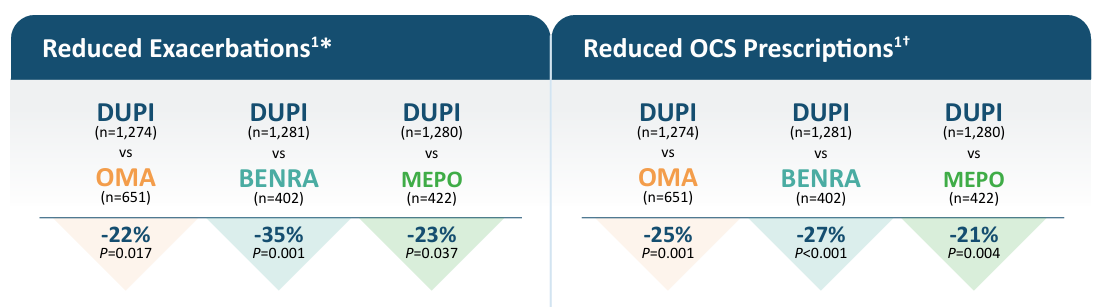
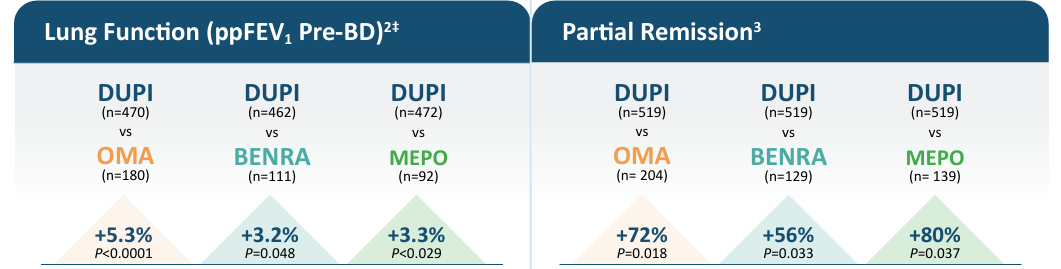
Dupilumab was associated with reduction in asthma exacerbation and OCS prescription and increase lung function compared to omalizumab, benralizumab, and mepolizumab increasing partial remission.

Limitations and Future Directions1: |
- Symptom data is not available to define clinical remission
- Inverse probability treatment weighting was used to reduce confounding factors between groups; however, some confounding factors may still exist
- Tezepelumab is not included because it was not approved during the timeframe of the study, but future comparisons are warranted
*Exacerbation defined as: (i) use of SCS for ≥3 and ≤14 days; or (ii) hospitalization or emergency department visit with asthma as a primary diagnosis; or (iii) asthma exacerbation recorded in the patient record. †OCS prescriptions defined as: rate of OCS prescriptions. ‡This analysis includes pathients who had ≥1 FEV1 measurement in both pre- and post-index periods. §A <5% decrease in pre/post-BD FEV1 from baseline.
BD, bronchodilator; FEV1, forced expiratory volume in 1 second; OCS, oral corticosteroids; ppFEV1, percent predicted FEV1; SA, severe asthma; SCS, systemic corticosteroids.
- Canonica GW, et al. ERJ Open Res 2025;11(4):01217-2024.
- Bourdin A, et al. Poster presented at American Academy of Allergy, Asthma & Immunology/World Allergic Organization Joint Congress; February 28-March 3, 2025; San Diego, California. Poster #715.
- Canonica GW, et al. Presented at European Academy of Allergy & Clinical Immunology; June 13-16, 2025; Glasgow, United Kingdom
MAT-BH-2600308-V1-May2026