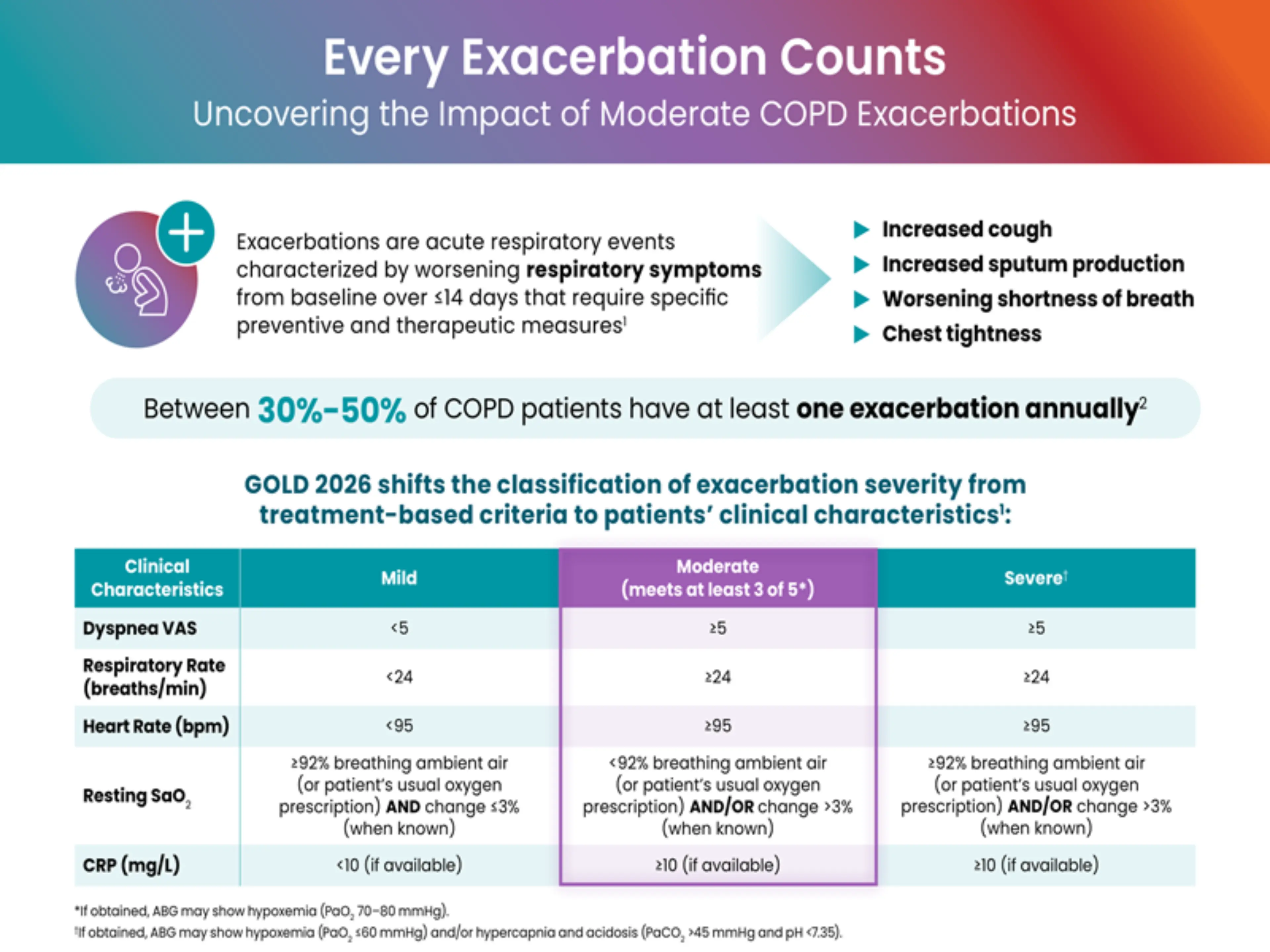
GOLD 2026 Report: Key Updates for COPD Management
What’s New in the GOLD 2026 Report
This website is intended exclusively for healthcare professionals residing and/or working in the UAE.


What’s New in the GOLD 2026 Report

Progression Independent of Relapse Activity (PIRA) represents the gradual, sustained worsening of disability that occurs even without relapses. In this video, Dr. Barry Singer explains how PIRA is defined, why it affects many patients across the MS spectrum, and how clinicians can better detect subtle changes that reflect true long-term progression.

Kaplan–Meier curves play a key role in visualizing how clinical events—such as confirmed disability progression—evolve over time in MS studies. In this video, Dr. Barry Singer provides a clear, simplified walkthrough of how these curves are constructed, how patient data contributes to each step, and what curve separation really tells us about treatment impact. This resource offers an accessible foundation for anyone looking to better understand KM interpretation in MS research.

Respiratory Syncytial Virus (RSV) is a major cause of lower respiratory tract infections in infants and young children. Nirsevimab is a long-acting monoclonal antibody that provides passive immunization against RSV, offering protection throughout the RSV season with a single dose
This video explains WEQAYA's strategy on Nirsevimab Implementation


Spot early signs of Pompe, Gaucher, Fabry, ASMD & MPS I. A Sanofi guide to early diagnosis and timely referrals for rare lysosomal storage disorders.
An evidence-based exploration of the current MS landscape, focusing on the pathophysiology of Progression Independent of Relapse Activity (PIRA). This module examines the clinical significance of disability accumulation and the remaining unmet needs in long-term patient management.