- Article
- Source: Campus Sanofi
- 14 May 2026
Importance of Therapeutic Management of Quality of Life among Patients with Atopic Disorders
Introduction
Atopy or atopic disorders is a predisposition to immunological responses against a wide range of allergens that cause hypersensitivity reactions (1). The most common manifestations of atopy include atopic dermatitis, allergic bronchial asthma, allergic rhinitis, and food allergies (1). The effects of these conditions can range from mild and local responses to life-threatening (e.g., anaphylaxis) (2).
Apart from physical impact, atopic disorders have an established relationship with mental health conditions, causing various burdens such as anxiety, depression, and suicidal intentions (2,3,5). As a result, screening for quality of life (QoL), depression, and psychometric approaches are necessary for effective management of patients (7).
Psychological and social consequences of atopic disorders
Clinical evidence suggests an increasing relationship between atopic disorders and mental health conditions (2). Epidemiological studies have shown associations between atopic disorders such as allergic rhinitis and mood disorders, suicidal ideation, anxiety disorders and urticaria with reduced quality of life, depression and anxiety (2). Comparison between the risk of mental ill-health in patients with atopic disorders and those without shows that the former had 43% more risk of subsequent mental health diagnosis, including OCD, anxiety, or depression, compared to the latter (2). A glimpse of the impact of atopic disorders on mental health among patients is shown in the figure below.
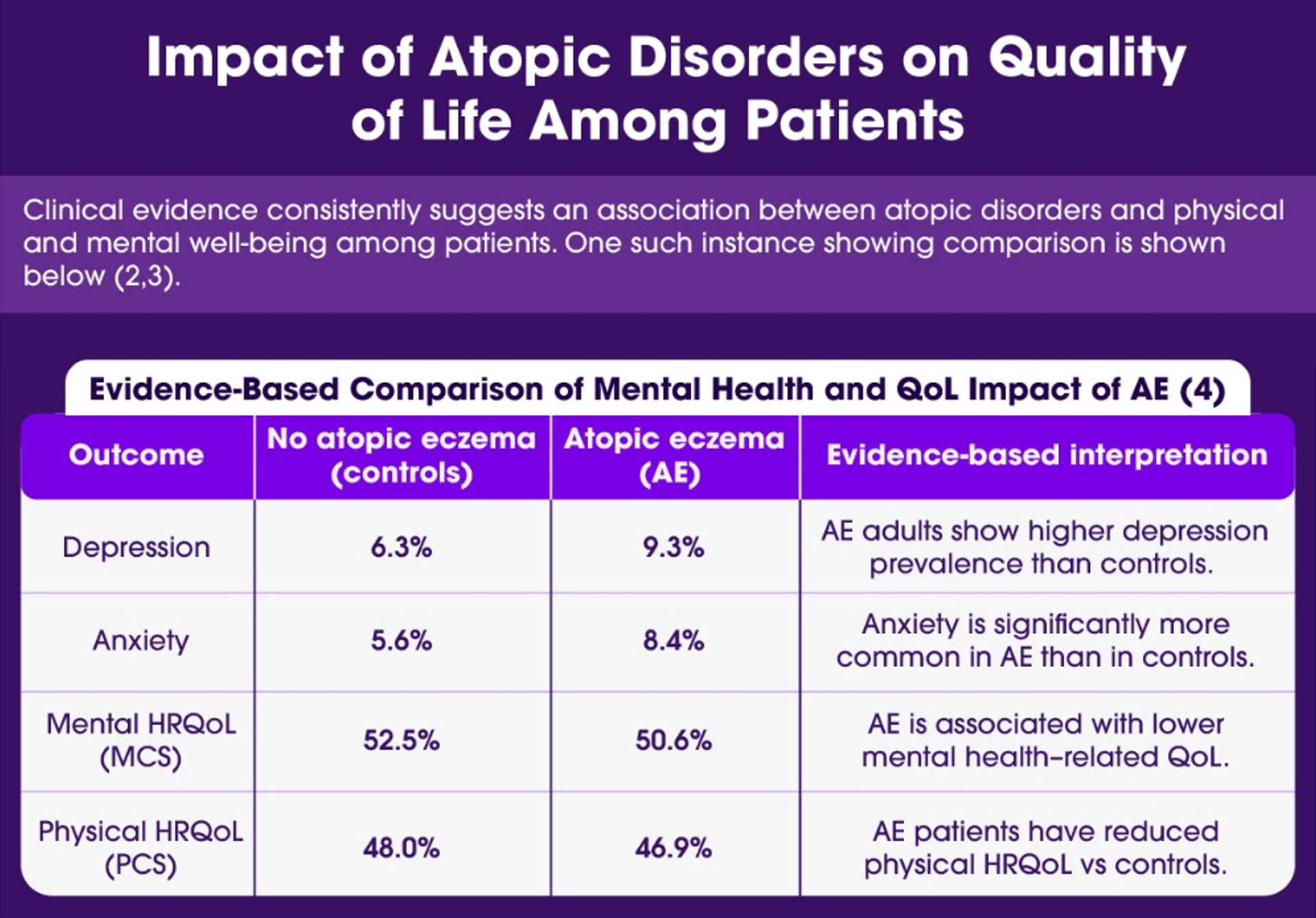
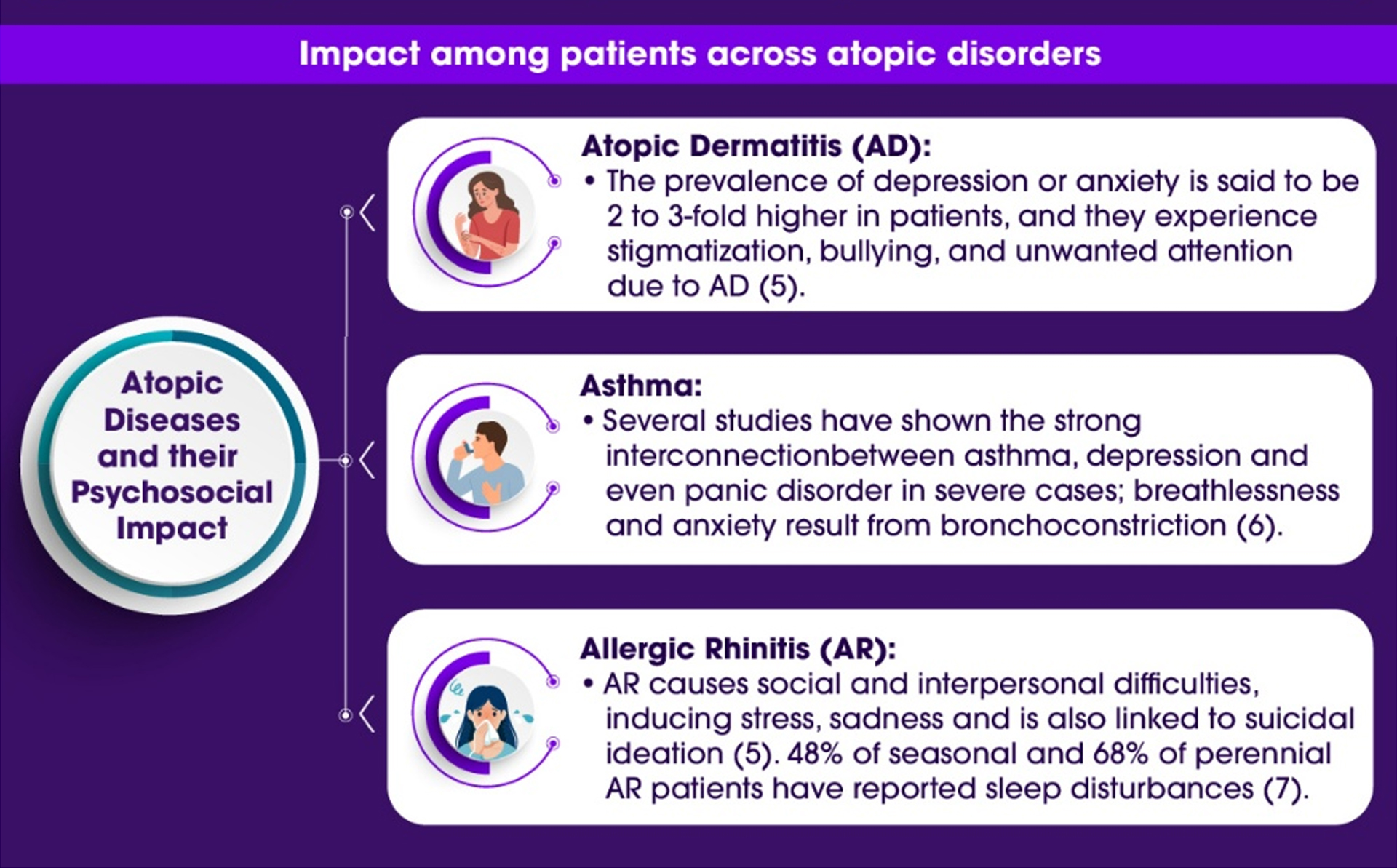
Figure 1: The psychological and social impact of atopic disorders (2-7).
(Abbreviations: QoL: Quality of life, AE: Atopic eczema, HRQoL: Health-related quality of life, MCS:
Mental component score, PCS: Physical component score.)
Age-based impact of atopic disorders
Besides disease severity, patients’ age is also an important factor affecting the QoL of children with atopic disorders, and the treatment and counselling should be tailored specifically to their age (8). Overall, QoL varies by age, with the impact increasing with an increase in age of the patients with atopic disorders (8,9). The varied impact of atopic disorders on quality of life across age groups is illustrated in the figure below.
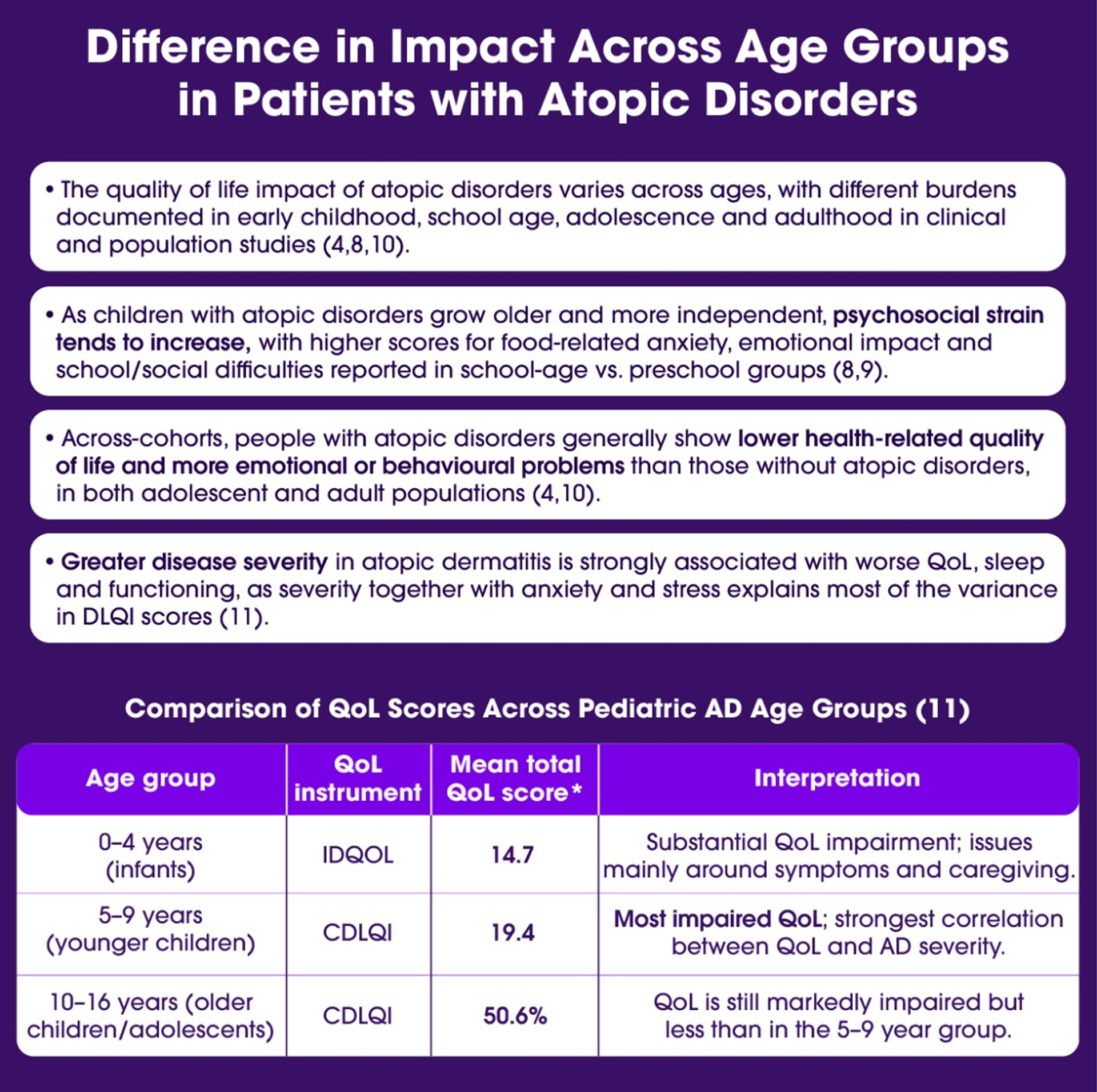
Figure 2: Age-based difference in impact on quality of life in atopic disorders (4,8-11).
(Abbreviations: QoL: Quality of life, DLQI: Dermatology Life Quality Index, AD: Atopic disorder, IDQOL:
Infant’s Dermatitis Quality of Life Index, CDLQI: Children’s Dermatology Life Quality Index)
Addressing mental health and quality of life in patients with atopic disorders
Due to increased mental ill health disorders among patients with the diagnosis of allergic or atopic disorders, there is a need to consider integrated delivery of allergy and psychology services to optimize the well-being of these patients (2). Screening and assessment for QoL and depression in patients cannot be neglected, and psychometric approaches should be considered for treatment, as shown in the image (13). Simple strategies to address the mental health impact among patients are presented below.
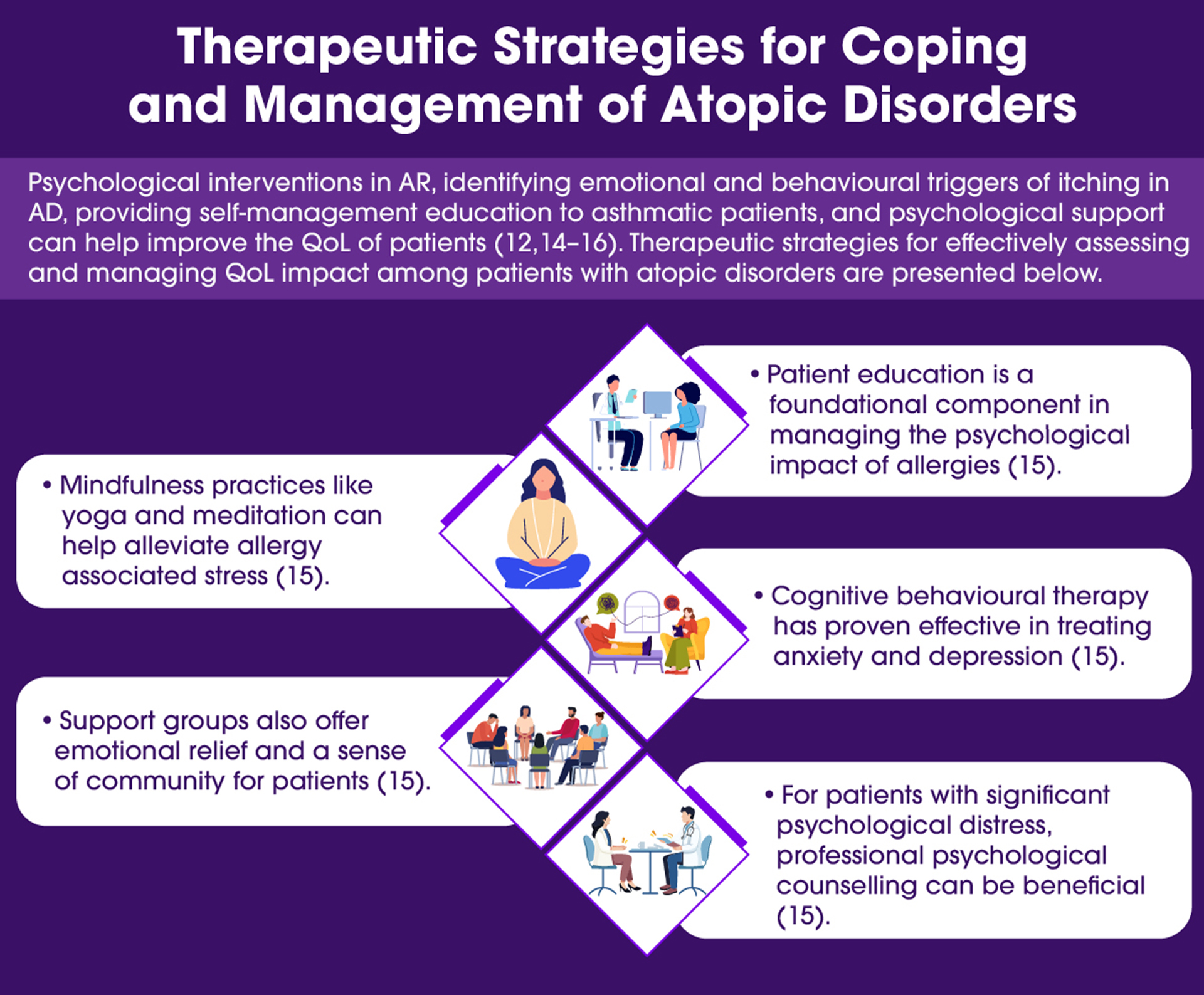
Figure 3: Coping with atopy through various strategies (12, 14-16).
(Abbreviations: AR: Allergic rhinitis, AD: Atopic dermatitis, QoL: Quality of life)
Key takeaways
- The most common atopic disorders, including asthma, atopic dermatitis, allergic rhinitis, etc., have a significant impact on quality of life among patients (1–3,5).
- Health-related QoL varies across patients’ age, with studies showing higher scores for food-related anxiety, emotional impact and social difficulties (8,9).
- Assessment of QoL and other parameters, as well as other strategies like patient education, mindfulness, support groups and psychotherapy, should be considered as a part of patient management (13,15).
1. Justiz Vaillant AA, Modi P, Syed HA, Jan A. Atopy. In: StatPearls [Internet]. Treasure Island (FL): StatPearls Publishing; 2025 [cited 2025 Dec 18]. Available from: http://www.ncbi.nlm.nih.gov/books/NBK542187/
2. Minhas S, Chandan JS, Knibb R, Diwakar L, Adderley N. Association between atopic disorders and mental ill health: a UK-based retrospective cohort study. BMJ Open. 2025 May 31;15(5):e089181.
3. Flinn C, McInerney A, Nearchou F. The prevalence of comorbid mental health difficulties in young people with chronic skin conditions: A systematic review and meta-analysis. J Health Psychol. 2025 Mar;30(4):652–79.
4. Treudler R, Zeynalova S, Riedel‐Heller SG, Zuelke AE, Roehr S, Hinz A, et al. Depression, anxiety and quality of life in subjects with atopic eczema in a population‐based cross‐sectional study in Germany. Acad Dermatol Venereol. 2020 Apr;34(4):810–6.
5. LeBovidge JS, Schneider LC. Depression and anxiety in patients with atopic dermatitis. Annals of Allergy, Asthma & Immunology. 2025 May;134(5):506–15.
6. Freitas J, Novais F. Review on the relationship of asthma and mental disorders. Personalized Medicine in Psychiatry. 2025 Jul;51–52:100157.
7. Amritwar AU, Lowry CA, Brenner LA, Hoisington AJ, Hamilton R, Stiller JW, et al. Mental Health in Allergic Rhinitis: Depression and Suicidal Behavior. Curr Treat Options Allergy. 2017 Mar;4(1):71–97.
8. Ražnatović Đurović M, Janković J, Tomić Spirić V, Relić M, Sojević Timotijević Z, Ćirković A, et al. Does age influence the quality of life in children with atopic dermatitis? Barac A, editor. PLoS ONE. 2019 Nov 14;14(11):e0224618.
9. Thörnqvist V, Middelveld R, Wai HM, Ballardini N, Nilsson E, Strömquist J, et al. Health-related quality of life worsens by school age amongst children with food allergy. Clin Transl Allergy. 2019 Dec;9(1):10.
10. Matterne U, Apfelbacher C. Is the impact of atopic disease on children and adolescents’ health related quality of life modified by mental health? Results from a population-based cross-sectional study. Health Qual Life Outcomes. 2013;11(1):115.
11. Xu X, Van Galen LS, Koh MJA, Bajpai R, Thng S, Yew YW, et al. Factors influencing quality of life in children with atopic dermatitis and their caregivers: a cross-sectional study. Sci Rep. 2019 Nov 5;9(1):15990.
12. Mou YK, Wang HR, Zhang WB, Zhang Y, Ren C, Song XC. Allergic Rhinitis and Depression: Profile and Proposal. Front Psychiatry [Internet]. 2022 Jan 4 [cited 2025 Dec 18];12. Available from: https://www.frontiersin.org/journals/psychiatry/articles/10.3389/fpsyt.2021.820497/full
13. Talamonti M, Galluzzo M, Silvaggio D, Lombardo P, Tartaglia C, Bianchi L. Quality of Life and Psychological Impact in Patients with Atopic Dermatitis. J Clin Med. 2021 Mar 21;10(6):1298.
14. LeBovidge JS, Elverson W, Timmons KG, Hawryluk EB, Rea C, Lee M, et al. Multidisciplinary interventions in the management of atopic dermatitis. Journal of Allergy and Clinical Immunology. 2016 Aug;138(2):325–34.
15. Danny S. Psychological Approaches to Allergy Treatment and Support.
16. Papanikolaou G. Thomai Prapa, Konstantinos Porpodis, Evangelia Fouka, Kalliopi Domvri, Pavlos Zarogoulidis, Georgia Chasapidou, Konstantinos Zarogoulidis, Despoina Papakosta.
MAT-BH-2600013/V1/Jan-2026