


Recommendation 5
- For patients with aTTP experiencing an acute event (first event or relapse), the panel suggests using CABLIVI over not using CABLIVI (a conditional recommendation in the context of moderate certainty evidence)

Recommendation informed by data of moderate certainty, based on randomized controlled trials
- The panel also believed that the greatest benefit of CABLIVI is accrued if it is started in the early phase of an acute TTP event (ie, at the time when a diagnosis is confirmed)
- Use of CABLIVI depends on the accessibility of clinicians to timely* and reliable ADAMTS13 testing (either for the initiation of therapy or for confirming the diagnosis if therapy has been started)
- When treating physicians are considering CABLIVI, they should consider administration of the drug before the results of ADAMTS13 activity become available. The panel noted this raises the possibility of overuse in patients who do not actually have aTTP
*The panel considered ADAMTS13 activity test with results available in less than 72 hours to be ideal and the results available between 72 hours and 7 days as being acceptable.
ADAMTS13=a disintegrin and metalloproteinase with a thrombospondin type 1 motif, 13.
Protection from day 1: CABLIVI is the first and only vWF-targeted therapy to prevent microthrombi in aTTP10,17,18
CABLIVI is indicated for the treatment of adults and adolescents of 12 years of age and older weighing at least 40 kg experiencing an episode of aTTP, in conjunction with PEX and immunosuppression.17
The triple threat of aTTP deserves a triple therapy regimen with CABLIVI, PEX, and immunosuppression11,17,19-24
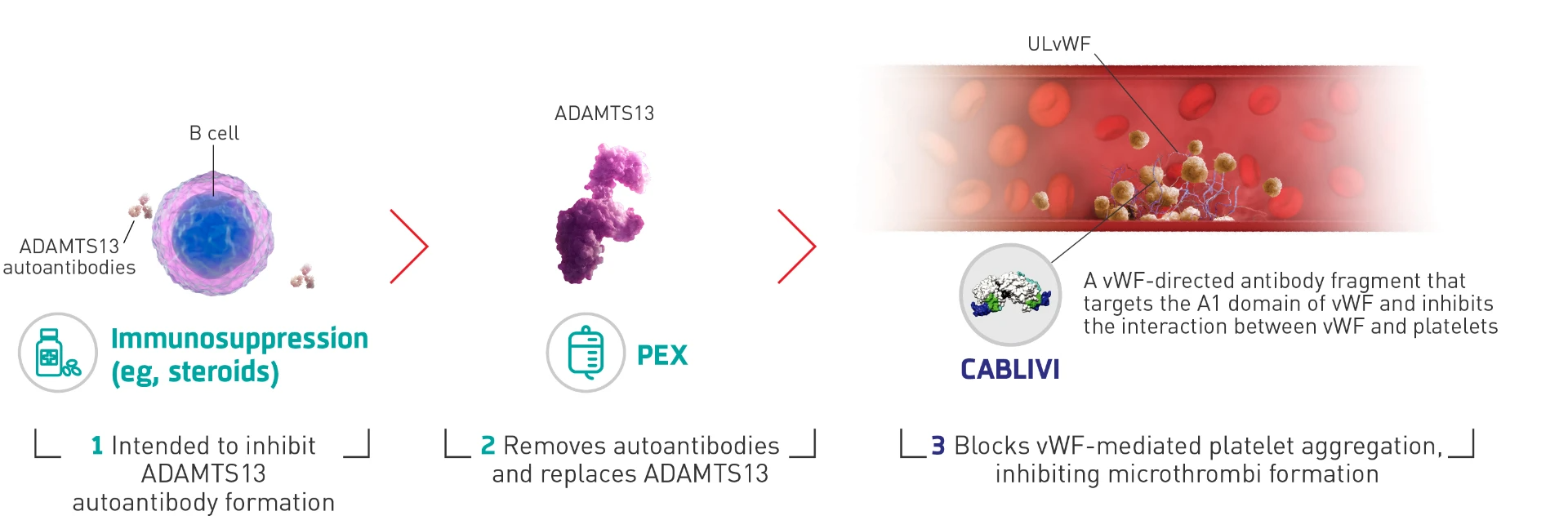
CABLIVI rapidly neutralizes vWF within 24 hours, suppressing platelet adhesion from day 1 and throughout treatment10,17,18
ADAMTS13=a disintegrin and metalloproteinase with a thrombospondin type 1 motif, 13; ULvWF=ultra-large von Willebrand factor; vWF=von Willebrand factor.
CABLIVI efficacy: time to platelet count response
HERCULES11,17
| CABLIVI
(n=72) | Placebo
(n=73) | Patients treated with CABLIVI were 1.55
times more likely to achieve platelet count response at any given time compared with placebo (P<0.01) |
| HR, 1.55 (95% Cl, 1.09-2.19) | ||
Time to platelet count normalization: Defined as the time from the first intravenous administration of CABLIVI
or placebo to normalization of the platelet count (≥150 × 109/L), with discontinuation of daily PEX within 5 days.
INTEGRATED ANALYSIS10,25
| CABLIVI
(n=108) | Placebo
(n=112) | CABLIVI significantly reduced time to platelet normalization) (P=0.001) |
| HR, 1.65 (95% Cl, 1.24-2.20) | ||
Time to platelet count normalization: Defined as a platelet count that was ≥150 × 109/L.
CNR-MAT REGISTRY STUDY2
| Triplet Regimen
(n=90) | Historical cohort
(n=180) | Durable platelet count recovery with CABLIVI 1.8 times as fast (P<0.01) |
| 5 days (4-6) | 12 days (6-17) |
Time to durable platelet count recovery: Recovery of normal platelet count (≥150 × 103/mm3) for at least 2 days.
CABLIVI achieves normal platelet count significantly faster than PEX and immunosuppression alone, reducing the risk of microthrombi formation and subsequent thrombotic complications, until PEX and immunosuppression take effect11
CNR-MAT=French Reference Centre for Thrombotic Microangiopathies; HR=hazard ratio; LDH=lactate dehydrogenase; ULN=upper limit of normal.
SPANISH3
| CABLIVI first-line
(n=44) | CABLIVI after exacerbation or relapse
(n=33) | Patients achieved faster platelet normalization with CABLIVI
(P<0.01) |
| 5 days | 15 days |
Time to platelet count normalization: Defined as the time from the first PEX to the first day with a platelet count ≥150 × 109/L.
REACT-20204,8,9
| CABLIVI first-line
(n=113) | CABLIVI non-first-line use
(n=119) | CABLIVI first-line use led to robust and significantly faster time to platelet count normalization after diagnosis
(P<0.05) |
| 5 days | 20 days |
Time to platelet count normalization: Defined as the first day with a platelet count ≥150 × 109/L.
AGGREGATED ANALYSIS2,4,10-12
| CABLIVI
(n=396) | Non-CABLIVI
(n=450) | CABLIVI decreased the time to final platelet count normalization across all cohorts where
CABLIVI was initiated first line (within 72 hours after diagnosis) |
Time to platelet count normalization: Definitions and calculation differed in the cohorts. HERCULES: Platelet count normalization was defined as initial platelet count ≥150 × 109/L with subsequent stop of daily PEX within 5 days; CNR-MAT Registry: Durable platelet count recovery was defined as recovery of normal platelet count (≥150 × 103/mm3) for at least 2 days; UK RWE: In line with HERCULES definition.
CABLIVI achieves normal platelet count significantly faster than PEX and immunosuppression alone, reducing the risk of microthrombi formation and subsequent thrombotic complications, until PEX and immunosuppression take effect11
CNR-MAT=French Reference Centre for Thrombotic Microangiopathies; RWE=real-world evidence; UK=United Kingdom
Patients achieved normal platelet count significantly faster with CABLIVI, in conjunction with PEX and immunosuppression9,26
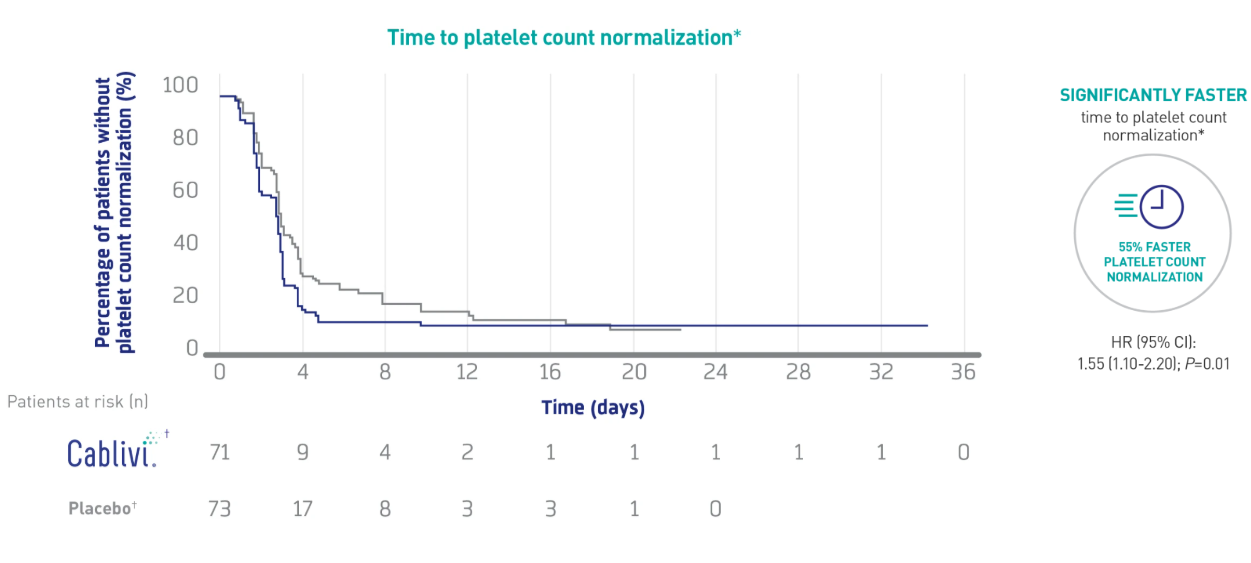
Treatment with CABLIVI, in conjunction with PEX and immunosuppression, resulted in a statistically significant reduction in time to platelet count response (P=0.01). Patients treated with CABLIVI were 55% more likely to achieve platelet count normalization at any given time point compared with patients treated with placebo9
*Platelet count normalization was defined as platelet count ≥150,000/μL with discontinuation of daily PEX 5 days thereafter.
† In conjunction with PEX and immunosuppression.
HR=hazard ratio.
Patient outcomes2
In this French RWE study, the first-line triplet regimen of PEX, immunosuppression (corticosteroids and rituximab*), and CABLIVI compared with the historical cohort demonstrated:
Durable platelet recovery
1.8 times as fast with CABLIVI vs historical cohort (5 days vs 12 days; P<0.01)
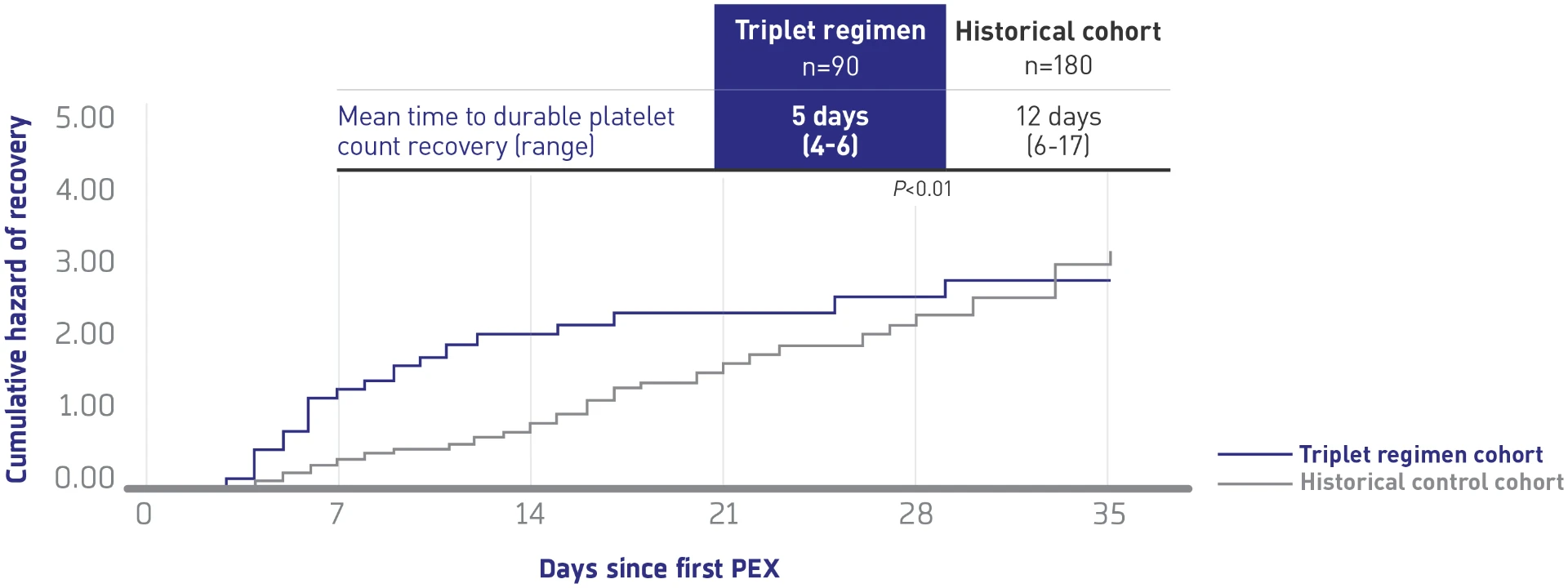
*Rituximab is not approved by most regulatory agencies worldwide for the treatment of aTTP (approved in Japan, 2020).6,7
† Durable platelet count recovery defined as complete response with no further thrombocytopenia, renal failure, or clinical worsening for more than 30 consecutive days from the first day of platelet count recovery.
aTTP=acquired thrombotic thrombocytopenic purpura; PEX=plasma exchange; RWE=real-world evidence.
Patient outcomes3
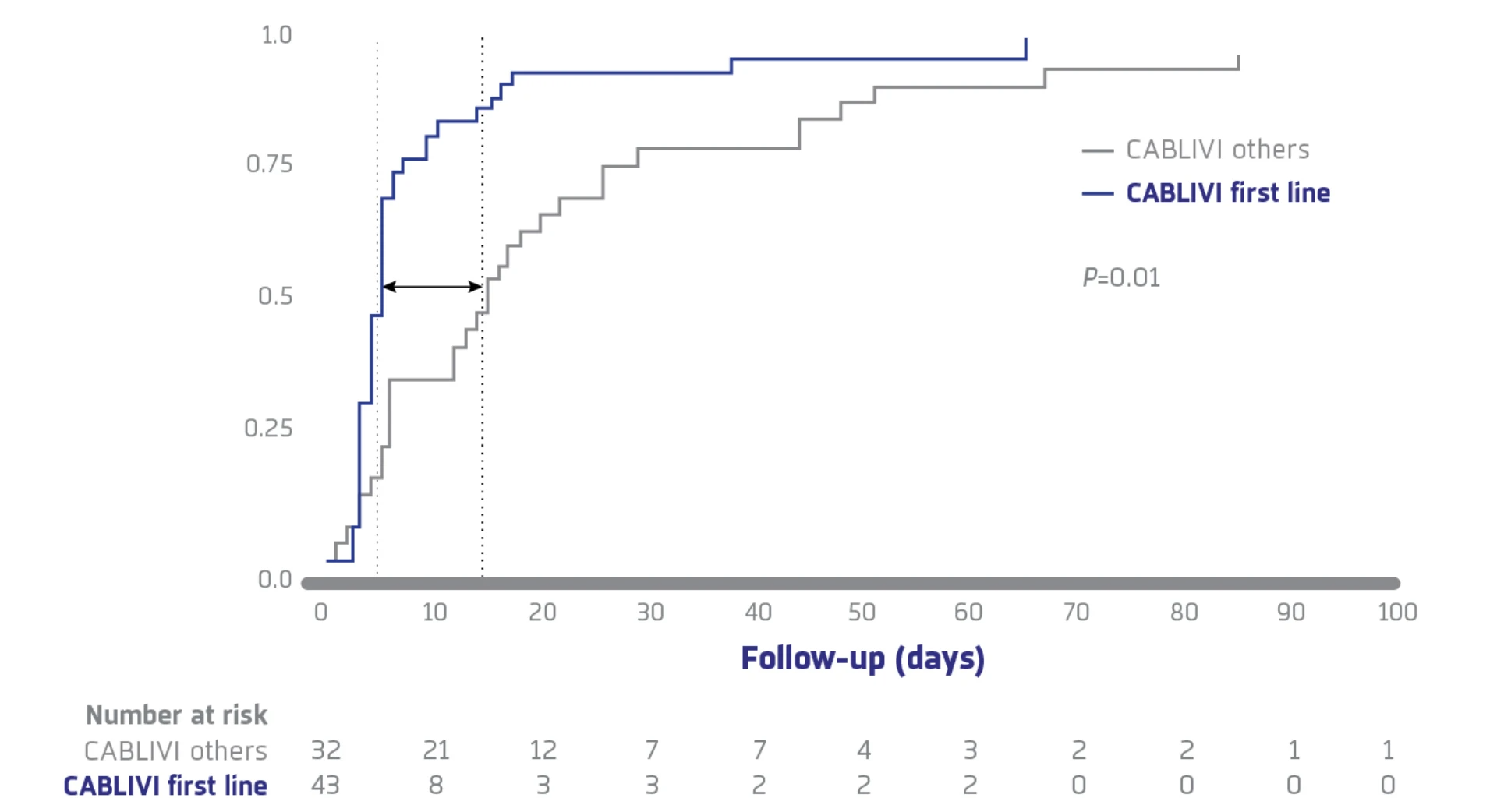
In this Spanish RWE study, CABLIVI use vs non-CABLIVI use showed:
Patients achieved faster platelet normalization* with CABLIVI
- 8.5 days with CABLIVI + PEX + immunosuppression as initial treatment† vs 14 days with PEX + immunosuppression alone (P=0.009)
- 5 days with CABLIVI + PEX + immunosuppression as initial treatment vs 15 days with CABLIVI + PEX + immunosuppression after exacerbation or refractoriness‡ (P<0.01; HR: 2.30; 95% CI: 1.41-3.76)
- 14 days with CABLIVI + PEX + rituximab vs 24 days with PEX + rituximab alone (P<0.001; HR: 1.96; 95% CI: 1.29-2.99)
Time to platelet count ≥150 × 109/L
Patients treated with CABLIVI as initial treatment† (N=43) vs
CABLIVI used in refractoriness or exacerbation‡ (N=32)
Patients treated with PEX + rituximab, with or without CABLIVI (N=111)
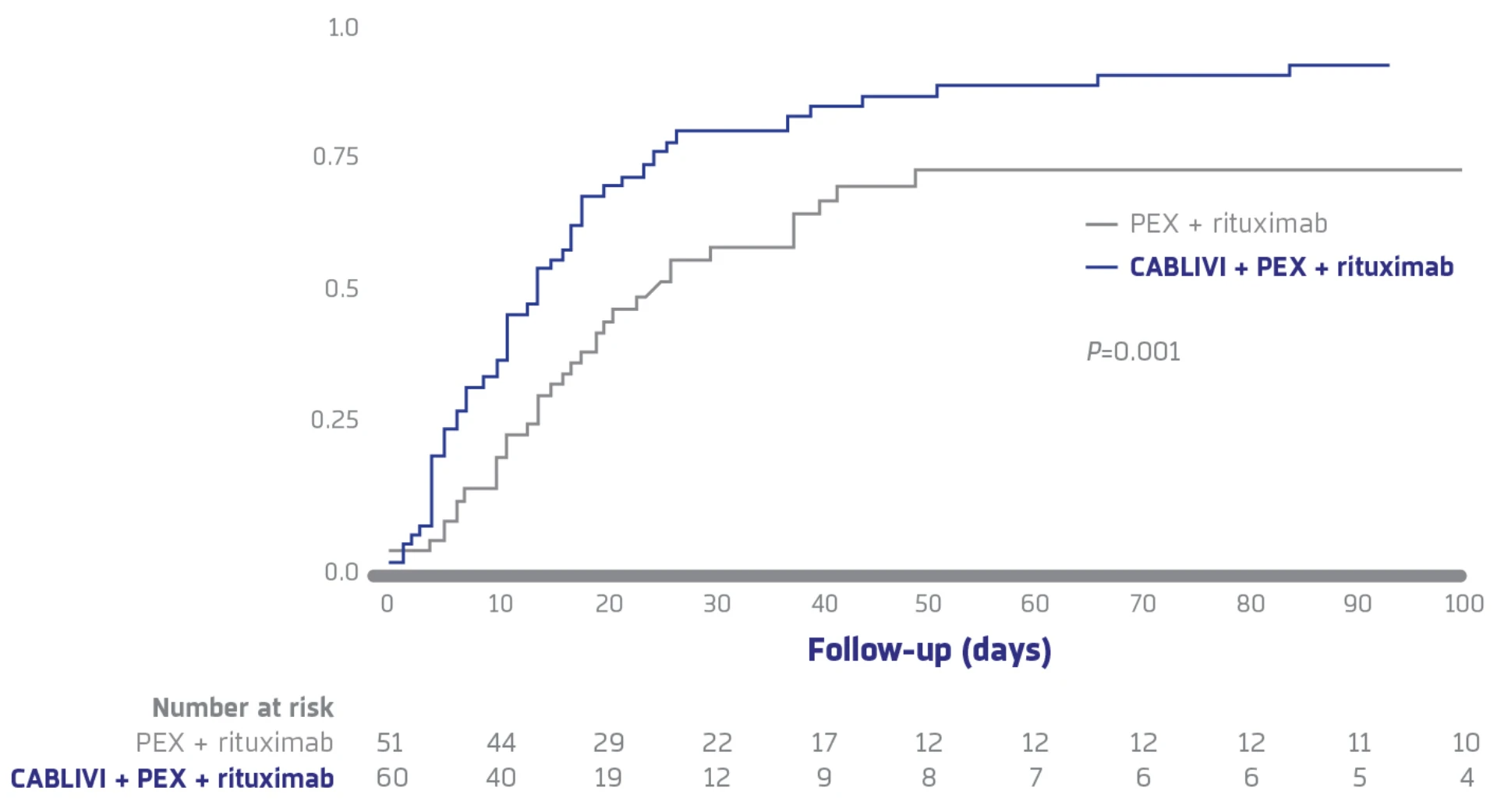
*Time to normalization of platelet count was defined as the time from the first PEX to the first day with a platelet count ≥150 × 109/L.
† The expression “initial treatment” is used to indicate the intention to use a drug or therapy from the beginning of treatment, although due to the procedures required to obtain the medication it could be delayed for several days.
‡All patients received PEX and corticosteroids.
HR=hazard ratio; PEX=plasma exchange; RWE=real-world evidence.
REACT-2020: Patient outcomes4
In this retrospective observational study, episodes treated with CABLIVI compared with historical cohorts showed:
CABLIVI first-line use led to robust and significantly faster time to platelet count normalization*
after diagnosis (median 5 days vs 20 days; P<0.05), mirroring results from clinical trials
Time to initial platelet normalization after CABLIVI
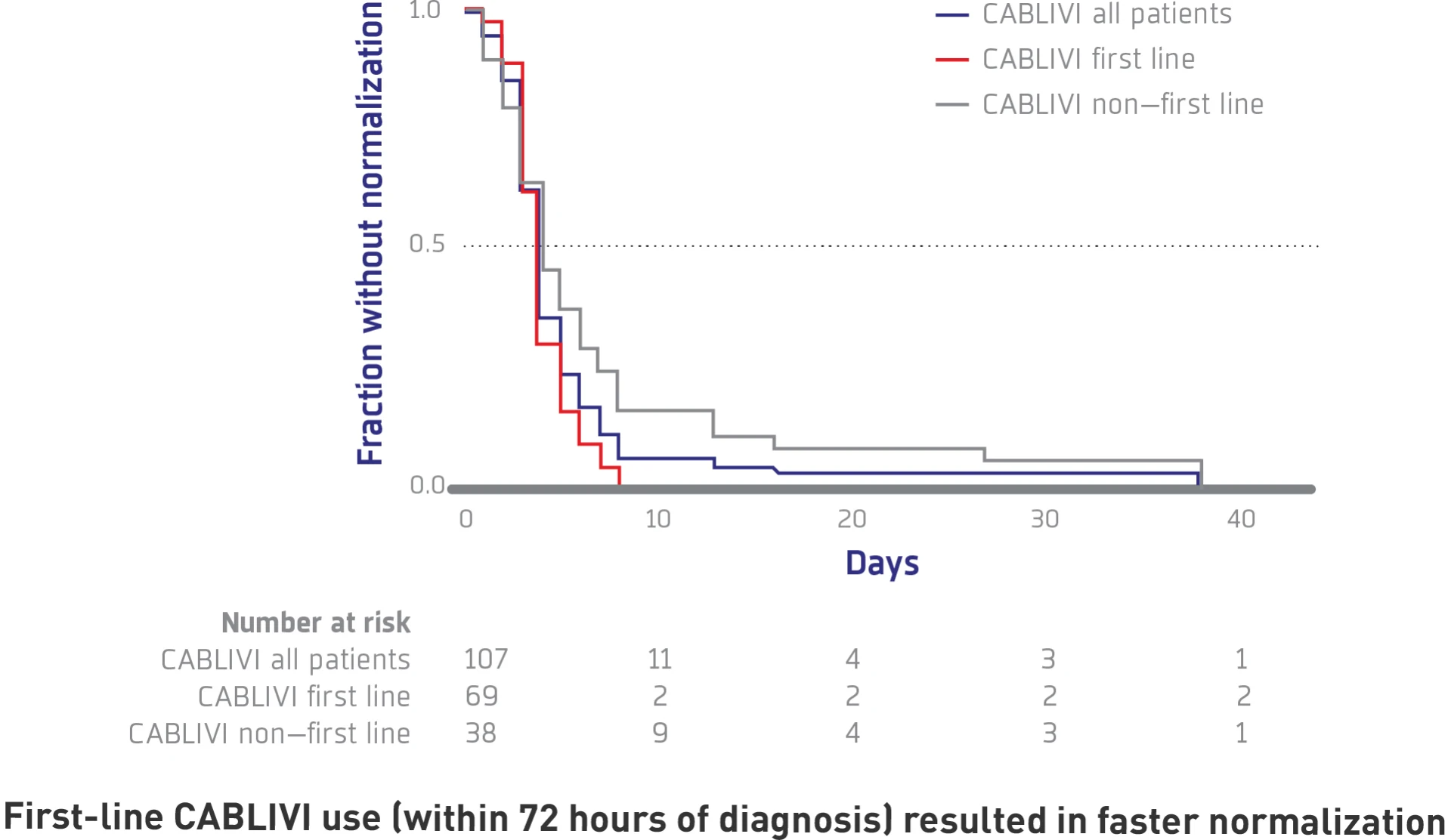
*Platelet normalization is defined as platelet levels ≥150 × 109/L.4,8,9
† Premature discontinuation included discontinuing CABLIVI driven by restored platelet count or prior to achieving ADAMTS13 remission or ADAMTS13 activity >10%. Premature discontinuation led to a significant increase in exacerbations.
ADAMTS13=a disintegrin and metalloproteinase with a thrombospondin type 1 motif, 13.
Aggregated analysis: Patient outcomes2,4,10
In this aggregated analysis, CABLIVI use compared with non-CABLIVI use showed:
CABLIVI decreased the time to final platelet count normalization* across all cohorts where CABLIVI was initiated first line (within 72 hours after diagnosis)
Comparison of relative reduction of time to final platelet count normalization
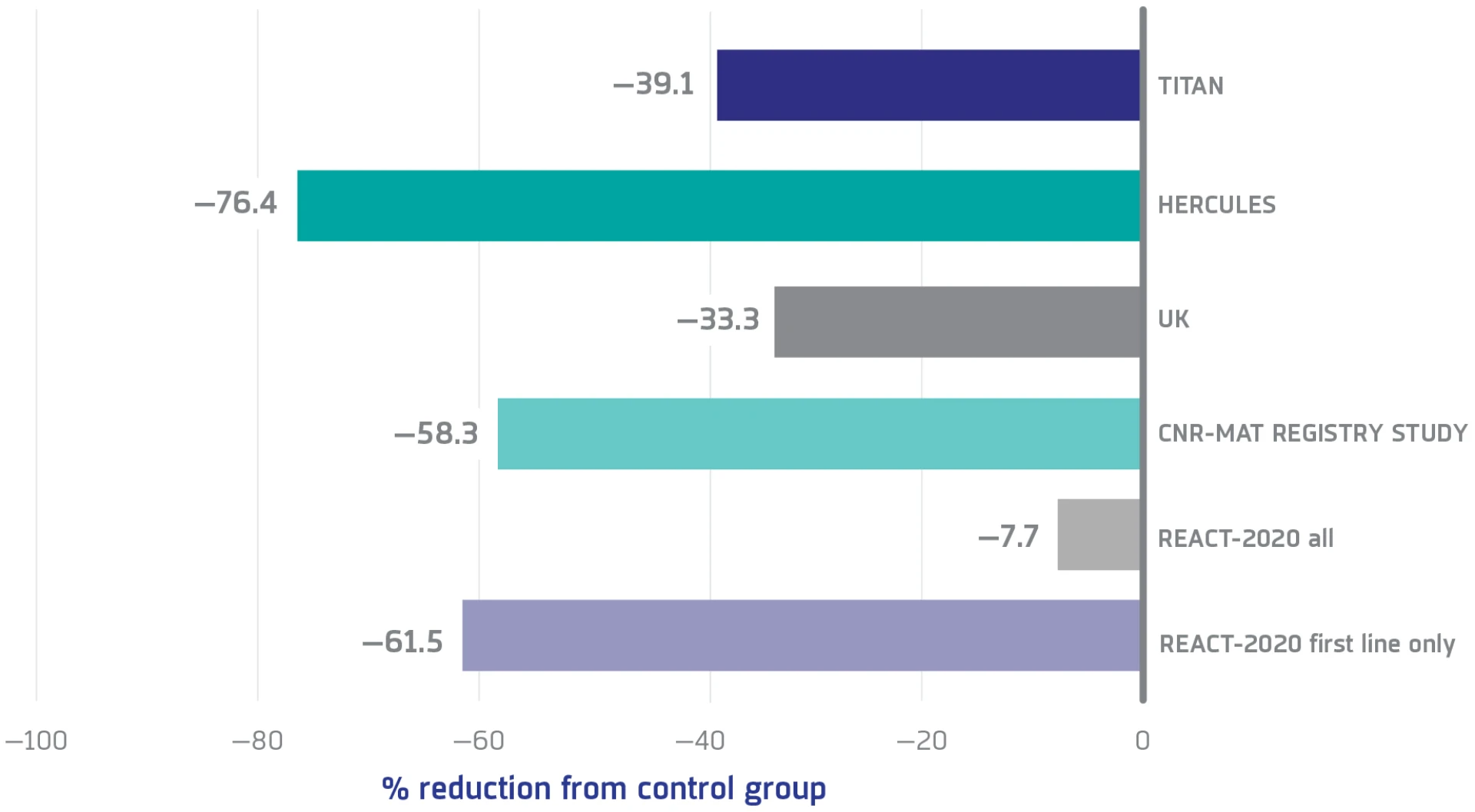
* The definitions and calculation for platelet count normalization differed in the cohorts. HERCULES: Platelet count normalization was defined as initial platelet count ≥150 × 109/L with subsequent stop of daily PEX within 5 days; CNR-MAT Registry: Durable platelet count recovery was defined as recovery of normal platelet count (≥150 × 103/mm3) for at least 2 days; TITAN: Time to platelet count normalization was defined as repeat of platelet count ≥150 × 109/L at 48 hours and LDH that was ≤2 × ULN; UK RWE: In line with HERCULES definition.2,4,10-12
CNR-MAT=French Reference Centre for Thrombotic Microangiopathies; LDH=lactate dehydrogenase; RWE=real-world evidence; UK=United Kingdom; ULN=upper limit of normal.