

Real-world evidence: Post-HERCULES study27
Learn about this multicenter, multinational, prospective study:
Study Design
Evaluation of long-term safety and efficacy of CABLIVI
Evaluation of safety and efficacy of repeated use of CABLIVI in patients with recurrence of aTTP

Data from the post-HERCULES study support the long-term safety and efficacy of CABLIVI, including its repeated use for aTTP recurrence

The long-term safety profile of patients exposed to CABLIVI + PEX + immunosuppression was similar to those who received placebo + PEX + immunosuppression in HERCULES

There were no observed increases in relapse or exacerbation of aTTP with CABLIVI + PEX + immunosuppression vs placebo + PEX + immunosuppression

Repeat CABLIVI use was efficacious and was not associated with new safety findings
Study Design27
-
Post-HERCULES was a multicenter, multinational, prospective study
-
Patients with aTTP who completed the Phase 3 HERCULES trial were invited to attend twice-yearly visits for 3 years
-
In case of aTTP exacerbation or relapse (recurrence) during post-HERCULES, patients could receive open-label CABLIVI with PEX and immunosuppression
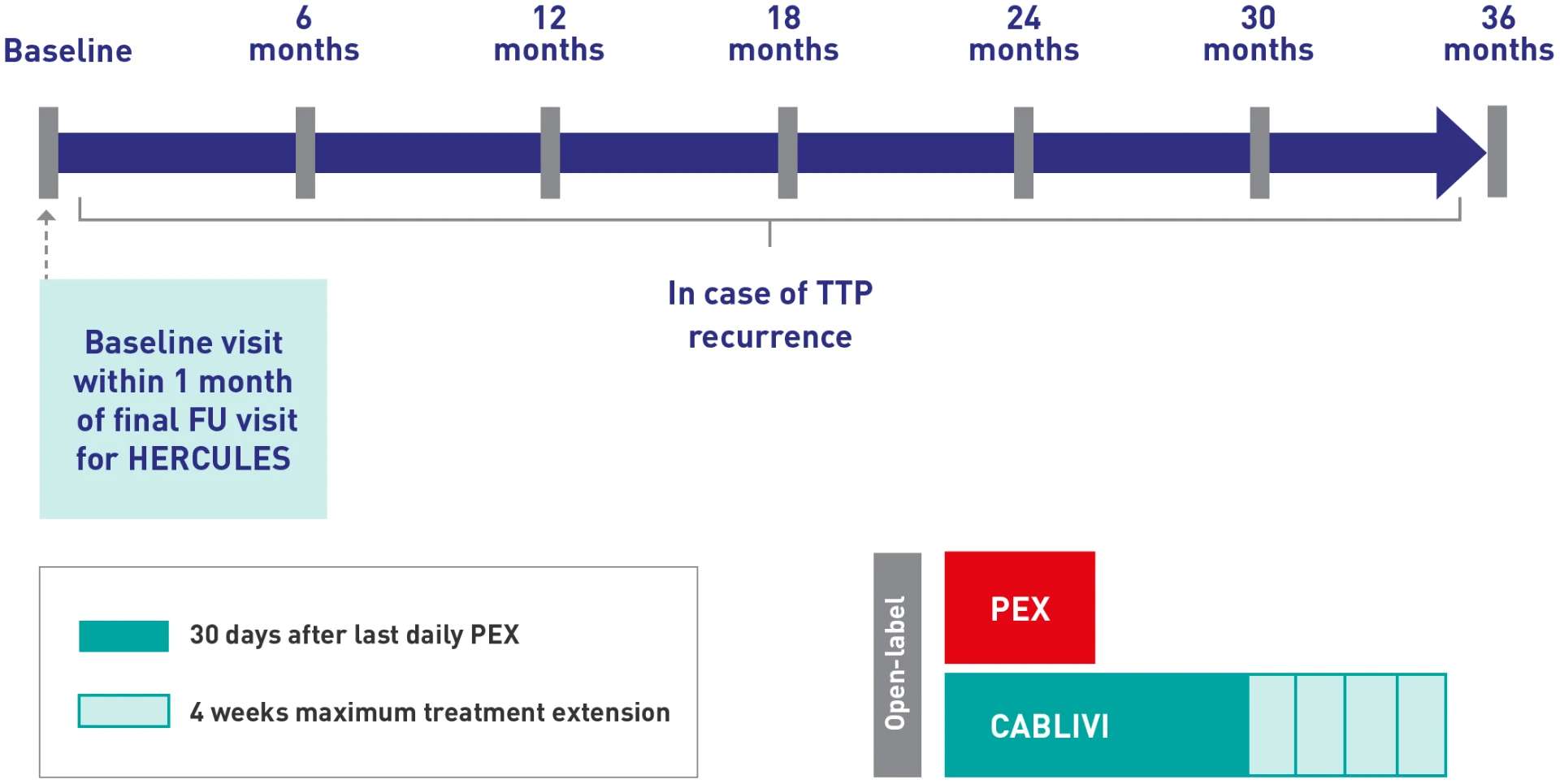
FU=follow-up.
Endpoints and definitions27
| Populations | Key Endpoints |
| Overall ITO population (n=104): All enrolled patients in post-HERCULES |
|
| Efficacy ITO population (n=78): Patients in the ITO population without aTTP recurrence (exacerbation or relapse) in HERCULES or prior to the beginning of post-HERCULES | TTP-related events (recurrence, mortality, thromboembolic events) |
| Recurrence population (n=19): Patients in the ITO population with ≥1 recurrence in post-HERCULES |
|
|
Repeat use population (n=9): Patients treated at least twice with CABLIVI because they:
| AEs during recurrences |
Definitions
- Recurrence: recurrent thrombocytopenia requiring initiation of PEX
- Exacerbation: recurrence <30 days after the last PEX
- Relapse: recurrence ≥30 days after the last PEX
- All exacerbations or relapses were captured in the safety database under the term “recurrences”
- Outcomes defined prior to publication of the International Working Group 2021 consensus report1
AE=adverse event; ICU=intensive care unit; ITO=intent to observe.
Patient disposition and demographics27
.2025-05-13-12-39-43.png)
Analysis groups
CABLIVI-treated group: Treated with CABLIVI + PEX + IS during HERCULES
Placebo-treated group: Treated with PEX + IS only during HERCULES
.2025-05-13-12-39-43.png)
Baseline demographics
CABLIVI-treated group
Median age: 45 years (range: 23–77)
Female: 51/75 patients (68%)
Placebo-treated group
Median age: 48 years (range: 23–80)
Female: 23/29 patients (79%)
.2025-05-13-12-39-43.png)
Median follow-up
CABLIVI-treated group: 1099 days
Placebo-treated group: 1097 days
| Overall ITO population, n(%) | CABLIVI-treated group
(n=75) | Placebo-treated group
(n=29) |
| ≥1 recurrence during post-HERCULES* | 11 (15) | 8 (28) |
| Treated with CABLIVI + PEX + IS | 8 (11) | 5 (17) |
| Not treated with CABLIVI + PEX +IS† | 3 (4) | 3 (10) |
| Completed post-HERCULES | 70 (93) | 23 (79) |
| Reasons for discontinuation of post-HERCULES | ||
| Lost to follow-up | 1 (1) | 4 (14) |
| Withdrawal by subject | 1 (1) | 1 (3) |
| Death | 0 | 1 (3) |
| Physician's decision | 3 (4) | 0 |
* All recurrences in the overall ITO population were relapses except in 2 patients.
† Of the 6 patients who did not receive CABLIVI for recurrence during post-HERCULES (all relapses except for 1 patient with multiple exacerbations), 2 discontinued the study upon the recurrence event. Reasons for not receiving CABLIVI: pregnancy, investigator’s decision, patient withdrawal due to neurological deterioration on commencing PEX and transferred to palliative care, and receiving more than 1 PEX before initiation of CABLIVI at recurrence.
IS=immunosuppression; ITO=intent to observe.
Long-term safety of CABLIVI27
| Overall ITO population, n (%) | CABLIVI-treated group
(n=75) | Placebo-treated group
(n=29) |
|
≥1 AE | 68 (91) | 26 (90) |
| AE reported in ≥15% in either group (PT) | ||
| Headache | 16 (21) | 9 (31) |
| TTP | 11 (15) | 8 (28) |
| Nasopharyngitis | 6 (8) | 6 (21) |
| ≥1 SAE | 28 (37) | 16 (55) |
| ≥1 bleeding event* | 16 (21) | 9 (31) |
| ≥1 AE leading to death | 0 (0) | 1 (3) |
| ≥1 thromboempolic event | 2 (3) | 3 (10) |
Frequency of AEs and SAEs was generally similar between groups
*Based on Standardized MedDRA Query, with exclusion of TTP.
AE=adverse event; ITO=intent to observe; MedDRA=Medical Dictionary for Regulatory Activities; PT=preferred term; SAE=serious adverse event.
TTP-related events during post-HERCULES27
| Efficacy ITO population, n(%) | Randomized to CABLIVI during HERCULES
(n=49) | Randomized to placebo during HERCULES
(n=29) |
| TTP-related events | 4 (8) | 11 (38) |
| TTP-related death* | 0 | 1 (3)† |
| Recurrence of TTP | 4 (8) | 8 (28) |
|
≥1 major TE event (excluding TTP) | 0 | 3 (10) |
All recurrences in the efficacy ITO population were relapses
* Patients in the ITO population who did not experience an aTTP exacerbation in HERCULES or prior to the beginning of post-HERCULES; patients were analyzed up to the moment they had an aTTP recurrence. †A patient who never received CABLIVI died after having a TTP recurrence. ITO=intent to observe; TE=thromboembolic event.
Efficacy of CABLIVI during recurrences and repeat use27
| Recurrence episode 1 | Recurrence episode 2 | ||
| Recurrence population |
Recurrence treated with CABLIVI
|
Recurrence not treated with CABLIVI
|
Recurrence treated with CABLIVI
|
| Resolved or resolving,* n(%) | 13 (100) | 4 (67) | 6 (100) |
| Fatal outcome,* n(%) | 0 | 1 (17) | 0 |
|
Time to initial platelet count ≥150 × 109/L
| |||
| Median (range), days | 7.0 (3-24) | 10.0 (5-15) | 5.5 (3-6) |
| n | 13 | 5 | 6 |
| Duration of PEX | |||
| Median (range), days | 5.0 (2-19) | 5.5 (4-7) | 5.0 (3-6) |
| n | 13 | 4 | 6 |
| Duration of hospital stay | |||
| Median (range), days | 7.0 (4-23) | 10.0 (9-11) | 7.0 (7-7) |
| n | 11 | 3 | 2 |
- All first and second recurrences treated with CABLIVI were resolved or resolving
- 1 patient died from recurrent aTTP disease; this patient did not receive CABLIVI in HERCULES or post-HERCULES
1 patient had more than 2 recurrence episodes.
*The outcome was missing for 1 patient who was not treated with CABLIVI for the recurrence.
Safety during recurrences and repeat use of CABLIVI27
|
TEAEs during first recurrence | ||
|
Patients with events during first recurrence period in post-HERCULES, n (%) |
Treated with CABLIVI in post-HERCULES
|
Repeat CABLIVI use
|
|
≥1 TEAE† | 12 (92) | 8 (89) |
|
≥1 treatment-related TEAE | 7 (54) | 6 (67) |
|
≥1 serious TEAE | 5 (38)‡ | 4 (44) |
|
≥1 treatment-related serious TEAE | 1 (8) | 1 (11) |
|
≥1 TEAE leading to death | 0 | 0 |
|
≥1 TEAE leading to study drup interruption | 2 (15) | 2 (22) |
|
≥1 TEAE leading to study drug withdrawal | 1 (8) | 1 (11) |
| TEAE of special interest | ||
|
≥1 bleeding event§ | 7 (54) | 5 (56) |
|
≥1 thromboembolic event | 0 | 0 |
|
≥1 hypersensitivity reaction | 3 (23) | 2 (22) |
|
≥1 treatment-related hypersensitivity reaction | 1 (8) | 1 (11) |
Treatment-related serious TEAEs in 2 patients:
- 2 episodes of urinary tract hemorrhage (during patient’s first recurrence)
- 1 episode of gastrointestinal hemorrhage (during patient’s second recurrence)
Treatment-emergent bleeding events during first and subsequent recurrences:
- 7/9 patients in the repeat-use population
No major thromboembolic events reported
* Subgroup of those treated with CABLIVI in post-HERCULES; 4 of the patients treated with CABLIVI in post-HERCULES received CABLIVI for the first time and thus were removed from the repeat CABLIVI use group.
†TEAEs occurring in ≥2 patients treated with CABLIVI were TTP, headache, and constipation (n=3 each; 23%); nausea; vomiting; epistaxis; catheter site hemorrhage; injection site pain; pruritus; and hypokalemia (n=2 each; 15%).
‡TTP (n=3), hematuria (n=1), urinary tract hemorrhage (n=1), allergic transfusion reaction (n=1).
§Based on Standard MedDRA Query, with exclusion of TTP.
MedDRA=Medical Dictionary for Regulatory Activities; TEAE=treatment-emergent adverse event.
Study limitations27
.2025-05-13-12-39-43.png)
Small sample sizes
.2025-05-13-12-39-43.png)
Complex heterogeneity of the treatment course in the study population. Also duration of CABLIVI exposure was variable
.2025-05-13-12-39-43.png)
Race distribution of the study population differed from the TTP race distribution in the United States
Conclusions27
Data from the post-HERCULES study support the long-term safety and efficacy of CABLIVI, including its repeated use for aTTP recurrence
The long-term safety profile of patients exposed to CABLIVI + PEX + immunosuppression was similar to those who received placebo + PEX + immunosuppression in HERCULES
There were no observed increases in relapse or exacerbation of aTTP with CABLIVI + PEX + immunosuppression vs placebo + PEX + immunosuppression
Repeat CABLIVI use was efficacious and was not associated with new safety findings