MULTAQ® (dronedarone) tablets logo
Heart-shaped mechanical clock with visible gears and moving hands

Dronedarone vs Sotalol Among Patients With Atrial Fibrillation: A Meta-Analysis of Retrospective Observational Databases


Read about the meta-analysis comparing dronedarone vs. sotalol across four retrospective observational health claims databases

https://www.ncbi.nlm.nih.gov/pubmed/40272320


Table: Diagram of study design: Propensity score 1:1 matching for Multaq (n=23,275) vs. sotalol (n=23,275). Primary outcome: CV hospitalization.


Relative Risk Reduction in CV Hospitalization Rate was Evaluated for MULTAQ® (dronedarone) Tablets and Sotalol1

A real-world meta-analysis was conducted in AAD-naive patients who initiated either MULTAQ or sotalol1

Relative risk reduction (RRR) in CV hospitalization rate was evaluated for MULTAQ and sotalol1
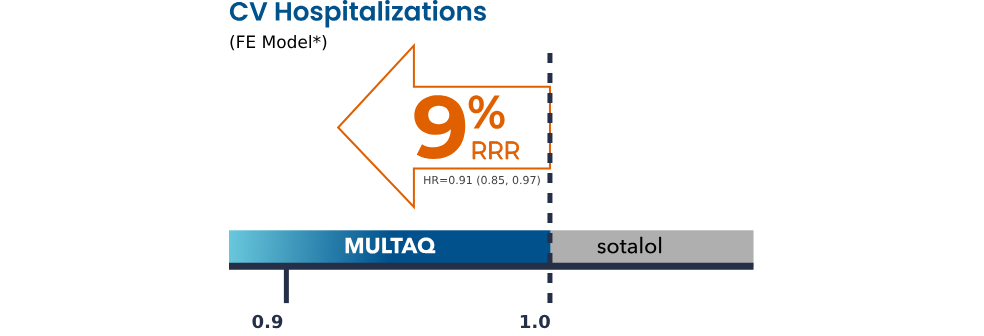
Graph comparing CV hospitalizations for Multaq vs. sotalol (FE Model). Multaq shows 9% RRR (HR=0.91, 95% CI: 0.85, 0.97)

Study Limitations1

  • This real-world evidence was collected outside of controlled clinical trials and has inherent limitations, including a lesser ability to control for confounding factors and selection bias. Therefore, causal inferences cannot be made, and no reliable conclusions can be drawn
  • Treatment was not randomized in this study according to indication, which may lead to confounding
  • Study excluded subtherapeutic doses of sotalol (<160 mg/d), which could eliminate patients with comorbidities such as renal impairment, a population which would potentially be more susceptible to adverse side effects and have higher overall risk
  • For the CV hospitalization endpoint, the results are unable to distinguish between hospitalizations due to adverse safety events vs those resulting from treatment nonresponse
  • Patients in the sotalol arm who initiated in the inpatient setting and discontinued during the hospitalization due to an adverse safety event are excluded
  • Different follow-up times and reasons for censoring between arms in the Optum and MarketScan databases were observed
  • Study was conducted as a meta-analysis combining 4 different databases with heterogeneity, which may lead to confounding

A meta-analysis of each database for CV hospitalization utilizing pharmacy claims and EHR data (N=46,550)1
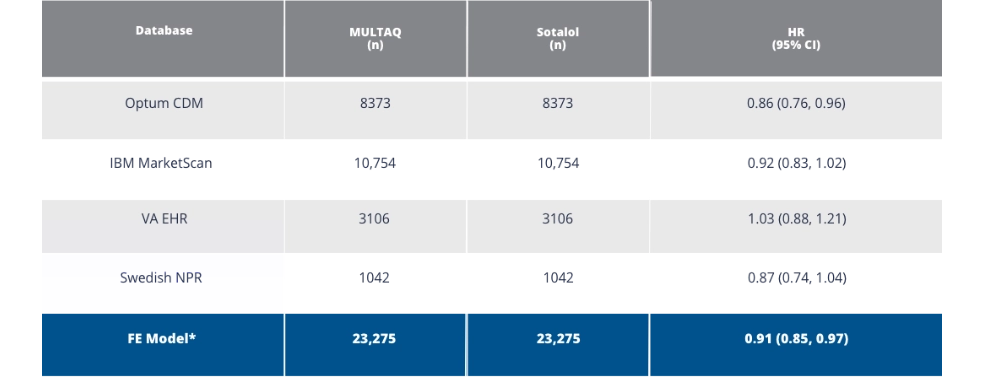
Table: Table comparing Multaq (n=23,275) vs. sotalol (n=23,275) across databases. FE Model HR=0.91 (95% CI: 0.85, 0.97).

I2=15.11%.
*Results above were aggregated using a fixed effects model. I2 statistic was used to assess heterogeneity.

Dronedarone vs Sotalol Among Patients With Atrial Fibrillation: A Meta-Analysis of Retrospective Observational Databases

Savings card displaying "As low as $0 co-pay."

Patients may pay as low as $0 for MULTAQ*

*Terms and conditions apply.

References:

1. Singh JP, Wieloch M, Reynolds SL, Blomstrom-Lundqvist C, Sandhu AT, Camm AJ, et al. Dronedarone vs Sotalol Among Patients With Atrial Fibrillation: A Meta-Analysis of Retrospective Observational Databases. JACC Clin Electrophysiol. 2025.

Important Safety Information

WARNING: INCREASED RISK OF DEATH, STROKE AND HEART FAILURE IN PATIENTS WITH DECOMPENSATED HEART FAILURE OR PERMANENT ATRIAL FIBRILLATION

MULTAQ is contraindicated in patients with symptomatic heart failure with recent decompensation requiring hospitalization or NYHA Class IV heart failure. MULTAQ doubles the risk of death in these patients.

MULTAQ is contraindicated in patients in atrial fibrillation (AFib) who will not or cannot be cardioverted into normal sinus rhythm. In patients with permanent AFib, MULTAQ doubles the risk of death, stroke, and hospitalization for heart failure.

MULTAQ is also contraindicated in patients with:

  • Second- or third-degree atrioventricular (AV) block or sick sinus syndrome (except when used in conjunction with a functioning pacemaker), bradycardia <50 bpm, QTc interval >500 ms or PR interval >280 ms
  • Concomitant use of strong CYP3A inhibitors, such as ketoconazole, itraconazole, voriconazole, cyclosporine, telithromycin, clarithromycin, nefazodone, ritonavir, erythromycin, or drugs or herbal products that prolong the QT interval and might increase the risk of torsade de pointes, such as phenothiazine antipsychotics, tricyclic antidepressants, certain oral macrolide antibiotics, and Class I and III antiarrhythmics
  • Liver or lung toxicity related to the previous use of amiodarone
  • Severe hepatic impairment
  • Hypersensitivity to the active substance or to any of the excipients

Cardiovascular Death in NYHA Class IV or Decompensated Heart Failure

MULTAQ is contraindicated in patients with NYHA Class IV heart failure or symptomatic heart failure with recent decompensation requiring hospitalization because it doubles the risk of death.

Cardiovascular Death and Heart Failure in Permanent AFib

MULTAQ doubles the risk of cardiovascular death (largely arrhythmic) and heart failure events in patients with permanent AFib. Patients treated with dronedarone should undergo monitoring of cardiac rhythm no less often than every 3 months. Cardiovert patients who are in AFib (if clinically indicated) or discontinue MULTAQ. MULTAQ offers no benefit in subjects in permanent AFib.

Increased Risk of Stroke in Permanent AFib

In a placebo-controlled study in patients with permanent AFib, dronedarone was associated with an increased risk of stroke, particularly in the first 2 weeks of therapy. MULTAQ should only be initiated in patients in sinus rhythm who are receiving appropriate antithrombotic therapy.

New Onset or Worsening Heart Failure

New onset or worsening of heart failure has been reported during treatment with MULTAQ in the postmarketing setting. In a placebo-controlled study in patients with permanent AFib, increased rates of heart failure were observed in patients with normal left ventricular function and no history of symptomatic heart failure, as well as those with a history of heart failure or left ventricular dysfunction.

Advise patients to consult a physician if they develop signs or symptoms of heart failure, such as weight gain, dependent edema, or increasing shortness of breath. If heart failure develops or worsens and requires hospitalization, discontinue MULTAQ.

Liver Injury

Hepatocellular liver injury, including acute liver failure requiring transplant, has been reported in patients treated with MULTAQ in the postmarketing setting. Advise patients treated with MULTAQ to report immediately symptoms suggesting hepatic injury (such as anorexia, nausea, vomiting, fever, malaise, fatigue, right upper quadrant pain, jaundice, dark urine, or itching). Consider obtaining periodic hepatic serum enzymes, especially during the first 6 months of treatment. It is not known whether routine periodic monitoring of serum enzymes will prevent the development of severe liver injury. If hepatic injury is suspected, promptly discontinue MULTAQ and test serum enzymes, aspartate aminotransferase (AST), alanine aminotransferase (ALT), and alkaline phosphatase, as well as serum bilirubin, to establish whether there is liver injury. If liver injury is found, institute appropriate treatment and investigate the probable cause. Do not restart MULTAQ in patients without another explanation for the observed liver injury.

Pulmonary Toxicity

Cases of interstitial lung disease, including pneumonitis and pulmonary fibrosis, have been reported in patients treated with MULTAQ in the post-marketing setting. Onset of dyspnea or non-productive cough may be related to pulmonary toxicity and patients should be carefully evaluated clinically. If pulmonary toxicity is confirmed, MULTAQ should be discontinued.

Hypokalemia and Hypomagnesemia with Potassium-Depleting Diuretics

Hypokalemia and hypomagnesemia may occur with concomitant administration of potassium-depleting diuretics. Potassium levels should be within the normal range prior to administration of MULTAQ and maintained in the normal range during administration of MULTAQ.

QT Interval Prolongation

MULTAQ is associated with concentration-dependent QTcF interval prolongation (estimated QTcF increase for 400 mg BID with food is 15 ms). If the QTc interval is >500 ms, discontinue MULTAQ.

Renal Impairment and Failure

Marked increase in serum creatinine, pre-renal azotemia and acute renal failure, often in the setting of heart failure or hypovolemia, have been reported in patients taking MULTAQ. In most cases, these effects appear to be reversible upon drug discontinuation and with appropriate medical treatment. Monitor renal function periodically.

Small increases in creatinine levels (about 0.1 mg/dL) following MULTAQ treatment initiation have been shown to be a result of inhibition of creatinine’s tubular secretion. The elevation has a rapid onset, reaches a plateau after 7 days and is reversible after discontinuation.

Embryofetal Toxicity

Based on animal data, MULTAQ may cause fetal harm when administered to a pregnant woman. Dronedarone caused multiple visceral and skeletal malformations in animal reproduction studies when pregnant rats and rabbits were administered dronedarone at doses equivalent to recommended human doses. Advise pregnant women of the potential risk to the fetus. Verify that females of reproductive potential are not pregnant prior to initiating MULTAQ. Advise females of reproductive potential to use effective contraception during treatment with MULTAQ and for 5 days (about 6 half-lives) after the final dose.

Drug-Drug Interactions

  • Treatment with Class I or III antiarrhythmics or drugs that are strong inhibitors of CYP3A must be stopped before starting MULTAQ (see Contraindications)
  • Patients should be instructed to avoid grapefruit juice beverages while taking MULTAQ
  • Calcium channel blockers with depressant effects and beta-blockers could increase the bradycardia effects of MULTAQ on conduction
  • In the ANDROMEDA (patients with recently decompensated heart failure) and PALLAS (patients with permanent AFib) trials, baseline use of digoxin was associated with an increased risk of arrhythmic or sudden death in dronedarone-treated patients compared to placebo. In patients not taking digoxin, no difference in risk of sudden death was observed in the dronedarone vs. placebo groups
  • Digoxin can potentiate the electrophysiologic effects of dronedarone (such as decreased AV-node conduction). Dronedarone increases exposure to digoxin
  • Consider discontinuing digoxin. If digoxin treatment is continued, halve the dose of digoxin, monitor serum levels closely, and observe for toxicity
  • Postmarketing cases of increased INR with or without bleeding events have been reported in warfarin-treated patients initiated with dronedarone. Monitor INR after initiating MULTAQ in patients taking warfarin
  • Statins: Avoid simvastatin doses greater than 10 mg daily. Follow statin label recommendations for use with CYP3A and P-gp inhibitors such as dronedarone

Adverse Reactions

In studies, the most common adverse reactions (≥2%) observed with MULTAQ were diarrhea, nausea, abdominal pain, vomiting, dyspepsia, bradycardia, skin issues (rashes, pruritus, eczema, dermatitis, dermatitis allergic), and asthenia.

Use in Specific Populations

Lactation: Do not breastfeed

Indication

MULTAQ is an antiarrhythmic drug indicated to reduce the risk of hospitalization for atrial fibrillation (AFib) in patients in sinus rhythm with a history of paroxysmal or persistent AFib.

Important Safety Information

Indication

MULTAQ is a registered trademark of Sanofi or an affiliate. MAT-US-2203730-v3.0-11/2025