- Article
- Source: Campus Sanofi
- Feb 19, 2026
Types of Infusions for Treatment of Hemophilia

A Standard of Care: Intravenous Factor Replacement for Hemophilia
Hemophilia is a congenital bleeding disorder characterized by a deficiency of clotting factor VIII (hemophilia A) or factor IX (hemophilia B), resulting in impaired hemostasis and an increased risk of spontaneous or trauma-induced bleeding.1 Clotting factor infusion therapy remains a cornerstone of treatment, providing targeted replacement of the deficient factor to restore coagulation in both acute and prophylactic settings.1
While other treatments, such as antifibrinolytics and non-factor replacement agents, are available, this article focuses on intravenous clotting factor replacement — a standard of care for many hemophilia patients worldwide.1,2 This therapeutic approach is backed by decades of clinical data supporting its efficacy in preventing life-threatening bleeds and preserving musculoskeletal function in patients with hemophilia.1,3
Hemophilia Replacement Therapy With Clotting Factor Concentrates
The therapeutic goals of clotting factor concentrates (CFC) are well-defined in clinical practice to help:
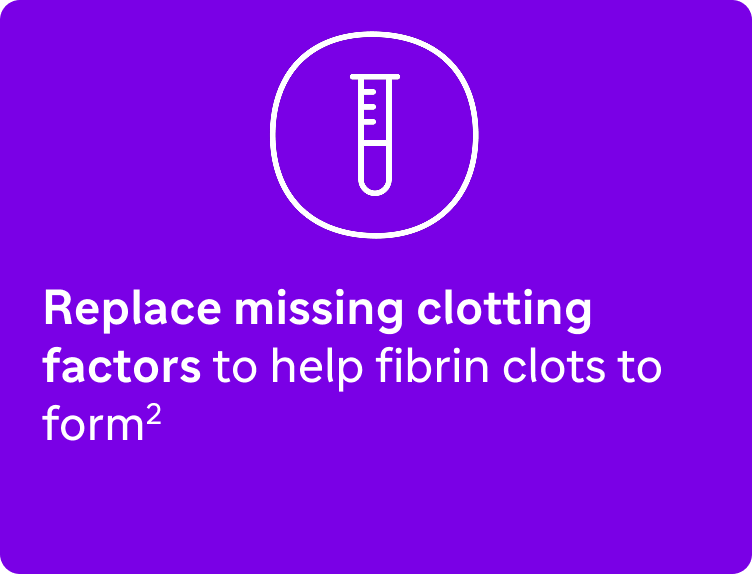

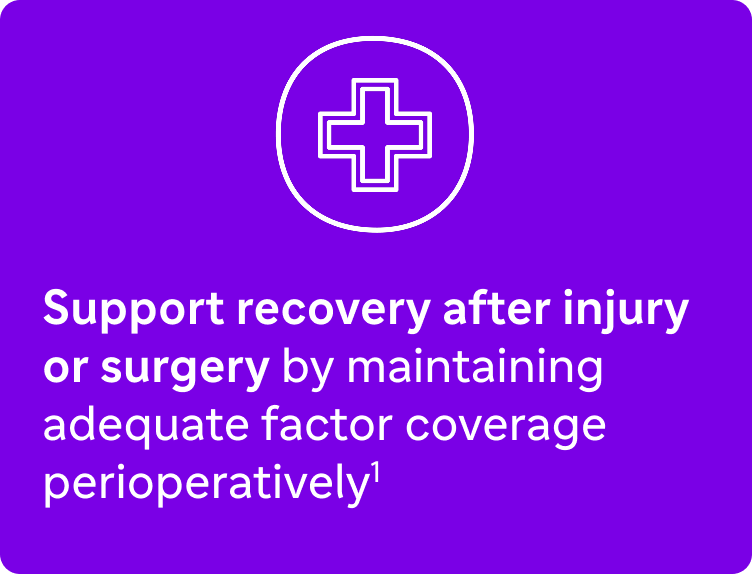
These objectives are uniformly applied across infusion protocols for factor VIII (FVIII) replacement in Hemophilia A and factor IX (FIX) replacement in Hemophilia B.2,4,5 In severe phenotypes, maintaining clotting factor activity above a protective threshold is essential to prevent recurrent hemarthroses, which are strongly associated with progressive joint damage.1,2
Types of Clotting Factor Infusions
FVIII vs FIX Replacement
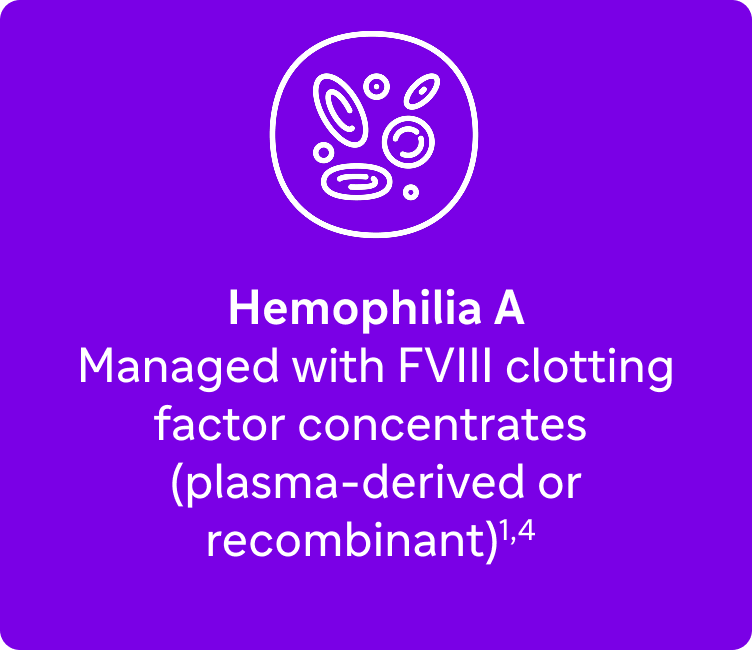
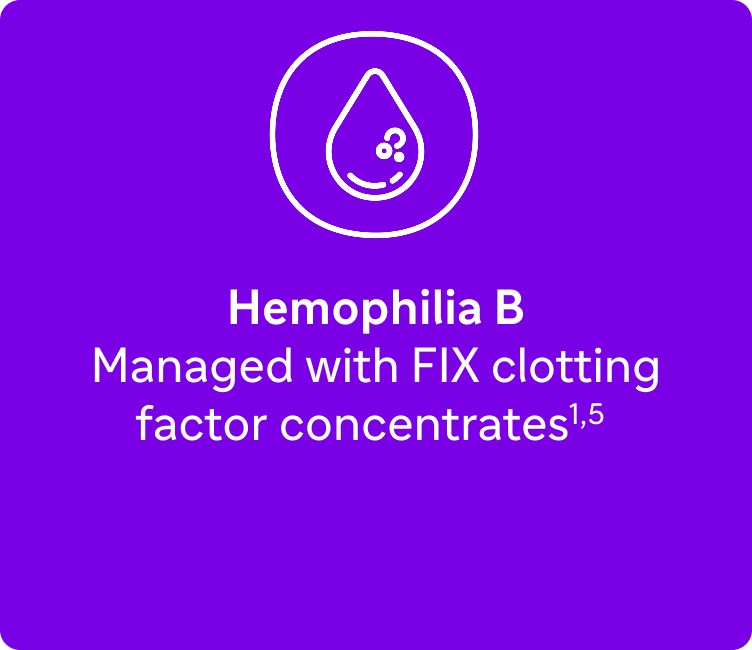
Factor VIII and FIX are typically administered via intravenous infusion, either in a clinic setting or at home.2 Infusion strategies should be individualized based on patient-specific factors such as age, disease severity, activity level, and lifestyle requirements.1,2 Pharmacokinetic (PK) profiling enables individualized dosing by optimizing trough levels and minimizing factor consumption.1,6
The following section outlines replacement therapy regimens for hemophilia.
On-demand infusions
The primary objective of on-demand treatment is to promptly control bleeding and prevent long-term musculoskeletal damage, particularly joint deterioration.1,2 Dosing is tailored to bleed severity, site, and patient-specific PK parameters.1,2 This approach is more common in mild phenotypes.2
Prophylactic infusions
Prophylaxis involves regularly scheduled factor replacement to maintain plasma levels with the goal to prevent spontaneous and breakthrough bleeding.1,2
For patients with severe hemophilia, long-term prophylaxis is recommended to preserve joint integrity, reduce the frequency of hemarthrosis, and enhance overall quality of life.1,2 Prophylactic regimens may involve more frequent factor infusions to maintain higher clotting factor levels and reduce the risk of bleeding, although in situations where resources are limited, less frequent dosing may be used based on individual needs and healthcare provider recommendations.2
For patients with Hemophilia A or B exhibiting a severe phenotype, including moderate disease, the World Federation of Hemophilia (WFH) strongly recommends individualized prophylaxis to reduce bleeding episodes, guided by bleeding history, joint status, pharmacokinetics, and patient preferences.1
Extended half-life (EHL) versus Standard half-life (SHL)
Extended half-life (EHL) factor products in hemophilia infusion therapy reduce infusion frequency while maintaining protection comparable to standard half-life products.1
EHL FVIII products extend half-life by 1.4–1.6X, while EHL FIX products achieve 3–5X extension compared to standard half-life (SHL) counterparts, improving access and convenience,1 especially in long-term prophylaxis.1
Non-factor therapies
Non-factor therapies, such as factor mimetics and re-balancing agents, provide alternative mechanisms of hemostatic support.1 While they reduce treatment burden, they require careful perioperative planning and bleed management protocols distinct from factor replacement therapy.1
Difference Between Infusion and Transfusion in Hemophilia Care
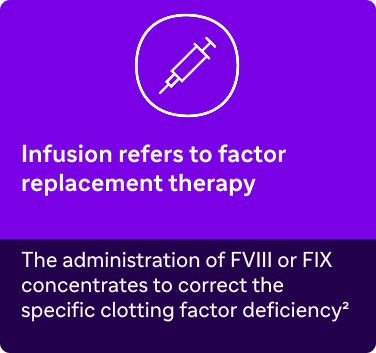
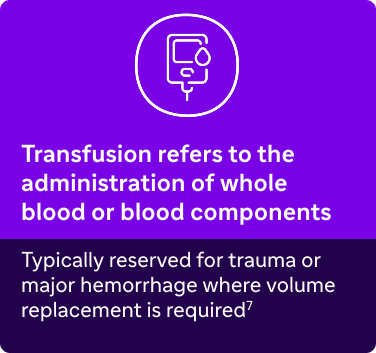
Understanding this distinction is important for clinical documentation and patient education.
Infusions for Children
Pediatric infusion protocols must address:

Venous access challenges: Often requiring skill development for peripheral access or consideration of long-term devices8

Infusion frequency: Balancing prophylactic needs with the burden of treatment1

Caregiver training: For home administration, including aseptic technique and recognition of bleeds9
Children may start with short-term prophylaxis, escalating as activity levels increase or breakthrough bleeds occur.9 Transitioning from caregiver-administered to self-infusion represents a key developmental milestone, requiring structured training and guidance10
Infusions for Adults
Adults with hemophilia may present with established hemophilic arthropathy due to recurrent bleeds during childhood.1 In such cases, infusion therapy often focuses on preserving joint function, managing pain, and preventing further deterioration.
Adherence to prescribed infusion schedules is key; missed doses increase the risk of spontaneous bleeding and accelerate musculoskeletal damage.1
Infusion Methods for Adults
Common administration routes include:
Peripheral vein access: Prefer when feasible1

Long-term venous access devices implanted ports: Consider when frequent infusions or difficult access necessitate them1,2
For at-home administration, a hemophilia infusion kit typically contains2:
- Factor vials and diluent
- Sterile syringes and butterfly needles
- Tourniquet
- Alcohol swabs
- Sharps disposal container
Proper central venous access device (CVAD) care is essential to prevent complications such as infection and thrombosis. This includes regular flushing, adherence to aseptic technique, and frequent monitoring for signs of malfunction.1
Key Takeaways for Clinical Practice

01
Hemophilia clotting factor infusion therapy can be used to treat in both acute
and prophylactic settings1
02
Treatment selection — FVIII vs FIX, SHL vs EHL — should be individualized1

03
Prophylaxis is essential in severe phenotypes to prevent irreversible joint damage1,2

04
Adherence and proper technique are critical to outcomes, particularly in home
therapy settings1
Abbreviations
CFC, clotting factor therapy; CVAD, central venous access device; EHL, extended half-life; FIX, factor IX; FVIII, factor VIII; IU/dL, international units per deciliter; PCC, prothrombin complex concentrate; PK, pharmacokinetics; PICC, peripherally inserted central catheter; SHL, standard half-life; WFH, World Federation of Hemophilia.
References
1. Srivastava A, Santagostino E, Dougall A, et al. WFH Guidelines for the Management of Hemophilia, 3rd edition. Haemophilia. 2020;26(Suppl 6):1‑158. doi:10.1111/hae.14046
2. Hemophilia of Georgia, Inc. The Hemophilia, von Willebrand Disease & Platelet Disorders Handbook. Hemophilia of Georgia website. Published 2024. Accessed October 13, 2025. http://www.hog.org/handbook/
3. Poon MC, Jackson S, Brown M, McClure W. Clotting factor therapy. In: All About Hemophilia: A Guide for Families. Montreal, Canada: Canadian Hemophilia Society; 2010. Accessed October 13, 2025. http://www.hemophilia.ca/files/Chapter%2005.pdf
4. National Bleeding Disorders Foundation. Hemophilia A. National Bleeding Disorders Foundation website. Accessed October 13, 2025. https://www.hemophilia.org/bleeding-disorders-a-z/types/hemophilia-a
5. National Bleeding Disorders Foundation. Hemophilia B. National Bleeding Disorders Foundation website. Accessed October 13, 2025. https://www.hemophilia.org/bleeding-disorders-a-z/types/hemophilia-b
6. Horowitz S. Life between peak and trough. Hemophilia News Today. Published September 17, 2019. Accessed October 13, 2025. https://hemophilianewstoday.com/columns/peak-trough-treatment-factor-cost/?cn-reloaded=1
7. Lotterman S, Sharma S. Blood transfusion. In: StatPearls [Internet]. Treasure Island, FL: StatPearls Publishing; Updated June 20, 2023. Accessed October 13, 2025. https://www.ncbi.nlm.nih.gov/books/NBK499824/
8. Jones P. Looking after the veins. In: Treatment of Hemophilia. No. 32. Montreal, Quebec, Canada: World Federation of Hemophilia; 2003.
9. Israels SJ, Schwetz N, Klein P, Jones R. Home infusion. In: All About Hemophilia: A Guide for Families. Montreal, Canada: Canadian Hemophilia Society; 2010. Accessed October 13, 2025. https://www.hemophilia.ca/files/Chapter%2007.pdf
10. Landau I. 11 clues your child is ready for self-infusion. HemAware website. Published June 10, 2020. Updated June 16, 2020. Accessed October 13, 2025. https://hemaware.org/life/11-clues-your-child-ready-self-infusion
MAT-US-2512272-v1.0-02/2026
