
This website contains promotional content and is intended for Healthcare Professionals based in the United States only.

MPS I: Piece together a diagnosis​

Understand the broad spectrum of clinical presentation
Mucopolysaccharidosis type I (MPS I) varies in the age of onset, symptom severity, progression rate, and presence of neurologic involvement.1,2

Timely intervention is key
Disease progression can lead to cardiovascular complications and respiratory disease, the leading morbidities associated with early death in MPS I.1,3

Long-term management and monitoring is essential
As a chronic, progressive, multisystemic disease, early multidisciplinary management is the best approach to slow progression.1,3

Inheritance of MPS I

MPS I is a progressive and potentially life-threatening condition

MPS I is a rare, genetic, debilitating, multisystemic, lysosomal storage disease. It is caused by the deficiency of lysosomal enzyme α-L-iduronidase (IDUA), which results in the progressive accumulation of nondegraded material (called glycosaminoglycans or GAGs) in cells throughout the body. The accumulated GAGs can cause cardiovascular complications and respiratory disease, which are the leading morbidities associated with early death in patients with MPS I.4,5

An affected gene for enzyme IDUA is the cause of MPS I

MPS I is caused by pathogenic variants in the gene that codes for lysosomal enzyme α-L-iduronidase (IDUA). MPS I is inherited in an autosomal recessive pattern and affects males and females equally. As MPS I is an inherited disease, this condition may affect other family members.4,5

Two common IDUA alleles, W402X and Q70X, and a minor IDUA allele, P533R, account for >50% of the MPS I alleles in the Caucasian demographic.4,5 To date, more than 200 pathogenic variants in the IDUA gene have been identified in patients with MPS I. Some variants result in more severe disease manifestations.6
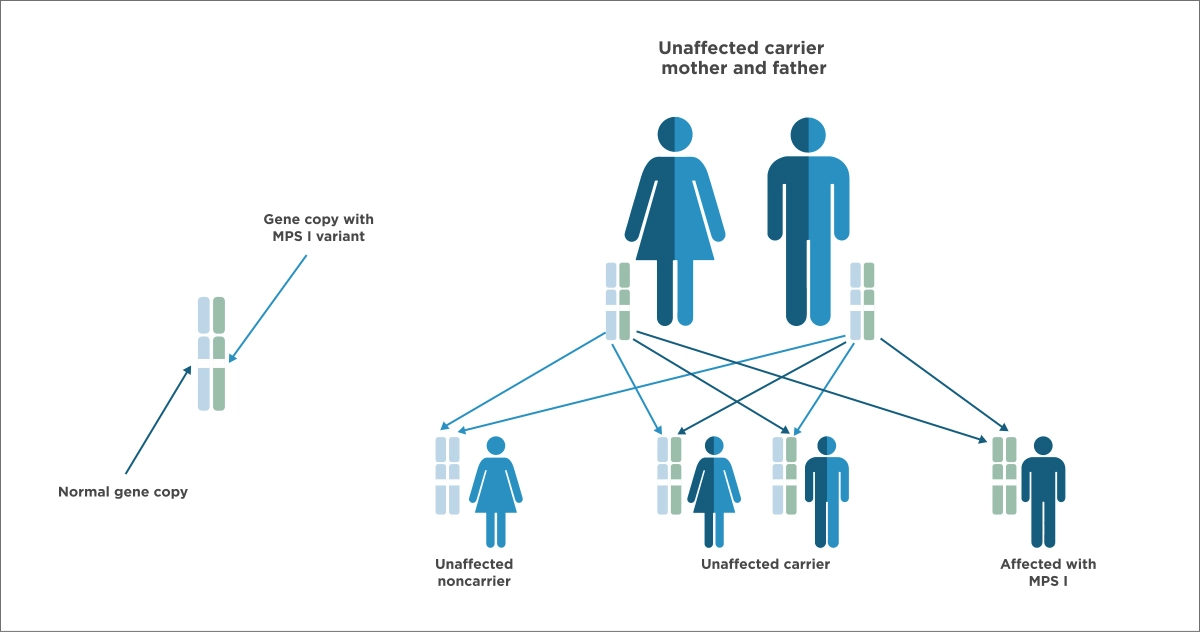
Inheritance Pattern of MPS I

Inheritance pattern of MPS I

GAG, glycosaminoglycan; IDUA, α-L-iduronidase

If both parents are carriers, every child has a 1-in-4 chance of being born with MPS I.1

Pathogenesis of MPS I

IDUA enzyme deficiency in MPS I can result in GAG accumulation, which can lead to irreversible damages

The IDUA enzyme is deficient in MPS I, resulting in GAG accumulation in cells which can cause tissue damage. Such damage can be irreversible and lead to loss of function, clinical deterioration, a variety of manifestations, and, in some cases, early death.2

Mechanism of MPS I pathogenesis

Clinical Presentation

Patients with MPS I face a multitude of serious and often debilitating multisystemic manifestations

In MPS I, the IDUA enzyme is deficient or essentially absent, causing GAG substratesa to accumulate in cells, leading to progressive damage to tissues and organs.2,4,7-11
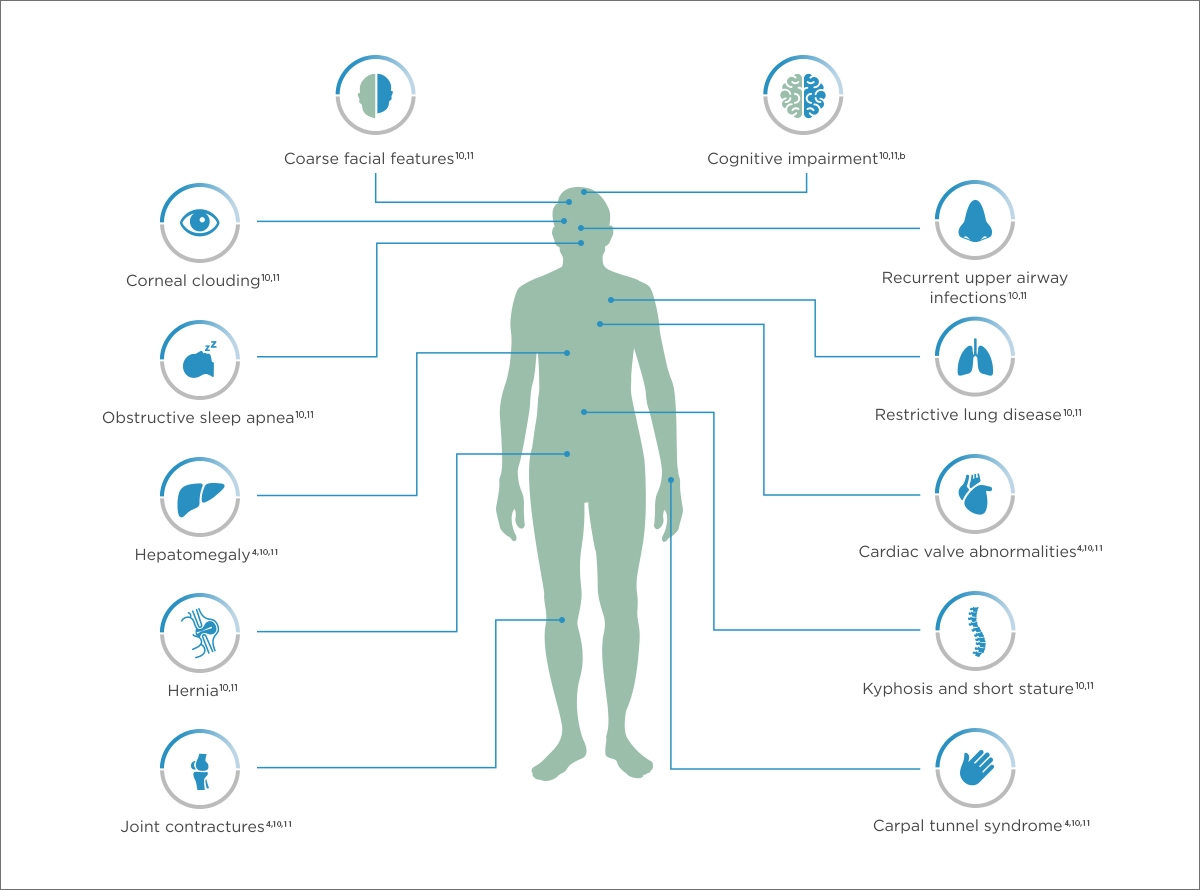
Some common manifestations include2,4,10,11:

aThe GAGs that accumulate in MPS I are dermatan sulfate and heparan sulfate.7
b
Scheie form has no cognitive impairment.4

Examples of disease progression4,10,11:

Cardiovascular manifestations

Musculoskeletal manifestations

  • Common in patients with MPS I
  • Cardiomyopathy and endocardial fibroelastosis can occur in children with severe MPS I
  • Coronary artery disease can lead to death
  • Patients with attenuated form may develop aortic or mitral valve disease
    • May have slowly progressive valvular heart disease for years
    • May need mitral or aortic valve replacement as early as in their teens and twenties4
  • Can occur early in life, by about 6 months of age
  • Bone abnormalities are common, some of them are:
    • Hip abnormalities, ovoid vertebrae, and widening of the ribs
    • A poorly formed pelvis, a gibbus deformity of the back, and shortened phalanges 
  • Progressive skeletal dysplasia can occur in all types of MPS I
  • Joint stiffness is common in all forms of MPS I4

Developmental delays

Physical appearance

  • Apparent in the severe form of MPS I—starting at 12–24 months of age, typically with a maximum functional age of 2-4 years. Then followed by slowed development and progressive regression in developmental skills until death
     
  • Mildly affected patients with the attenuated form generally have unaffected cognition4
  • Physical appearance of some infants with severe and moderate-to-severe symptoms of MPS I may appear unaffected at birth, but as early as 3 months of age, parents may notice changes in the child’s facial features10
  • Characteristic facial features of these patients include:
    • Short noses, flat faces, prominent foreheads, and large heads, which tend to be longer than normal from front to back (scaphocephaly)11
  • The overall appearance in attenuated form of MPS I is extremely variable
    • Adults are often stocky in build and their trunks shorter than their limbs
    • Neck may be short and stiff  
    • Unremarkable facial appearance

This is not meant to be a comprehensive list of all manifestations associated with MPS I.

MPS I can present with a wide spectrum of signs and symptoms     

It is important to identify the common manifestations across the spectrum of MPS I to piece together the diagnosis of this potentially fatal disease.2
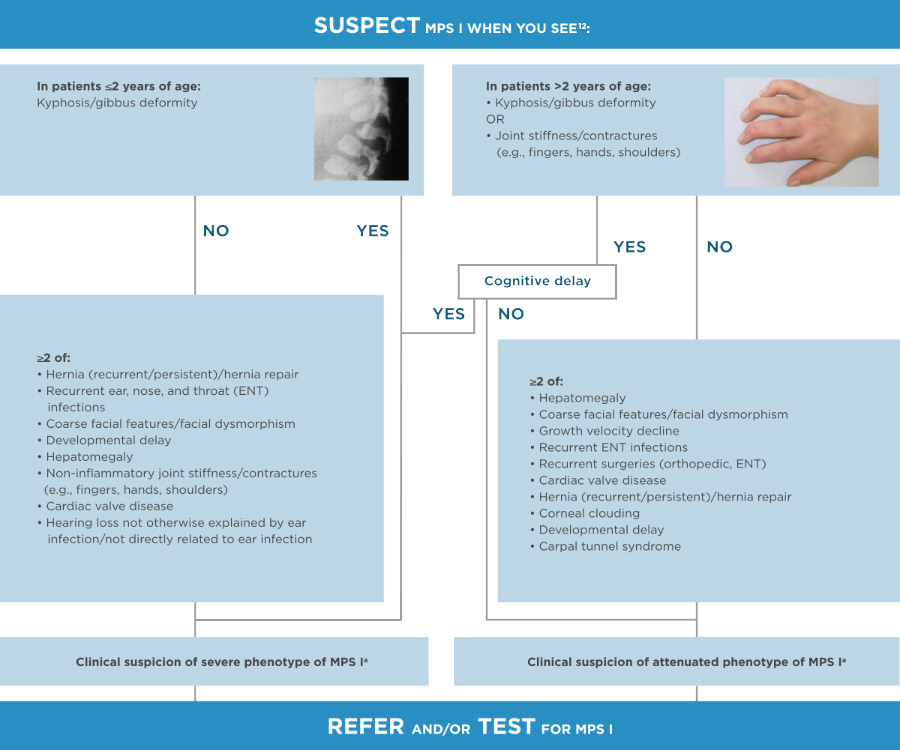
Diagnostic algorithm for patients with MPS I12

aUrinary GAGs testing to be done if available but without delaying the referral.
The presence of kyphosis and/or joint contractures, along with any combination of less specific symptoms, should prompt referral and/or diagnostic testing for MPS I

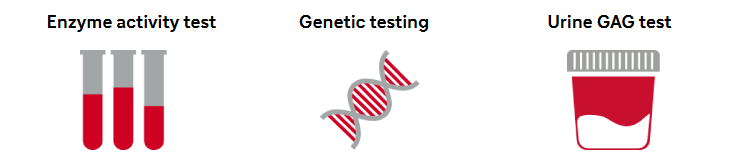
MPS I tests used for diagnostic process

  • Enzyme activity test13
    • Measures activity of α-L-iduronidase (IDUA) enzyme
    • Can confirm diagnosis
    • Can be measured in leukocytes, plasma, serum, or dried blood spots
  • Genetic testing13
    • Identifies pathogenic variants in IDUA
    • Can confirm diagnosis
  • Urine GAG test13
    • Accumulation of GAGs in lysosomes results in elevated GAGs in the urine
    • May be qualitative or quantitative
    • Urinary GAG measurement cannot confirm MPS I diagnosis but can be a helpful assessment in MPS I

Management Approaches

Early multidisciplinary management is the best approach to slow the progression of MPS I
  

MPS I is a chronic, progressive, multisystemic disease. The key factors that should be considered when managing MPS I are2,14:

  • Initiating management early
  • Carefully monitoring multiple organ systems
  • Individualizing management (i.e., specific genetic variant and presentation of MPS I)

Treatments for MPS I may include the following:

Hematopoietic stem cell transplantation (HSCT)1,14

The clinical success of HSCT depends on the age of the child at transplantation, the degree of clinical involvement, the child’s cardiopulmonary status and neurologic development, the type of donor, and the ability to achieve stable engraftment without the development of graft-versus-host disease.

  • HSCT is considered for children with severe MPS I under certain conditions
  • In rare cases, HSCT may be considered for attenuated MPS I
  • Bone marrow and umbilical cord blood are used most often as sources of stem cells
  • When successful, HSCT can prevent or reverse many but not all of the clinical features of severe MPS I, including:
    • Improve lifespan
    • Improve hearing and growth
    • Improve respiratory symptoms
    • Improve certain cardiac manifestations, e.g., heart failure and tachyarrhythmia, but cardiac valvular deformities may not be improved
    • Improvement in cognitive outcomes is greatly influenced by the degree of cognitive impairment at the time of transplantation
    • Reduce facial coarseness and hepatosplenomegaly
    • Reduce urinary GAG levels
    • Stabilize or prevent hydrocephalus
    • HSCT has less effects on skeletal diseases, joint manifestations, and corneal clouding

Viral infections, graft rejection, pulmonary hemorrhage, and graft-versus-host disease (GvHD) remain the most common causes of death and are most commonly seen in the first several months after transplant, but can occur within the first year post-transplantation. These complications may be related to the immunologic responses of the recipient to the donor cells or vice versa, or may be due to the conditioning chemotherapy regimen, with use of agents such as busulfan and cyclophosphamide.15

Supportive care and treatment of complications16

This type of treatment helps in the management of symptoms. Examples of supportive care include:

  • Supplemental oxygen for breathing difficulties
  • Continuous positive airway pressure machines for interrupted breathing during sleep (sleep apnea)
  • Surgery (e.g., tracheostomy) for difficulties in breathing
  • Physical therapy for joint stiffness
  • Heart valve replacement therapy for heart problems

Enzyme Replacement Therapy (ERT)15

ERT substitutes the naturally occurring enzyme that is deficient or absent in MPS I patients.

  • ERT provides exogenous enzyme for uptake into lysosomes and increases the catabolism of glycosaminoglycan (GAG)
  • Uptake by cells into lysosomes is most likely mediated by the mannose-6-phosphate (M6P)-terminated oligosaccharides chains binding to specific M6P receptors

Learn more about an approved option

Monitoring and Assessments

Regular monitoring is an important part of MPS I management

Early diagnosis is critical to the early initiation of disease management.17

The Recommended Schedule of Assessments represents the core MPS I disease-related assessments that allow for evaluations of disease progression over time. Physicians will determine the actual frequency of necessary assessments according to a patient’s individualized need for medical care and routine follow-up.17

Minimum Recommended Schedule of Assessments for MPS I Patients17-20

 Initial 
Assessments
Every
6 Months
Every
12 Months
Every
Other Year
General    
Demographics   
Patient Diagnosisa   
Medical History  
Physical Examination  
General Appearance  
MPS I Disease Clinical Assessments    
Neurologic/CNS    
  • MRI of Brain
  
  • MRI of Spine
  
  • Media Nerve Conduction Velocity
  
Cognitive Testing (DQ/IQ)  
Ophthalmologic    
  • Visual Acuity
  
  • Retinal Examination
  
  • Corneal Examination
  
Auditory    
  • Audiometry
  
Cardiac    
  • Echocardiogram
  
  • ECG
  
Respiratoryb    
  • FVC/FEV1
  
  • Sleep Study
  
Gastrointestinal    
  • Spleen Volumec
  
  • Liver Volumec
  
Musculoskeletal    
  • Skeletal Survey by X-rayd
  
Vitals and Laboratory Tests    
  • Height/Weight
  
  • Head Circumferenced
  
  • Blood Pressure
  
  • Enzyme Activity Level
   
  • Urinary GAG Level
  
  • Urinalysis
  
Functional Outcome Measurements    
  • MPS Health Assessment Questionnaire, or other tools exploring functional ability and quality of lifeb
   

All tests requiring sedation are recommended only if sedation is considered to be safe for the patient.
aDiagnosis would include genotype, if available.
bMay not be possible in non-cooperative patients or patients younger than 5 to 6 years of age.
cThe recommended method for obtaining organ volumes is MRI or computed tomography to enable quantitative analysis. However, if in the opinion of the clinician it is unsafe to sedate the patient, then ultrasound may be substituted.
dMeasured in pediatric patients only, unless determined otherwise by treating physician.

CNS, central nervous system; DQ, developmental quotients; ECG, electrocardiogram; FVC, forced vital capacity; FEV, forced expiratory volume; GAGs, glycosaminoglycans; IQ, intelligence quotient; MPS, mucopolysaccharidosis

Support for Healthcare Providers

Have a question or want additional information? A Sanofi representative is available to answer your disease- or product-related questions. Click the link below to complete a request.

Request Information

Medical Information

Sanofi’s Medical Information Department can provide information on diagnostic testing, pharmacovigilance/safety, and MPS I disease.

Visit our Medical Information Website

Sanofimedicalinformation.com

Please call 8 AM until 6 PM EST, Monday through Friday:

1-800-745-4447, option 2 (toll-free)/1-617-768-9000, option 2

Support for Your Patients

CareConnectTM Personalized Support Services – Connected Care Personalized To Your Patients

CareConnect is a free, voluntary and confidential support program for eligible patients and families living with certain lysosomal storage disorders (LSDs).

Connected Education: Comprehensive disease education from diagnosis and beyond for individuals, families, and communities.

Connected Team: Experts who connect the dots between specialists, insurance, and appointments for a less fragmented care experience.

Connected Experience: Programs designed to support patients by connecting them with experts and the community to navigate life transitions and manage treatment.

If affording treatment is an issue, CareConnect may be able to help eligible patients access financial assistance. To learn more about our range of support offerings, connect with us careconnectpss.com/hcp, call 1-800-745-4447 option 3, or email info@careconnectpss.com

Educational Resources

This listing is provided as a resource only and does not constitute an endorsement by Sanofi of any particular organization or its programming. Additional resources on this topic may be available and should be investigated. Sanofi does not review or control the content of non-Sanofi websites.

Resources for your patients:

Professional Organizations

The following professional organizations are dedicated to genetic diseases:

References: 1. Clarke LA. GeneReviews® [Internet]. Accessed April 11, 2025. https://www.ncbi.nlm.nih.gov/books/NBK1162/ 2. Beck M et al. Genet Med. 2014;16(10):759-765. 3. Muenzer J et al. Pediatrics. 2009;123(1):19-29. 4. Neufeld EF et al. In: Valle DL, Antonarakis S, Ballabio A, Beaudet AL, Mitchell GA, eds. The Online Metabolic and Molecular Bases of Inherited Disease. McGraw Hill; 2019. Accessed March 21, 2022. https://ommbid.mhmedical.com/content.aspx?bookid=2709&sectionid=225069235 5. Vijay S, Wraith JE. Acta Paediatr. 2005;94(7):872-877. 6. Poletto E et al. Clin Genet. 2018;94(1):95-102. 7. de Ru MH et al. Orphanet J Rare Dis. 2011;6:55. 8. Wraith JE et al. J Pediatr. 2004;144(5):581-588. 9. D’Aco K et al. Eur J Pediatr. 2012;171(6):911-919. 10. Cleary MA, Wraith JE. Acta Paediatr. 1995;84(3):337-339. 11. Scheie HG et al. Am J Ophthalmol. 1962;53:753-769. 12. Tylki-Szymańska A et al. Acta Paediatr. 2018;107(8):1402-1408. 13. Wraith JE. Expert Opin Pharmacother. 2005;6(3):489-506. 14. Taylor M et al. Biol Blood Marrow Transplant. 2019;25(7):e226-e246. 15. Hampe CS et al. Biomolecules. 2021;11(2):189. 16. Nan H et al. Biomed Res Int. 2020;2020:2408402. 17. Pastores GM et al. Mol Genet Metab. 2007;91(1):37-47. 18. Berger KI et al. J Inherit Metab Dis. 2012;36(2):201-210. 19. Braunlin EA et al. J Inherit Metab Dis. 2011;34(6):1183-97. 20. White KK. Rheumatology. 2011;50(Suppl5):v26-v33. 21. Muenzer J et al. Pediatrics. 2009;123:19-29.
 

MAT-US-2205119-v2.0-08/2025