SARCLISA® (isatuximab-irfc) logo

IKEMA: SARCLISA® (isatuximab-irfc) + Kd vs Kd Alone in RRMM

SARCLISA + CARFILZOMIB AND DEXAMETHASONE (Kd)


FINAL ANALYSIS: 44 months median follow-up

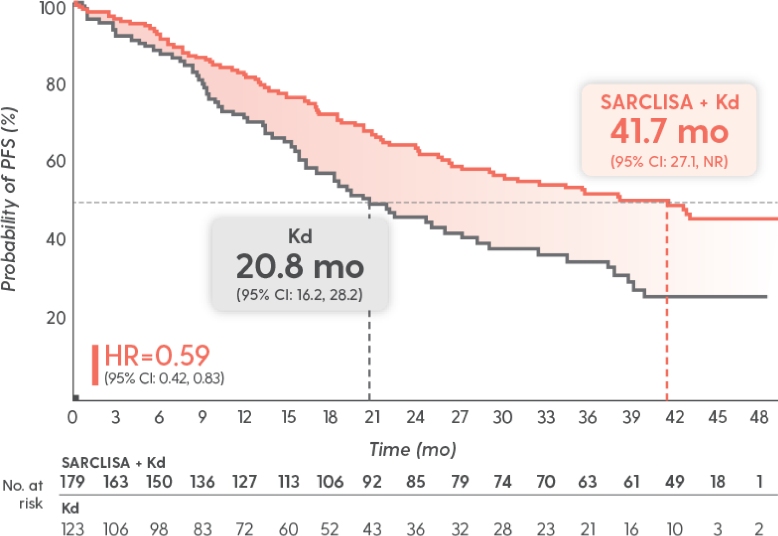
Unprecedented results: ~42 months mPFS with SARCLISA + Kd

Longest ever reported in a phase 3 trial that included lenalidomide-refractory
patients1-7*

*Based on a review of published phase 3 trials that included lenalidomide-refractory patients with RRMM. Interpret with caution, as various factors, including patient population, differ between trials.

A Kaplan-Meier curve shows the mPFS of SARCLISA + Kd vs Kd alone in the IKEMA trial.

PFS results were assessed by an IRC, based on central laboratory data for M-protein, and central radiologic imaging review using IMWG criteria. A preplanned interim analysis was conducted when 65% of 159 PFS events were observed. P value is not reported as this is a non-inferential analysis of the primary endpoint that was met at the time of the interim analysis.1,8

Superior PFS vs Kd at
interim analysis

(median follow-up of 20.7 months)1

SARCLISA + Kd: mPFS NR
Kd: mPFS 20.27 months1
HR=0.548
(95% CI: 0.37, 0.82; P=0.0032)1

Final analysis: A prespecified final analysis was conducted when 159 PFS events were observed, with a median follow-up of 44 months.2

The median duration of treatment was 94 weeks with SARCLISA + Kd vs 62 weeks with Kd alone. The median time to next treatment was 44.91 months (95% CI: 31.61, NR) in the SARCLISA + Kd arm vs 25.0 months (95% CI: 17.94, 31.31) with Kd alone8,9

IMWG=International Myeloma Working Group; IRC=independent response committee; mPFS=median progression-free survival; M-protein=monoclonal protein; NR=not reached; PFS=progression-free survival; RRMM=relapsed or refractory multiple myeloma.

NCCN

National Comprehensive Cancer Network® (NCCN®) recommends isatuximab-irfc (SARCLISA) in the NCCN Clinical Practice Guidelines in Oncology (NCCN Guidelines®) for Multiple Myeloma as a Category 1 Preferred option in combination with carfilzomib and dexamethasone or with pomalidomide and dexamethasone10:

  • For early relapses (1-3 prior therapies)
  • Option for patients refractory to either lenalidomide or bortezomib

CATEGORY 1
PREFERRED

NCCN makes no warranties of any kind whatsoever regarding their content, use or application and disclaims any responsibility for their application or use in any way.
Recommendation for isatuximab-irfc (SARCLISA) in combination with carfilzomib and dexamethasone based on results of interim analysis.
After 2 prior therapies including lenalidomide and a proteasome inhibitor for isatuximab-irfc in combination with pomalidomide and dexamethasone.
NCCN=National Comprehensive Cancer Network® (NCCN®).

Explore a patient profile for SARCLISA + Kd at first relapse

Patients in the IKEMA trial achieved deep responses2‡

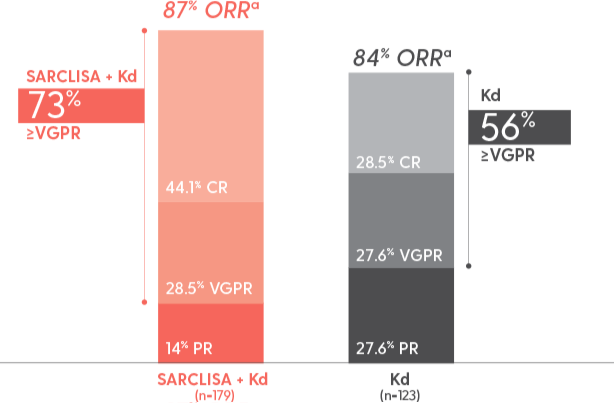
High rates of ≥VGPR were seen in IKEMA

A bar graph compares the rates of ORR, CR, VGPR, PR, and VGPR or better in patients receiving SARCLISA + Kd vs Kd alone in the IKEMA trial.

As ORR did not reach statistical significance, ≥VGPR and CR were not tested for significance

Interim analysis (20.7 months median follow-up)1,8

  • ORR:
    - 86.6% (95% CI: 0.81, 0.91) with SARCLISA + Kd
    - 82.9% (95% CI: 0.75, 0.89) with Kd alone
    P=0.3859; 95% CI estimated using the Clopper-Pearson method
  • ≥VGPR: 72.6% with SARCLISA + Kd vs 56.1% with Kd alone
  • CR: 39.7% with SARCLISA + Kd vs 27.6% with Kd alone
  • MRD-: 30% with SARCLISA + Kd (95% CI: 0.23, 0.37) vs 13% with Kd alone (95% CI: 0.08, 0.20)

The median time to first response among responders was 1.08 months in the SARCLISA + Kd arm and 1.12 months in the Kd arm.8

A response of ≥VGPR.
asCR, CR, VGPR, and PR were evaluated by the IRC using the IMWG response criteria. Results are based on a prespecified final analysis with a median follow-up time of 44 months.1
CR=complete response; MRD-=minimal (or measurable) residual disease negative/negativity; ORR=overall response rate; PR=partial response; sCR=stringent complete response; VGPR=very good partial response.

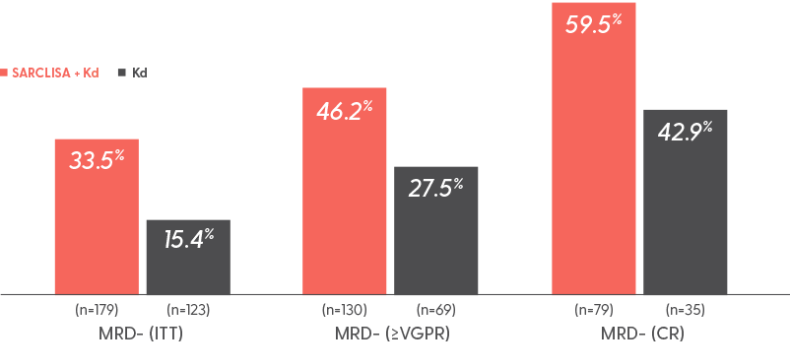
6 out of 10 patients in CR achieved MRD- with SARCLISA + Kd2,9

Rate of MRD- by adaptive NGS at 10-5§

A bar graph compares the rates of MRD negativity (ITT), MRD negativity (VGPR or better), and MRD negativity (CR) in patients receiving SARCLISA + Kd vs Kd alone in the IKEMA trial.

Interim analysis (20.7 months median follow-up): MRD- rate in the ITT population was 30% with SARCLISA + Kd (95% CI: 0.23, 0.37) vs 13% with Kd alone (95% CI: 0.08, 0.20)1,8

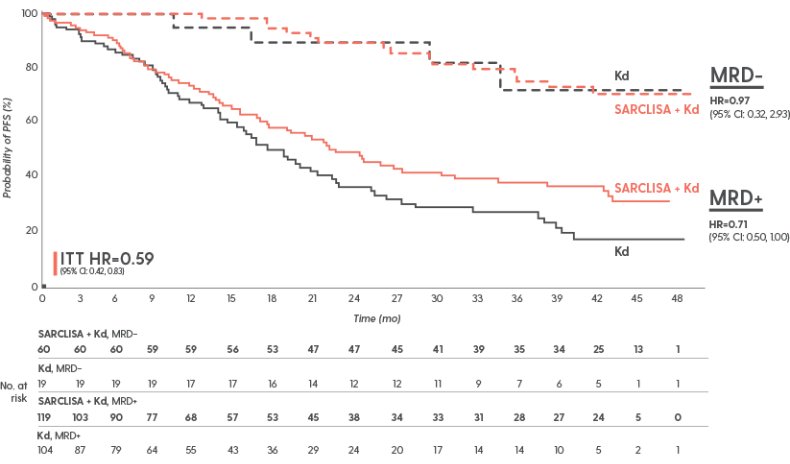
In IKEMA, achieving MRD- translated into prolonged PFS8

PFS by MRD status and treatment arm at the final analysis

A Kaplan-Meier curve shows the mPFS of patients receiving SARCLISA + Kd vs Kd alone who achieved MRD negativity or who were MRD positive in the IKEMA trial.

PFS results were assessed by an IRC, based on central laboratory data for M-protein, and central radiologic imaging review using the IMWG criteria.1

The addition of SARCLISA to Kd also improved PFS in patients who remained MRD+ (HR=0.71, 95% CI: 0.50, 1.00)8

Study limitations

According to the FDA, using MRD to assess clinical benefit of a multiple myeloma treatment should only be assessed in patients who achieve a CR or sCR. In the IKEMA trial, MRD was assessed in patients who achieved ≥VGPR. Additionally, there was an amount of missing data that did not meet the FDA’s threshold for label inclusion. This analysis requires cautious interpretation and clinical significance of these data is unknown.

§Based on a sensitivity level of 10-5 by NGS in patients who achieved ≥VGPR.8
ITT=intent to treat; MRD+=minimal (or measurable) residual disease positive/positivity; NGS=next-generation sequencing.

Subgroup data for SARCLISA + Kd8

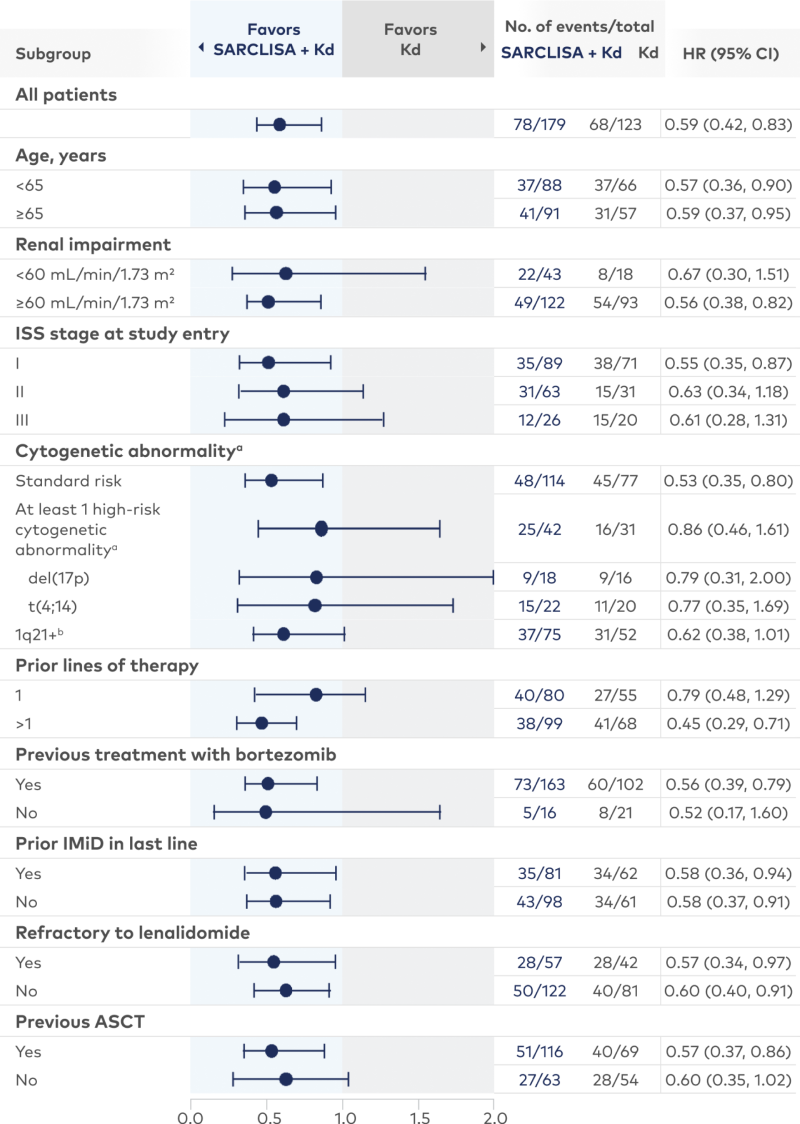
Consistent PFS results were seen across almost all subgroups with SARCLISA + Kd

A forest plot shows the PFS data for patient subgroups receiving SARCLISA + Kd vs Kd alone in the IKEMA trial.

aHigh-risk cytogenetic status was defined as the presence of del(17p) and/or t(4;14) and/or t(14;16). Chromosomal abnormality was considered positive if present in ≥30% of analyzed plasma cells, except for del(17p), where the threshold was ≥50%; please note that due to the low number of patients with t(14;16), the HR could not be calculated.
b1q21+ was also analyzed and was considered positive if there were ≥3 copies in ≥30% of analyzed plasma cells.

Study limitations

All subgroups were prespecified except the lenalidomide-refractory subgroup. Subgroups were not powered to show differences between treatment arms.

ASCT=autologous stem cell transplant; IMiD=immunomodulatory drug; ISS=International Staging System.

Reduction in the risk of disease progression in patients treated with SARCLISA + Kd vs Kd alone

Patients 65 years of age and older experienced 41% reduction in the risk of disease progression.
Patients refractory to lenalidomide experienced 43% reduction in the risk of disease progression.
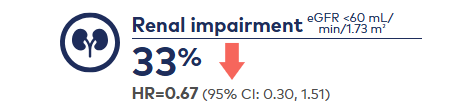
Patients with renal impairment experienced 33% reduction in the risk of disease progression.
Patients with the presence of 1q21+ experienced 38% reduction in the risk of disease progression.

Study limitations

All subgroups were prespecified except the lenalidomide-refractory subgroup. Subgroups were not powered to show differences between treatment arms.

1q21+ was considered positive if there were ≥3 copies in ≥30% of analyzed plasma cells.
eGFR=estimated glomerular filtration rate.

IKEMA trial: SARCLISA + Kd vs Kd alone

Evaluated in 302 patients in a phase 3, multicenter, multinational, randomized, open-label study1,8

The IKEMA study design shows the results of the phase 3, randomized, open-label study comparing SARCLISA + Kd vs Kd alone.

Treatment was administered in 28-day cycles until disease progression or unacceptable toxicity.

PRIMARY ENDPOINT: PFSǁ

Key secondary endpoints: ORR, ≥VGPR, CR, MRD negativity, OS


aSARCLISA 10 mg/kg was administered as an IV infusion weekly in the first cycle and every 2 weeks thereafter.
bCarfilzomib was administered as an IV infusion during cycle 1 at a dose of 20 mg/m2 on days 1 and 2, and at 56 mg/m2 on days 8, 9, 15, and 16; during subsequent cycles, it was administered at 56 mg/m2 on days 1, 2, 8, 9, 15, and 16. Dexamethasone (IV on the days of SARCLISA and/or carfilzomib infusions, and orally on the other days) 20 mg was given on days 1, 2, 8, 9, 15, 16, 22, and 23 of each 28-day cycle.
IIPFS results were assessed by an IRC, based on central laboratory data for M-protein, and central radiologic imaging review using the IMWG criteria. An interim analysis was conducted when 65% of the 159 PFS events (ie, 103 events) were observed. A prespecified final analysis was conducted when 159 PFS events were observed, with a median follow-up of 44 months.
IV=intravenous; OS=overall survival.

The IKEMA trial included a broad and diverse patient population1,8,11

Patient factors

28%

≥70 years of age

20%

Impaired renal functiona

24%

High cytogenetic risk

Treatment history

90%/43%

Prior PI/lenalidomide

33%

Refractory to lenalidomide

61%

Prior ASCT

Baseline characteristics were balanced across both treatment arms

Baseline characteristics

SARCLISA + Kd (n=179)

Kd (n=123)

Age, years

Median (range)

65 (37-86)

63 (33-90)

<70

71%

72%

≥70

29%

28%

Renal impairmenta

≥60 mL/min/1.73 m2

68%

76%

<60 mL/min/1.73 m2

24%

15%

≥15-<30 mL/min/1.73 m2

2%

2%

ECOG PS

0 or 1

94%

96%

2

6%

4%

ISS stage at study entry

I

50%

58%

II

35%

25%

III

15%

16%

Cytogenetic abnormality at baseline

Highb

23%

25%

    del(17p)

10%

13%

    t(4;14)

12%

16%

    t(14;16)

3%

0%

Standard

64%

63%

Unknown or missing

13%

11%

1q21+c

42%

42%

Prior lines of therapyd

Median (range)

2 (1-4)

2 (1-4)

1

44%

45%

Prior therapies

PI

93%

85%

IMiD

76%

81%

Lenalidomide

40%

48%

Patient refractory to

IMiD

44%

47%

Lenalidomide

32%

34%

IMiD + PI

20%

22%

Previous ASCT

Yes

65%

56%

aImpaired renal function is defined as eGFR <60 mL/min/1.73 m2.1
b
High-risk cytogenetic status is defined as the presence of del(17p) and/or t(4;14) and/or t(14;16). Chromosomal abnormality was considered positive if present in ≥30% of analyzed plasma cells, except for del(17p), where the threshold is ≥50%.8
c
1q21+ was also analyzed and was considered positive if there were ≥3 copies in ≥30% of analyzed plasma cells.8
d
Inclusion criteria for the IKEMA study specified 1 to 3 prior lines of therapy; however, 3 patients (1.7%) and 2 patients (1.6%) had >3 prior lines in the SARCLISA + Kd and Kd arms, respectively.8
ECOG PS=Eastern Cooperative Oncology Group performance status; PI=proteasome inhibitor.

Important Safety Information

CONTRAINDICATIONS
SARCLISA is contraindicated in patients with severe hypersensitivity to isatuximab-irfc or to any of its excipients.

WARNINGS AND PRECAUTIONS
Infusion-Related Reactions
Serious infusion-related reactions (IRRs), including life-threatening anaphylactic reactions, have occurred with SARCLISA treatment. Severe signs and symptoms include cardiac arrest, hypertension, hypotension, bronchospasm, dyspnea, angioedema, and swelling.

In clinical trials (ICARIA-MM, IKEMA, and IMROZ), in patients treated with SARCLISA (N=592), infusion-related reactions occurred in 206 patients (35%). Among these 206 patients, 92% experienced infusion-related reactions during the first infusion and 12% after the first cycle.

The most common symptoms (≥5%) of an infusion-related reaction included dyspnea and cough. Grade 1 infusion-related reactions were reported in 6% of patients, grade 2 in 28%, and grade 3 or 4 in 1.2%. Anaphylactic reactions occurred in less than 1% of patients. The total incidence of SARCLISA infusion interruptions was less than 1% and the incidence of patients with at least one SARCLISA infusion interruption due to infusion-related reactions was 26%. The median time to first SARCLISA infusion interruption was 61 minutes (range 4 to 240 minutes). SARCLISA was discontinued in 1% of patients due to infusion-related reactions. To decrease the risk and severity of IRRs, premedicate patients prior to SARCLISA infusion with acetaminophen, H₂ antagonists, diphenhydramine or equivalent, and dexamethasone.

Monitor vital signs frequently during the entire SARCLISA infusion. For patients with grade ≥2 reactions, interrupt SARCLISA infusion and provide appropriate medical management. For patients with grade 2 or grade 3 reactions, if symptoms improve to grade ≤1, restart SARCLISA infusion at half of the initial infusion rate, with supportive care as needed, and closely monitor patients. If symptoms do not recur after 30 minutes, the infusion rate may be increased to the initial rate, and then increased incrementally. In case symptoms do not improve to grade ≤1 after interruption of SARCLISA infusion, persist or worsen despite appropriate medications, or require hospitalization, permanently discontinue SARCLISA and institute appropriate management. Permanently discontinue SARCLISA if an anaphylactic reaction or life-threatening (grade 4) IRR occurs and institute appropriate management.

Infections
SARCLISA can cause severe, life-threatening, or fatal infections. In patients who received SARCLISA at the recommended dose in ICARIA-MM, IKEMA, and IMROZ (N=592), serious infections, including opportunistic infections, occurred in 46%, grade 3 or 4 infections occurred in 43%, and fatal infections occurred in 4.7%. The most common serious infection reported was pneumonia (32%).

Monitor patients for signs and symptoms of infection prior to and during treatment with SARCLISA and treat appropriately. Administer prophylactic antimicrobials according to guidelines.

Neutropenia
SARCLISA may cause neutropenia.

In clinical trials (ICARIA-MM, IKEMA, and IMROZ), in patients treated with SARCLISA (N=592), neutropenia based on laboratory values occurred in 81%, with grade 3 or 4 occurring in 52%. Neutropenic infections occurred in 12% of patients, with grade 3 or 4 in 4.9%, and febrile neutropenia in 4%.

Monitor complete blood cell counts periodically during treatment. If needed, use antibacterial and antiviral prophylaxis during treatment. Monitor patients with neutropenia for signs of infection. In case of grade 4 neutropenia, delay SARCLISA dose until neutrophil count recovery to at least 1 x 10⁹/L, and provide supportive care with growth factors, according to institutional guidelines. No dose reductions of SARCLISA are recommended.

Second Primary Malignancies
The incidence of second primary malignancies, during treatment and post-treatment, is increased in patients treated with SARCLISA-containing regimens. In clinical trials (ICARIA-MM, IKEMA, and IMROZ), in patients treated with SARCLISA (N=592), second primary malignancies occurred in 71 patients (12%).

In ICARIA-MM, at a median follow-up time of 52 months, second primary malignancies occurred in 7% of patients treated with SARCLISA, pomalidomide, and dexamethasone (Isa-Pd) and in 2% of patients treated with Pd.

In IKEMA study, at a median follow-up time of 57 months, second primary malignancies occurred in 10% of patients treated with SARCLISA, carfilzomib, and dexamethasone (Isa-Kd) and in 8% of patients treated with Kd.

In IMROZ study, at a median follow-up time of 60 months, second primary malignancies occurred in 16% of patients treated with SARCLISA, bortezomib, lenalidomide, and dexamethasone (Isa-VRd) and in 9% of patients treated with VRd.

The most common (≥1%) second primary malignancies in ICARIA-MM, IKEMA, and IMROZ (N=592) included skin cancers (7% with SARCLISA-containing regimens and 3.1% with comparative regimens) and solid tumors other than skin cancer (4.6% with SARCLISA-containing regimens and 2.9% with comparative regimens). Patients with non-melanoma skin cancer continued treatment after resection of the skin cancer, except 2 patients in the Isa-VRd arm and 1 patient in the VRd arm of the IMROZ study. Monitor patients for the development of second primary malignancies.

Laboratory Test Interference
Interference with Serological Testing (Indirect Antiglobulin Test)
SARCLISA binds to CD38 on red blood cells (RBCs) and may result in a false-positive indirect antiglobulin test (indirect Coombs test). This interference with the indirect Coombs test may persist for approximately 6 months after the last infusion of SARCLISA. The indirect antiglobulin test was positive during Isa-Pd treatment in 68% of the tested patients, and during Isa-Kd treatment in 63% of patients. In patients with a positive indirect antiglobulin test, blood transfusions were administered without evidence of hemolysis. ABO/RhD typing was not affected by SARCLISA treatment.

Before the first SARCLISA infusion, conduct blood type and screen tests on SARCLISA-treated patients. Consider phenotyping prior to starting SARCLISA treatment. If treatment with SARCLISA has already started, inform the blood bank that the patient is receiving SARCLISA and that SARCLISA interference with blood compatibility testing can be resolved using dithiothreitol-treated RBCs. If an emergency transfusion is required, non–cross-matched ABO/RhD-compatible RBCs can be given as per local blood bank practices.

Interference with Serum Protein Electrophoresis and Immunofixation Tests
SARCLISA is an IgG kappa monoclonal antibody that can be incidentally detected on both serum protein electrophoresis and immunofixation assays used for the clinical monitoring of endogenous M-protein. This interference can impact the accuracy of the determination of complete response in some patients with IgG kappa myeloma protein.

Embryo-Fetal Toxicity
Based on the mechanism of action, SARCLISA can cause fetal harm when administered to a pregnant woman. SARCLISA may cause fetal immune cell depletion and decreased bone density. Advise pregnant women of the potential risk to a fetus. Advise females with reproductive potential to use an effective method of contraception during treatment with SARCLISA and for 5 months after the last dose. The combination of SARCLISA with pomalidomide or lenalidomide is contraindicated in pregnant women because pomalidomide or lenalidomide may cause birth defects and death of the unborn child. Refer to the pomalidomide or lenalidomide prescribing information on use during pregnancy.

ADVERSE REACTIONS
In combination with pomalidomide and dexamethasone: The most common adverse reactions (≥20%) were upper respiratory tract infection, infusion-related reactions, pneumonia, and diarrhea. The most common hematology laboratory abnormalities (≥80%) were decreased hemoglobin, decreased neutrophils, decreased lymphocytes, and decreased platelets.

In combination with carfilzomib and dexamethasone: The most common adverse reactions (≥20%) were upper respiratory tract infection, infusion-related reactions, fatigue, hypertension, diarrhea, pneumonia, dyspnea, insomnia, bronchitis, cough, and back pain. The most common hematology laboratory abnormalities (≥80%) were decreased hemoglobin, decreased lymphocytes, and decreased platelets.

In combination with bortezomib, lenalidomide, and dexamethasone: The most common adverse reactions (≥20%) were upper respiratory tract infections, diarrhea, fatigue, peripheral sensory neuropathy, pneumonia, musculoskeletal pain, cataract, constipation, peripheral edema, rash, infusion-related reaction, insomnia, and COVID-19. The most common hematologic laboratory abnormalities (≥80%) were decreased hemoglobin, decreased leukocytes, decreased lymphocytes, decreased platelets, and decreased neutrophils.

Serious adverse reactions occurred in 62% of patients receiving Isa-Pd. Serious adverse reactions in >5% of patients who received Isa-Pd included pneumonia (26%), upper respiratory tract infections (7%), and febrile neutropenia (7%). Fatal adverse reactions occurred in 11% of patients (those that occurred in more than 1% of patients were pneumonia and other infections [3%]).

Serious adverse reactions occurred in 59% of patients receiving Isa-Kd. The most frequent serious adverse reactions in >5% of patients who received Isa-Kd were pneumonia (25%) and upper respiratory tract infections (9%). Adverse reactions with a fatal outcome during treatment were reported in 3.4% of patients in the Isa-Kd group (those occurring in more than 1% of patients were pneumonia occurring in 1.7% and cardiac failure in 1.1% of patients).

Serious adverse reactions occurred in 71% of patients receiving Isa-VRd. The serious adverse reaction in >5% of patients who received Isa-VRd was pneumonia (30%). Fatal adverse reactions occurred in 11% of patients with Isa-VRd (those occurring in more than 1% of patients were pneumonia [5%]).

USE IN SPECIAL POPULATIONS
Because of the potential for serious adverse reactions in the breastfed child from isatuximab-irfc administered in combination with pomalidomide or lenalidomide and dexamethasone, advise lactating women not to breastfeed during treatment with SARCLISA.

Indication

SARCLISA (isatuximab-irfc) is indicated:

  • In combination with bortezomib, lenalidomide, and dexamethasone, for the treatment of adult patients with newly diagnosed multiple myeloma who are not eligible for autologous stem cell transplant (ASCT)

  • In combination with carfilzomib and dexamethasone, for the treatment of adult patients with relapsed or refractory multiple myeloma who have received 1 to 3 prior lines of therapy

  • In combination with pomalidomide and dexamethasone, for the treatment of adult patients with multiple myeloma who have received at least 2 prior therapies including lenalidomide and a proteasome inhibitor

Important Safety Information

Indication

References: 1. SARCLISA. Prescribing information. sanofi-aventis U.S. LLC; 2024. 2. Martin T, Dimopoulos MA, Mikhael J, et al. Isatuximab, carfilzomib, and dexamethasone in patients with relapsed multiple myeloma: updated results from IKEMA, a randomized phase 3 study. Blood Cancer J. 2023;13:72. doi:10.1038/s41408-023-00797-8 3. Hernández-Rivas JA, Ríos-Tamayo R, Encinas C, Lahuerta JJ. The changing landscape of relapsed and/or refractory multiple myeloma (MM): fundamentals and controversies. Biomarker Res. 2022;10(1):1-23. 4. Usmani SZ, Quach H, Mateos MV, et al. Carfilzomib, dexamethasone, and daratumumab versus carfilzomib and dexamethasone for patients with relapsed or refractory multiple myeloma (CANDOR): updated outcomes from a randomised, multicentre, open-label, phase 3 study. Lancet Oncol. 2022;23:65-76. 5. Orlowski RZ, Nagler A, Sonneveld P, et al. Randomized phase III study of pegylated liposomal doxorubicin plus bortezomib compared with bortezomib alone in relapsed or refractory multiple myeloma: combination therapy improves time to progression. J Clin Oncol. 2007;25(25):3892-3901. 6. Rodriguez-Otero P, Ailawadhi S, Arnulf B, et al. Ide-cel or standard regimens in relapsed and refractory multiple myeloma. N Engl J Med. 2023;388(11):1002-1014. doi:10.1056/NEJMoa2213614 7. Supplement to: Martin T, Dimopoulos MA, Mikhael J, et al. Isatuximab, carfilzomib, and dexamethasone in patients with relapsed multiple myeloma: updated results from IKEMA, a randomized phase 3 study. Blood Cancer J. 2023;13:72. doi:10.1038/s41408-023-00797-8 8. Data on file. sanofi-aventis U.S. LLC. 9. Moreau P, Dimopoulos MA, Mikhael J, et al; IKEMA study group. Updated progression-free survival and depth of response in IKEMA, a randomized phase 3 trial of isatuximab, carfilzomib and dexamethasone (Isa-Kd) vs Kd in relapsed multiple myeloma. Presented at: the 8th World Congress on Controversies in Multiple Myeloma (COMy); May 12-15, 2022; Paris, France. 10. Referenced with permission from the NCCN Clinical Practice Guidelines in Oncology (NCCN Guidelines®) for Multiple Myeloma V.1.2025. © National Comprehensive Cancer Network, Inc. 2024. All rights reserved. Accessed September 24, 2024. To view the most recent and complete version of the guideline, go online to NCCN.org. 11. Facon T, Moreau P, Martin TG, et al. Isatuximab plus carfilzomib and dexamethasone versus carfilzomib and dexamethasone in elderly patients with relapsed multiple myeloma: IKEMA subgroup analysis. Hematol Oncol. 2022;40(5):1020-1029.

©2025 Sanofi. All rights reserved. SARCLISA, CareASSIST, and Sanofi are registered trademarks of Sanofi or an affiliate. All the other trademarks on this website are the property of their respective owners, who have no affiliation or relationship with Sanofi. MAT-US-2406157-v2.0-07/2025 Last Updated: July 2025