.2025-08-27-15-36-02.svg)
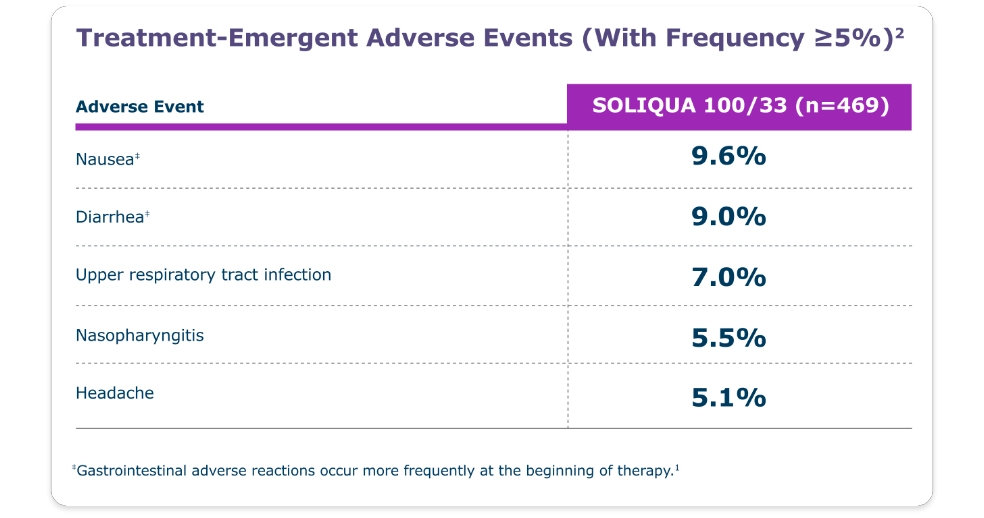
In the LixiLan-O Pivotal Trial, No Patients Studied Experienced Severe Symptomatic Hypoglycemia With SOLIQUA 100/331

Severe symptomatic hypoglycemia1*
(0 out of 469 patients)

Hypoglycemia1†
(38 out of 469 patients)
Hypoglycemia is the most common adverse event with insulin-containing therapies.1 |
*Severe symptomatic hypoglycemia defined as an event requiring assistance of another person to actively administer carbohydrate, glucagon, or other resuscitative actions.1
†Hypoglycemia defined as self-monitored plasma glucose <54 mg/dL.1
Study Design:
A randomized, 30-week, open-label, multicenter, phase III study of adult patients with type 2 diabetes inadequately controlled on metformin (with or without a second oral glucose-lowering drug) was conducted to evaluate the efficacy and safety of iGlarLixi (a titratable fixed-ratio combination of insulin glargine and lixisenatide), insulin glargine alone, or lixisenatide alone. After a 4-week run-in period to optimize metformin and discontinue other oral agents, patients (N=1,170) were randomized in a 2:2:1 ratio to receive once-daily iGlarLixi, insulin glargine, or lixisenatide for 30 weeks. Metformin was continued throughout the study. The primary endpoint was change from baseline HbA1c at Week 30. The maximum allowable insulin glargine dose was 60 units for both iGlarLixi and insulin glargine groups. The trial was designed to assess the contribution of the GLP-1 RA component to glycemic lowering while maintaining comparable insulin titration algorithms across arms.2
Analysis Limitations:
The open-label design may introduce bias, as blinding was impractical due to differences in injection devices and administration patterns. Additionally, the 30-week duration limits assessment of long-term durability of glycemic control and safety outcomes.2
Incidence of Hypoglycemia in Clinical Studies1
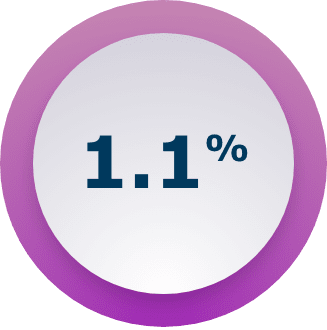
Severe symptomatic hypoglycemia1*
(4 out of 365 patients)
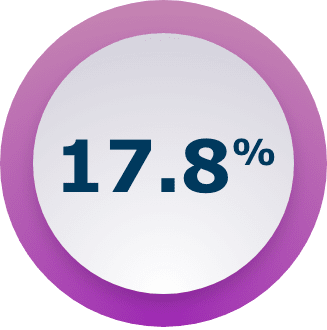
Hypoglycemia1†
(65 out of 365 patients)
Hypoglycemia is the most common adverse event with insulin-containing therapies.1 |
*Severe symptomatic hypoglycemia defined as an event requiring assistance of another person to actively administer carbohydrate, glucagon, or other resuscitative actions.1
†Hypoglycemia defined as self-monitored plasma glucose <54 mg/dL.1
Study Design:
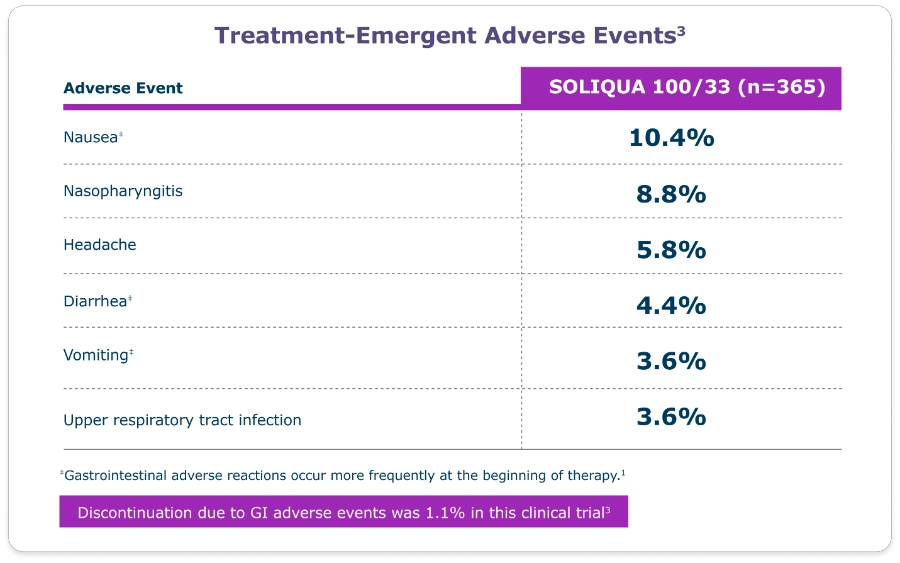
A randomized, 30-week, open-label, multicenter study of adult patients with T2DM was conducted to evaluate the efficacy and safety of SOLIQUA 100/33 (n=365) or Lantus (n=365). Metformin was continued if previously taken and any other OADs were discontinued. The primary endpoint was change from baseline A1C at Week 30. The maximum allowable insulin glargine dose was 60 Units for both treatment groups. The trial was designed to show the contribution of the GLP-1 RA component to glycemic lowering, and the insulin glargine dose and dosing algorithm were selected in order to isolate the effect of the GLP-1 RA component.1,2
Analysis limitations:
The difference in effect observed in the trial may not necessarily reflect the effect that will be observed in the care setting where alternative insulin glargine dosages can be used.1
5x Lower Discontinuation Rate vs GLP-1 RA (lixisenatide)2
| 0.9% of patients discontinued SOLIQUA 100/33 due to GI adverse events vs 5.2% for the GLP-1 RA (lixisenatide)2 |
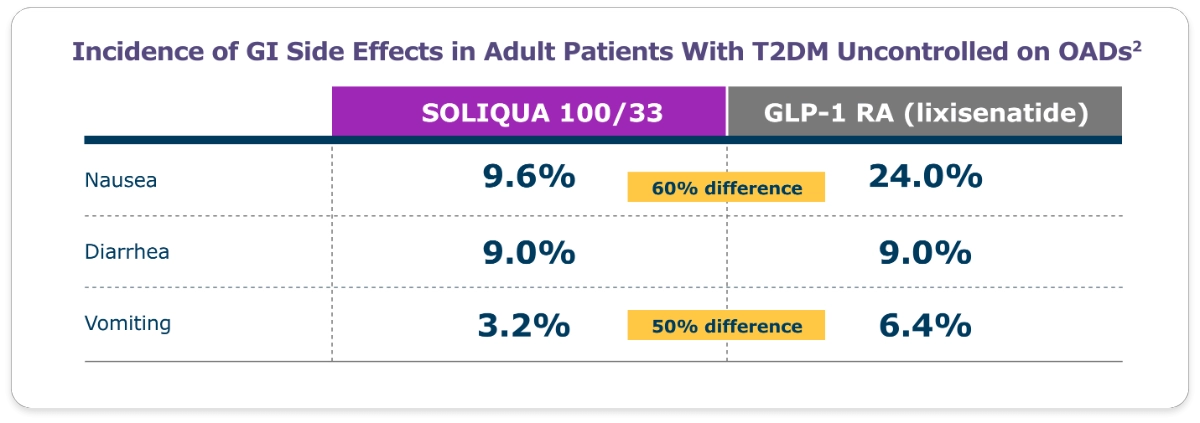
Hypoglycemia is the most common adverse event with insulin-containing therapies.1 |
In the LixiLan-O Pivotal Trial, No Patients Studied Experienced Severe Symptomatic Hypoglycemia With SOLIQUA 100/331
Severe symptomatic hypoglycemia1*
(0 out of 469 patients)
Hypoglycemia1†
(38 out of 469 patients)
Hypoglycemia is the most common adverse event with insulin-containing therapies.1 |
*Severe symptomatic hypoglycemia defined as an event requiring assistance of another person to actively administer carbohydrate, glucagon, or other resuscitative actions.1
†Hypoglycemia defined as self-monitored plasma glucose <54 mg/dL.1
Study Design:
A randomized, 30-week, open-label, multicenter, phase III study of adult patients with type 2 diabetes inadequately controlled on metformin (with or without a second oral glucose-lowering drug) was conducted to evaluate the efficacy and safety of iGlarLixi (a titratable fixed-ratio combination of insulin glargine and lixisenatide), insulin glargine alone, or lixisenatide alone. After a 4-week run-in period to optimize metformin and discontinue other oral agents, patients (N=1,170) were randomized in a 2:2:1 ratio to receive once-daily iGlarLixi, insulin glargine, or lixisenatide for 30 weeks. Metformin was continued throughout the study. The primary endpoint was change from baseline HbA1c at Week 30. The maximum allowable insulin glargine dose was 60 units for both iGlarLixi and insulin glargine groups. The trial was designed to assess the contribution of the GLP-1 RA component to glycemic lowering while maintaining comparable insulin titration algorithms across arms.2
Analysis Limitations:
The open-label design may introduce bias, as blinding was impractical due to differences in injection devices and administration patterns. Additionally, the 30-week duration limits assessment of long-term durability of glycemic control and safety outcomes.2
Incidence of Hypoglycemia in Clinical Studies1
Severe symptomatic hypoglycemia1*
(4 out of 365 patients)
Hypoglycemia1†
(65 out of 365 patients)
Hypoglycemia is the most common adverse event with insulin-containing therapies.1 |
*Severe symptomatic hypoglycemia defined as an event requiring assistance of another person to actively administer carbohydrate, glucagon, or other resuscitative actions.1
†Hypoglycemia defined as self-monitored plasma glucose <54 mg/dL.1
Study Design:
A randomized, 30-week, open-label, multicenter study of adult patients with T2DM was conducted to evaluate the efficacy and safety of SOLIQUA 100/33 (n=365) or Lantus (n=365). Metformin was continued if previously taken and any other OADs were discontinued. The primary endpoint was change from baseline A1C at Week 30. The maximum allowable insulin glargine dose was 60 Units for both treatment groups. The trial was designed to show the contribution of the GLP-1 RA component to glycemic lowering, and the insulin glargine dose and dosing algorithm were selected in order to isolate the effect of the GLP-1 RA component.1,2
Analysis limitations:
The difference in effect observed in the trial may not necessarily reflect the effect that will be observed in the care setting where alternative insulin glargine dosages can be used.1
5x Lower Discontinuation Rate vs GLP-1 RA (lixisenatide)2
| 0.9% of patients discontinued SOLIQUA 100/33 due to GI adverse events vs 5.2% for the GLP-1 RA (lixisenatide)2 |
Hypoglycemia is the most common adverse event with insulin-containing therapies.1 |
Important Safety Information
Abbreviations: GI, gastrointestinal; GLP-1, glucagon-like peptide-1; OAD, oral antidiabetic drug; RA, receptor agonist; T2DM, type 2 diabetes mellitus.
References:
-
SOLIQUA 100/33 Prescribing Information.
-
Data on file. CSR 12404. Sanofi US.
-
Data on file. CSR 12405. Sanofi US.
-
Blonde L, Rosenstock J, Del Prato S, et al. Switching to iGlarLixi versus continuing daily or weekly GLP-1 RA in type 2 diabetes inadequately controlled by GLP-1 RA and oral antihyperglycemic therapy: the LixiLan-G randomized clinical trial. Diabetes Care. 2019;42(11):2108-2116.
