Toujeo® U-300 (insulin glargine) injection 300 Units/mL Pen Comparison


Consider Toujeo Max SoloStar, which offers 900 units per pen and a 56-day shelf life, and is capable of delivering up to 160 units per injection. It is recommended for your appropriate patients who require at least 20 units per day.

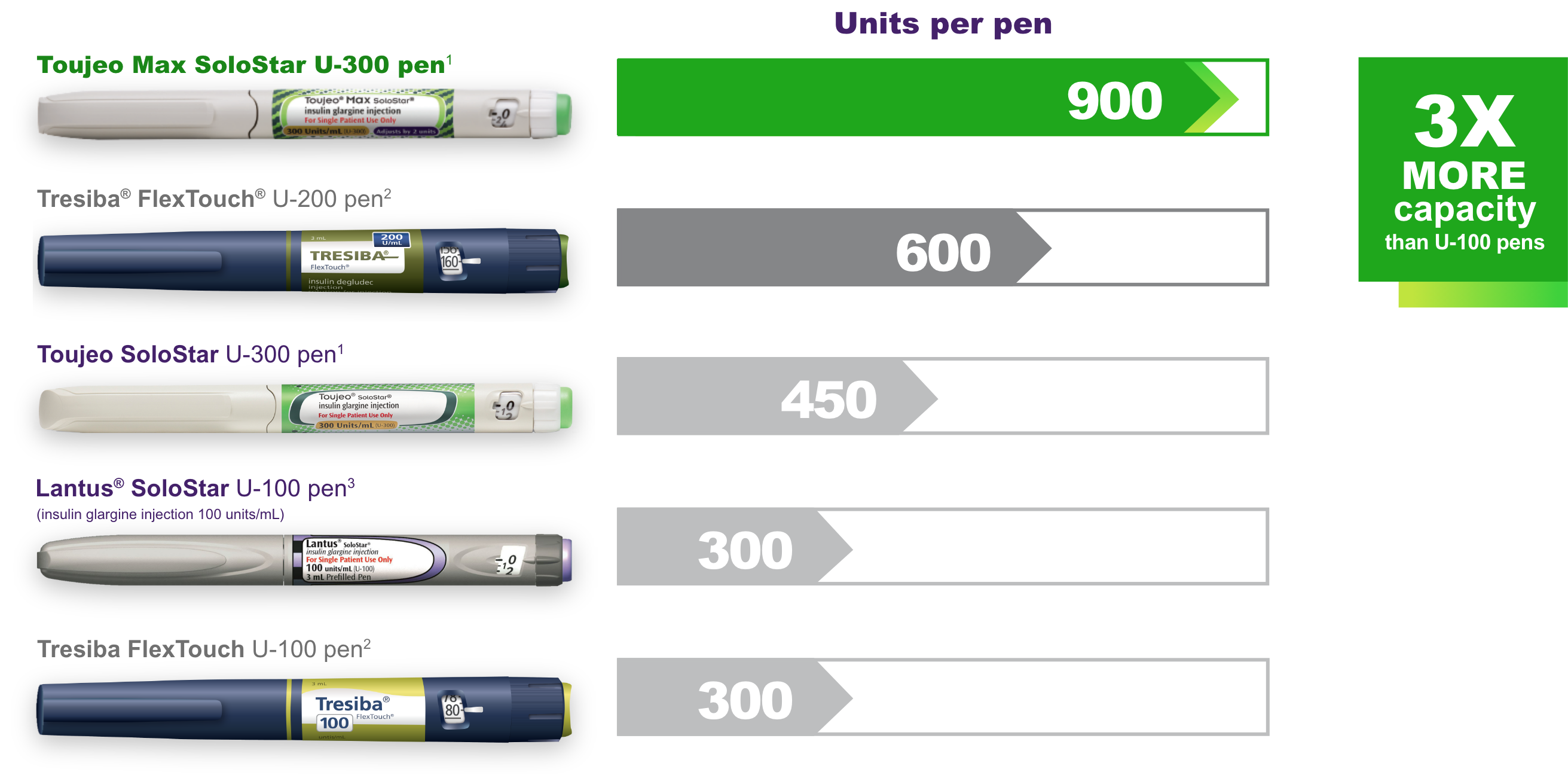
Illustration of a calculator on a teal background.
Chart showing the “Units per pen” for several once-daily basal insulin pens. Toujeo Max SoloStar U-300 pen¹ with 900 units (highlighted in green). Tresiba® FlexTouch® U-200 pen² (600 units), Toujeo SoloStar U-300 pen¹ (450 units), and both Lantus® SoloStar U-100 pen³ and Tresiba FlexTouch U-100 pen² (300 units each). A green label at the top right reads: “3X MORE capacity than U-100 pens.”

For illustrative purposes only. This is not an exhaustive list of all basal insulin pens on the market. This unit-to-unit comparison of these pens does not support an evaluation of safety or efficacy between products.

Toujeo Max SoloStar is recommended for appropriate patients who require at least 20 units of basal insulin per day.

More capacity may mean fewer pens per year*

Choose the average insulin dose in your practice.
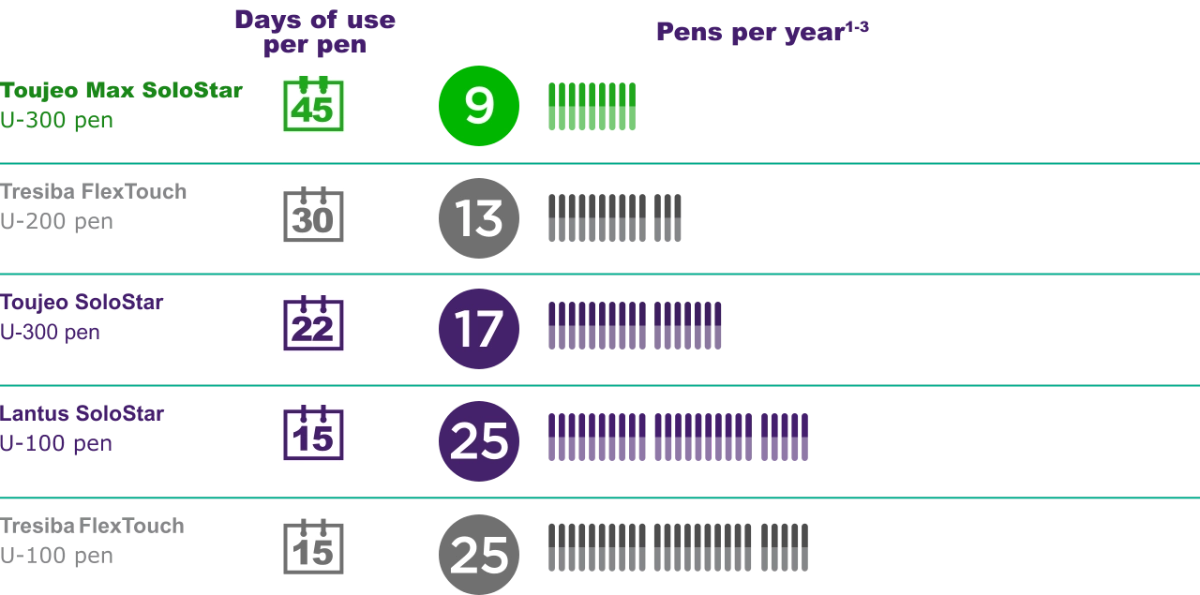
Chart showing once-daily basal insulin pens by "Days of use per pen" and "Pens per year¹⁻³" based on a dosage of 20 units per day. Toujeo Max SoloStar U-300 shows 45 days per pen and 9 pens/year (highlighted in green), followed by Tresiba FlexTouch U-200 (30 days, 13 pens/year), Toujeo SoloStar U-300 (22 days, 17 pens/year), and both Lantus SoloStar U-100 and Tresiba FlexTouch U-100 (15 days, 25 pens/year each).
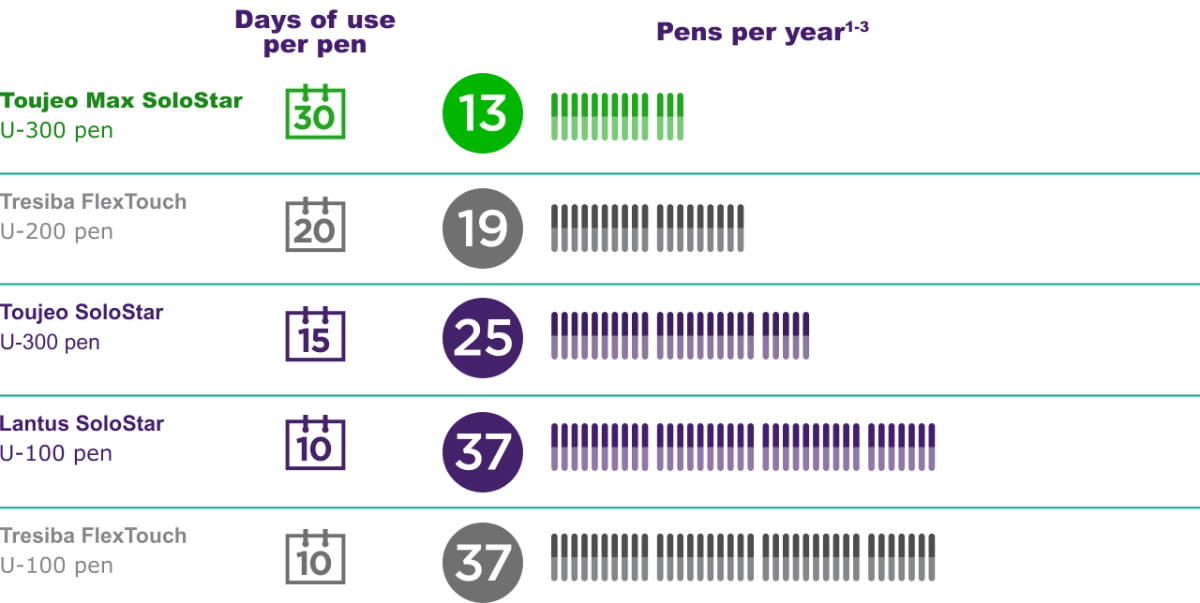
Chart showing once-daily basal insulin pens by "Days of use per pen" and "Pens per year¹⁻³" based on a dosage of 30 units per day. Toujeo Max SoloStar U-300 shows 30 days per pen and 13 pens/year (highlighted in green), followed by Tresiba FlexTouch U-200 (20 days, 19 pens/year), Toujeo SoloStar U-300 (15 days, 25 pens/year), and both Lantus SoloStar U-100 and Tresiba FlexTouch U-100 (10 days, 37 pens/year each).
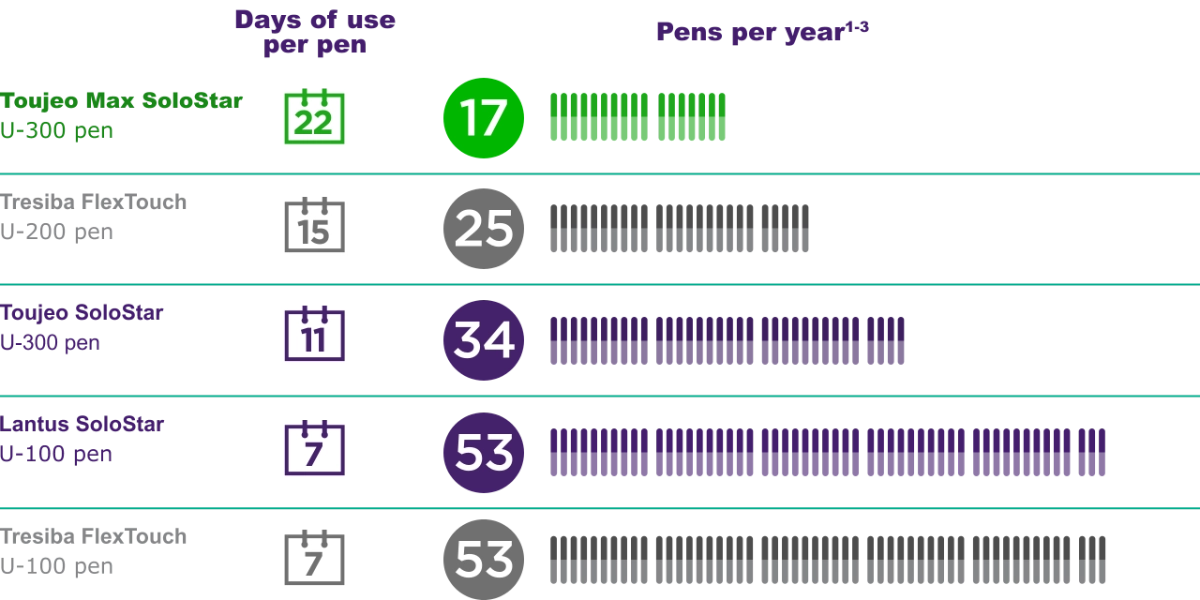
Chart showing once-daily basal insulin pens by "Days of use per pen" and "Pens per year¹⁻³" based on a dosage of 40 units per day. Toujeo Max SoloStar U-300 shows 22 days per pen and 17 pens/year (highlighted in green), followed by Tresiba FlexTouch U-200 (15 days, 25 pens/year), Toujeo SoloStar U-300 (11 days, 34 pens/year), and both Lantus SoloStar U-100 and Tresiba FlexTouch U-100 (7 days, 53 pens/year each).

*Depending on daily dose. Does not account for pen priming or safety tests.

The comparison of these pens does not support an evaluation of safety or efficacy between products.

Download the Dosing Guide
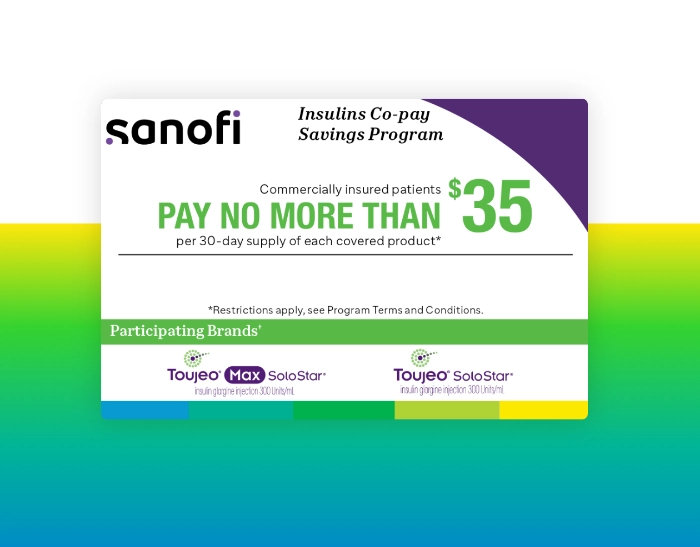
Sanofi insulin co-pay card: 'Pay no more than $35' for a 30-day supply with Toujeo. Terms and conditions apply.

Pay no more than $35

See available savings for eligible patients with and without prescription insurance.

Eligibility Restrictions & Offer Terms apply.

HELP PATIENTS SAVE
Green calculator icon with yellow green gradient box.

Interactive Dosing Calculator for T2DM patients

Calculate the number of units (including titration estimate), mLs, and boxes to include on 30- or 90-day prescriptions. Writing this information on a prescription may reduce rejections at the pharmacy.

FIND THEIR DOSE

Important Safety Information

Contraindications

Toujeo is contraindicated during episodes of hypoglycemia and in patients hypersensitive to insulin glargine or any of the excipients in Toujeo.

Warnings and Precautions

Toujeo contains the same active ingredient, insulin glargine, as Lantus. The concentration of insulin glargine in Toujeo is 300 units per mL (U-300).

Insulin pens and needles must never be shared between patients. Do NOT reuse needles.

Monitor blood glucose in all patients treated with insulin. Modify insulin regimens only under medical supervision. Changes in insulin regimen, strength, manufacturer, type, injection site or method of administration may result in the need for a change in insulin dose or an adjustment in concomitant oral antidiabetic treatment. Changes in insulin regimen may result in hyperglycemia or hypoglycemia. Dosage adjustments are recommended to lower the risk of hypoglycemia when switching patients to Toujeo from another insulin therapy.

Repeated insulin injections into areas of lipodystrophy or localized cutaneous amyloidosis may result in hyperglycemia; sudden change in the injection site (to unaffected area) has been reported to result in hypoglycemia. Advise patients to rotate injection site to unaffected areas and closely monitor for hypoglycemia.

Unit for unit, patients started on, or switched to, Toujeo required a higher dose than patients controlled with Lantus. When switching from another basal insulin to Toujeo, patients experienced higher average fasting plasma glucose levels in the first few weeks of therapy until titrated to their individualized fasting plasma glucose targets. Higher doses were required in titrate-to-target studies to achieve glucose control similar to Lantus.

Hypoglycemia is the most common adverse reaction in patients treated with Toujeo and may be life-threatening. The long-acting effect of Toujeo may delay recovery from hypoglycemia compared to shorter-acting insulins.

Medication errors that may lead to hypoglycemia, such as accidental mix-ups between insulin products, have been reported. Patients should be instructed to always verify the insulin label before each injection.

Do not dilute or mix Toujeo with any other insulin or solution. If mixed or diluted, the solution may become cloudy, and the onset of action/time to peak effect may be altered in an unpredictable manner. Do not administer Toujeo via an insulin pump or intravenously because severe hypoglycemia can occur.

Severe, life-threatening, generalized allergy, including anaphylaxis, can occur. Discontinue Toujeo, monitor, and treat if indicated.

A reduction in the Toujeo dose may be required in patients with renal or hepatic impairment.

All insulins, including Toujeo, can lead to life-threatening hypokalemia. Untreated hypokalemia may cause respiratory paralysis, ventricular arrhythmia, and death. Closely monitor potassium levels in patients at risk of hypokalemia and treat if indicated.

Fluid retention, which may lead to or exacerbate heart failure, can occur with concomitant use of thiazolidinediones (TZDs) with insulin. These patients should be observed for signs and symptoms of heart failure. If heart failure occurs, dosage reduction or discontinuation of TZD must be considered.

Drug Interactions

Certain drugs may affect glucose metabolism, requiring insulin dosage adjustment and close monitoring of blood glucose. The signs of hypoglycemia may be reduced in patients taking anti-adrenergic drugs (e.g., beta-blockers, clonidine, guanethidine, and reserpine).

Adverse Reactions

Adverse reactions commonly associated with Toujeo include hypoglycemia, hypersensitivity reactions, injection site reactions, lipodystrophy, pruritus, rash, edema, and weight gain.

Important Safety Information for Toujeo U-300 (insulin glargine) injection SoloStar and Toujeo Max SoloStar

Toujeo SoloStar and Toujeo Max SoloStar are single-patient-use prefilled insulin pens. To help ensure an accurate dose each time, patients should follow all steps in the Instruction Leaflet accompanying their pen; otherwise, they may not get the correct amount of insulin, which may affect their blood glucose levels. It is especially important to perform a safety test when a patient is using a new pen for the first time.
Do not withdraw Toujeo from the SoloStar and Max SoloStar single-patient-use prefilled pens with a syringe.

Indication

Toujeo is a long-acting human insulin analog indicated to improve glycemic control in adults and pediatric patients 6 years and older with diabetes mellitus.

Limitations of Use: Toujeo is not recommended for the treatment of diabetic ketoacidosis.

Important Safety Information

Indication

†Eligibility Restrictions & Offer Terms for Your Patients:

Sanofi Insulins Co-pay Savings Program: This savings program is not insurance. For a complete list of participating brands, products, and National Drug Codes (NDCs) Click Here. This offer is not valid for prescriptions covered by or submitted for reimbursement, in whole or in part, under Medicare, Medicaid, VA, DOD, TRICARE, similar federal or state programs, including any state pharmaceutical programs. If you have an Affordable Care (Health Care Exchange) plan, you may still be qualified to receive and use this savings card. Please note: the Federal Employees Health Benefits (FEHB) Program is not a federal or state government health care program for purposes of the savings program. Void where prohibited by law. There are other relevant costs associated with overall treatment. Sanofi reserves the right to rescind, revoke, terminate, or amend this offer, eligibility, and terms of use at any time without notice. Upon registration, patients will receive all program details. For questions regarding your eligibility or benefits, or if you wish to discontinue your participation, call the Sanofi Insulins Co-pay Savings Program at (866) 255-8661 (8:00 am-8:00 pm EST, Monday-Friday).

Insulins Valyou Savings Program: This savings program is not insurance. For a complete list of participating brands, products, and National Drug Codes (NDCs) Click Here. This offer is only valid for those who are uninsured or those who are insured by a prescription plan but are not using such insurance and will be paying the full retail price for the medication. Void where prohibited by law. The Savings Program applies to the cost of medication. There are other relevant costs associated with overall treatment. You may not submit claims for reimbursement to any third-party payor, including any government healthcare plan (e.g., Medicare, Medicaid, DOD, VA, TRICARE) or similar federal or state programs for Sanofi Insulin prescriptions when using this Program. You may not seek to have your out-of-pocket costs or the full retail price of the Sanofi Insulin count toward your deductible, true-out-of-pocket (TrOOP), maximum out-of-pocket (MOOP), or any other out-of-pocket caps associated with any insurance coverage. Sanofi reserves the right to rescind, revoke, terminate, or amend this offer, eligibility, and terms of use at any time without notice. Upon registration, patients will receive all program details. For questions regarding your eligibility or benefits, or if you wish to discontinue your participation, call the Insulins Valyou Savings Program at (833) 813-0190 (8:00 am-8:00 pm EST, Monday-Friday).

References:
1. Toujeo Prescribing Information. 2. Tresiba Prescribing Information. 3. Lantus Prescribing Information.

LANTUS, TOUJEO, SoloStar, TOUJEO Max SoloStar, Sanofi Patient Connection, and Sanofi are registered trademarks of Sanofi or an affiliate. All the other trademarks above are the property of their respective owners, who have no affiliation or relationship with Sanofi. MAT-US-2509828-v1.0-10/2025