

Jump to:
Infilbray showed superior neurologic improvement compared with imiglucerase, as assessed through the O’Brien OLS global test evaluating multiple endpoints in motor and cognitive function, in patients 12 years and older with Gaucher disease type 3.1,a
P value=0.0137.1
aAs measured by 4-item SARA and RBANS at Week 52.1
Infilbray was studied in a pivotal, phase 3 trial1
A randomized, double-blind, double-dummy, active-controlled, multicenter trial1

Patients were excluded from this study if they had progressive myoclonic epilepsy or severe depression.2
Median length of ERT treatment prior to enrollment was 14 years, ranging from 3 to 26 years.1
aPatients were stratified by age group (12 to 17 years; 18 years and older).1
bFor ≥3 years.1
cPatients must have had gaze palsy and some sign of ataxia, defined as a modified SARA score of 1 or above, to be included in the study.2
dFour-item SARA score evaluated neurologic motor function across 4 domains, including: gait, stance, sitting, and speech disturbance. RBANS assessed cognitive function across 5 domains, including: immediate memory, visuospatial/constructional abilities, language, attention, and delayed memory.1
Infilbray showed superior neurologic improvement compared with imiglucerase in patients ≥12 years of age1
Infilbray demonstrated statistical superiority versus imiglucerase based on the O'Brien OLS global test of RBANS and 4-item SARA scores at Week 521
O'Brien OLS global test, P value=0.01371
Cognitive score (RBANS): An improvement with Infilbray was observed1
Infilbray baseline mean (SD): 78.57 (18.28)
Imiglucerase baseline mean (SD): 68.36 (20.87)

LS mean changes at Week 52

Infilbray Week 52 mean (SD): 80.55 (19.24)
Imiglucerase Week 52 mean (SD): 66.14 (16.79)
Motor function (4-item SARA): An improvement with Infilbray was observed1
Infilbray baseline mean (SD): 2.19 (1.47)
Imiglucerase baseline mean (SD): 3.18 (2.38)

LS mean changes at Week 52

Infilbray Week 52 mean (SD): 1.71 (1.52)
Imiglucerase Week 52 mean (SD): 2.81 (2.32)
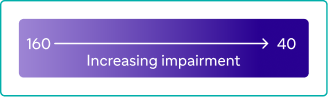
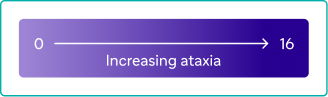
aHigher RBANS scores and lower 4-item SARA scores indicate improvement from baseline in cognitive and neurologic motor function, respectively.1
Statistical significance based on a global test that weighted both scores; RBANS and 4-item SARA were not evaluated individually.1
Change in cognitive and motor function from baseline to Week 52 was evaluated1,2
Change in 5 RBANS domain scores from baseline to Week 522

Individual components of RBANS were not prespecified and are descriptive in nature. Data should be interpreted with caution.
Increase = improvement1
A positive change in total RBANS score represents improved cognitive function.
Change in 4-item SARA scores from baseline to Week 521,2

Individual components of 4-item SARA were not prespecified and are descriptive in nature. Data should be interpreted with caution.
Sitting cannot be displayed because only 4 patients participated with non-zero change.2
Decrease = improvement1
A negative change in total 4-item SARA represents improved motor function.
aRepresents no change.
Change in 4-item SARA scores from baseline to Week 521,2
Individual components of 4-item SARA were not prespecified and are descriptive in nature. Data should be interpreted with caution.
Sitting cannot be displayed because only 4 patients participated with non-zero change.2
Decrease = improvement1
A negative change in total 4-item SARA represents improved motor function.
aRepresents no change.
Understanding the primary endpoint of the pivotal trial1
Total RBANS score
Total 4-item SARA score
Interested in learning more?
Definitions: ERT=enzyme replacement therapy; LS=least squares; OLS=ordinary least squares; Q2W=every two weeks; RBANS=Repeatable Battery for the Assessment of Neuropsychological Status; SARA=Scale for the Assessment and Rating of Ataxia; SD=standard deviation.
Relevant pages to view:


Indication
References: 1. Infilbray (venglustat). Prescribing information. Genzyme Corporation, Cambridge, MA. 2. Mistry P et al. Poster presented at: WORLDSymposium; February 2-6, 2026; San Diego, CA.
