SARCLISA® (isatuximab-irfc) logo

ICARIA-MM: Adverse Reactions for SARCLISA® (isatuximab-irfc) + Pd

SARCLISA + POMALIDOMIDE AND DEXAMETHASONE (Pd)


Discontinuation rates1,2

Permanent treatment discontinuation due to adverse reactions (grades 1 to 4)

SARCLISA + PdPd
7%12%
  • Dosage interruptions due to an adverse reaction occurred in 31% of patients who received SARCLISA + Pd
    - Discontinuations from treatment due to infection were reported in 2.6% of patients receiving SARCLISA + Pd vs 5% of patients receiving Pd alone
    - The most frequent adverse reaction requiring dosage interruption was IRR (28%)

The addition of SARCLISA to Pd did not increase treatment discontinuations due to adverse reactions vs Pd alone1,2

IRR=infusion-related reaction.

Adverse reactions (≥10%) in patients receiving SARCLISA + Pd with a difference between arms of ≥5% compared with Pd alone1

Adverse reactionsSARCLISA + Pd
(n=152)
Pd
(n=149)
All gradesGrade 3Grade 4All gradesGrade 3Grade 4
General disorders and administration site conditions
IRRa38%1.3%1.3%0%0%0%
Infections
Upper respiratory tract infectionb57%9%0%42%3.4%0%
Pneumoniac31%22%3.3%23%16%2.7%
Blood and lymphatic system disorders
Febrile neutropenia12%11%1.3%2%1.3%0.7%
Respiratory, thoracic, and mediastinal disorders
Dyspnead17%5%0%12%1.3%0%
Gastrointestinal disorders
Diarrhea26%2%0%19%0.7%0%
Nausea15%0%0%9%0%0%
Vomiting12%1.3%0%3.4%0%0%

aIRR includes IRR, cytokine release syndrome, and drug hypersensitivity.
bUpper respiratory tract infection includes bronchiolitis, bronchitis, bronchitis viral, chronic sinusitis, fungal pharyngitis, influenza-like illness, laryngitis, nasopharyngitis, parainfluenzae virus infection, pharyngitis, respiratory tract infection, respiratory tract infection viral, rhinitis, sinusitis, tracheitis, upper respiratory tract infection, and upper respiratory tract infection bacterial.
cPneumonia includes atypical pneumonia, bronchopulmonary aspergillosis, pneumonia, pneumonia haemophilus, pneumonia influenzal, pneumonia pneumococcal, pneumonia streptococcal, pneumonia viral, candida pneumonia, pneumonia bacterial, haemophilus infection, lung infection, pneumonia fungal, and Pneumocystis jirovecii pneumonia.
dDyspnea includes dyspnea, dyspnea exertional, and dyspnea at rest.

Serious adverse reactions1,2

  • Serious adverse reactions occurred in 62% of patients receiving SARCLISA + Pd
    - Serious adverse reactions in >5% of patients who received SARCLISA + Pd included pneumonia (26%), upper respiratory tract infection (7%), and febrile neutropenia (7%)
  • Fatal adverse reactions occurred in 11% of patients in the SARCLISA + Pd arm (those that occurred in >1% of patients were pneumonia and other infections [3%]) vs 11% in the Pd arm

Hematology laboratory abnormalities in patients receiving SARCLISA + Pd vs Pd alone1

Laboratory parametersSARCLISA + Pd
(n=152)
Pd
(n=149)
All gradesGrade 3Grade 4All gradesGrade 3Grade 4
Hemoglobin decreased99%32%0%97%28%0%
Neutrophils decreased96%24%61%92%38%31%
Lymphocytes decreased92%42%13%92%35%8%
Platelets decreased84%14%16%79%9%15%

The denominator used to calculate the percentages was based on the safety population.

Complete blood cell counts should be monitored periodically during treatment. Patients with neutropenia should be monitored for signs of infection. In case of infection, appropriate standard therapy should be instituted. Antibacterial and antiviral prophylaxis can be considered during treatment.

Infusion-related reactions (IRRs)1

Incidence and timing of IRRs

A 1st icon.

Across 3 clinical trials, IRRs occurred in 35% of patients receiving SARCLISA (n=206/592). Among these patients, 92% experienced IRRs during the first infusion and 12% experienced them after the first cycle

A bar graph icon.

Grade 1 IRRs were reported in 6% of patients receiving SARCLISA, grade 2 in 28%, and grade 3 or 4 in 1.2% across the 3 clinical trials

Symptoms of IRRs

A lightning bolt icon.

The most common symptoms (≥5%) of an IRR across the 3 clinical trials included dyspnea and cough
- Anaphylactic reactions occurred in <1% of patients across the 3 clinical trials

An exclamation point icon.

Serious IRRs, including life-threatening anaphylactic reactions, have occurred with SARCLISA treatment. Severe signs and symptoms included cardiac arrest, hypertension, hypotension, bronchospasm, dyspnea, angioedema, and swelling

Infusion interruption and discontinuation due to IRRs

A hand icon.

Infusion interruption of SARCLISA occurred in <1% of patients across the 3 clinical trials; of these patients, 26% experienced interruptions due to IRRs

An x icon.

SARCLISA alone was discontinued due to IRRs in 1% of patients across the 3 clinical trials

Managing IRRs1,3

  • To decrease the risk and severity of IRRs, premedicate patients prior to SARCLISA infusion with acetaminophen, H₂ antagonists, diphenhydramine or equivalent, and dexamethasone
  • Monitor vital signs frequently during the entire SARCLISA infusion
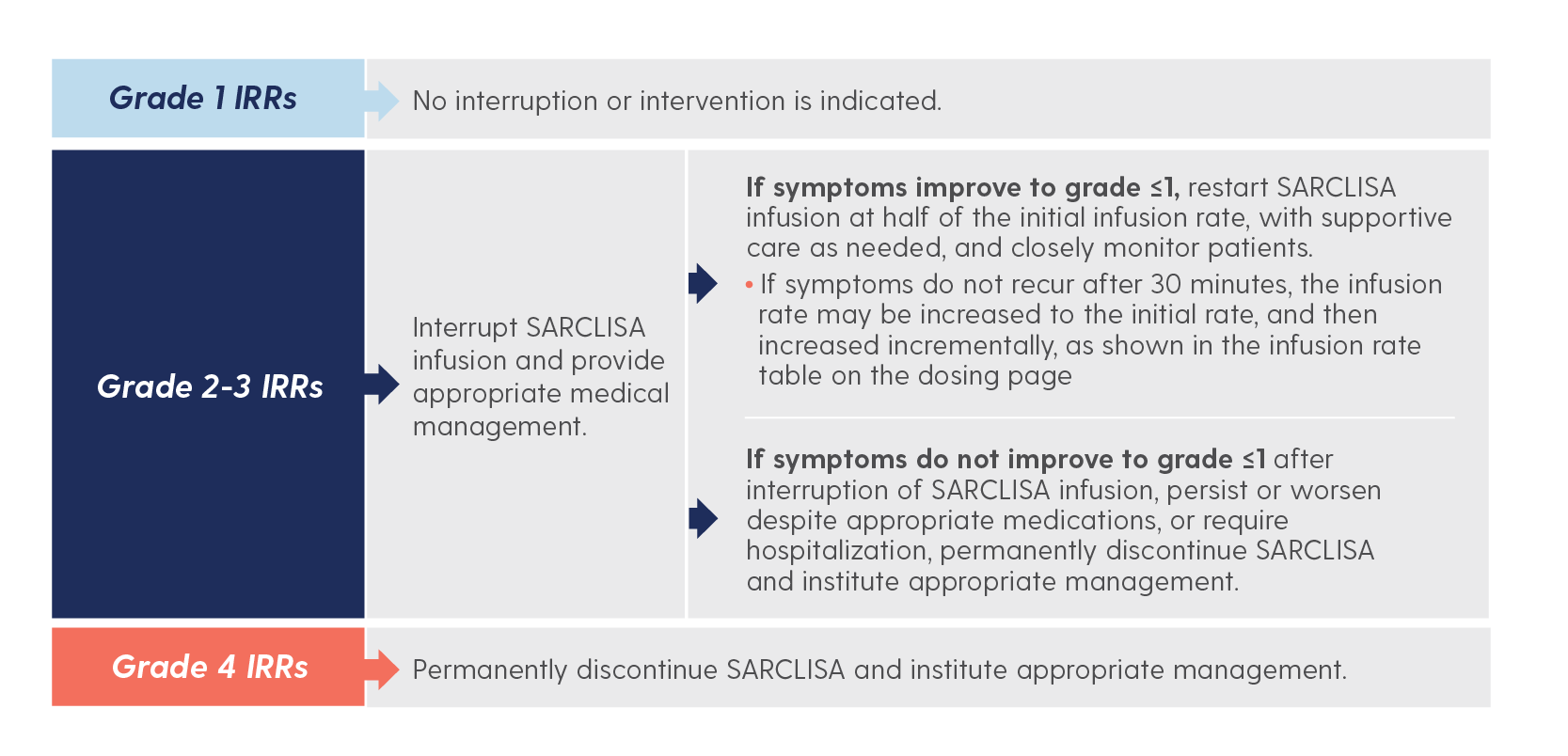
A table provides recommendations on how to manage grade 1-4 infusion-related reactions, or IRRs.

See the infusion rate table on the Dosing page for more details.

Defining IRR grades3

Grade 1Mild transient reaction.
Grade 2Therapy or infusion interruption indicated, but IRR responds promptly to symptomatic treatment (eg, antihistamines, NSAIDs, narcotics, IV fluids); prophylactic medications indicated for ≤24 hours.
Grade 3Prolonged (ie, not rapidly responsive to symptomatic medication and/or brief interruption of infusion); recurrence of symptoms following initial improvement; hospitalization indicated for clinical sequelae.
Grade 4Life-threatening consequences; urgent intervention indicated.

IV=intravenous; NSAID=nonsteroidal anti-inflammatory drug.

Dose modifications1

Dose delay may be required to allow for recovery of blood counts in the event of hematological toxicity. For dosing instructions for combination agents administered with SARCLISA, refer to the study design description for ICARIA-MM and the respective manufacturer’s Prescribing Information.

No dose reduction of SARCLISA is recommended

View the premedication information for SARCLISA

Other adverse reactions1

Infections

  • SARCLISA can cause severe, life-threatening, or fatal infections. In patients who received SARCLISA at the recommended dose in ICARIA-MM, IKEMA, and IMROZ (N=592), serious infections, including opportunistic infections, occurred in 46%, grade 3 or 4 infections occurred in 43%, and fatal infections occurred in 4.7%. The most common type of serious infection reported was pneumonia (32%)
  • Monitor patients for signs and symptoms of infection prior to and during treatment with SARCLISA and treat appropriately. Administer prophylactic antimicrobials according to guidelines

Neutropenia

  • SARCLISA can cause neutropenia. In 3 clinical trials, in patients treated with SARCLISA (N=592), neutropenia based on laboratory values occurred in 81%, with grade 3 or 4 occurring in 52%. Neutropenic infections occurred in 12% of patients, with grade 3 or 4 in 4.9%, and febrile neutropenia in 4%
  • Monitor complete blood cell counts periodically during treatment
  • Consider the use of antibacterial and antiviral prophylaxis during treatment
  • Monitor patients with neutropenia for signs of infection
  • If grade 4 neutropenia occurs, delay SARCLISA dose until neutrophil count recovery to at least 1 × 10⁹/L, and provide supportive care with growth factors, according to institutional guidelines

Second primary malignancies

  • Monitor patients for the development of second primary malignancies
  • The incidence of second primary malignancies is increased in patients treated with regimens that contain SARCLISA     
    - Across 3 clinical trials in patients treated with SARCLISA (N=592), second primary malignancies occurred in 12% of patients
    - In ICARIA-MM, at a median follow-up time of 52 months, second primary malignancies occurred in 7% of patients in the SARCLISA + Pd arm and in 2% of patients in the Pd arm 
  • The most common (≥1%) second primary malignancies across 3 clinical trials (N=592) included skin cancers (7% with SARCLISA-containing regimens and 3.1% with comparative regimens) and solid tumors other than skin cancer (4.6% with SARCLISA-containing regimens and 2.9% with comparative regimens). Patients with non-melanoma skin cancer continued treatment after resection of the skin cancer in ICARIA-MM 

Laboratory test interference

SARCLISA, an anti-CD38 antibody, may interfere with blood bank serological tests with false-positive reactions in indirect antiglobulin tests (indirect Coombs tests), antibody detection (screening) tests, antibody identification panels, and antihuman globulin crossmatches in patients treated with SARCLISA. This interference with the indirect Coombs test may persist for approximately 6 months after the last infusion of SARCLISA.

  • Conduct blood type and screen tests in patients before the first infusion of SARCLISA
  • Consider phenotyping prior to starting treatment with SARCLISA
  • If treatment with SARCLISA has already begun, inform the blood bank that the patient is receiving SARCLISA, and SARCLISA interference with blood compatibility testing can be resolved using dithiothreitol-treated red blood cells (RBCs). If an emergency transfusion is required, non–cross-matched ABO/RhD-compatible RBCs can be given as per local blood bank practices
Dosing

Important Safety Information

CONTRAINDICATIONS
SARCLISA is contraindicated in patients with severe hypersensitivity to isatuximab-irfc or to any of its excipients.

WARNINGS AND PRECAUTIONS
Infusion-Related Reactions
Serious infusion-related reactions (IRRs), including life-threatening anaphylactic reactions, have occurred with SARCLISA treatment. Severe signs and symptoms include cardiac arrest, hypertension, hypotension, bronchospasm, dyspnea, angioedema, and swelling.

In clinical trials (ICARIA-MM, IKEMA, and IMROZ), in patients treated with SARCLISA (N=592), infusion-related reactions occurred in 206 patients (35%). Among these 206 patients, 92% experienced infusion-related reactions during the first infusion and 12% after the first cycle.

The most common symptoms (≥5%) of an infusion-related reaction included dyspnea and cough. Grade 1 infusion-related reactions were reported in 6% of patients, grade 2 in 28%, and grade 3 or 4 in 1.2%. Anaphylactic reactions occurred in less than 1% of patients. The total incidence of SARCLISA infusion interruptions was less than 1% and the incidence of patients with at least one SARCLISA infusion interruption due to infusion-related reactions was 26%. The median time to first SARCLISA infusion interruption was 61 minutes (range 4 to 240 minutes). SARCLISA was discontinued in 1% of patients due to infusion-related reactions. To decrease the risk and severity of IRRs, premedicate patients prior to SARCLISA infusion with acetaminophen, H₂ antagonists, diphenhydramine or equivalent, and dexamethasone.

Monitor vital signs frequently during the entire SARCLISA infusion. For patients with grade ≥2 reactions, interrupt SARCLISA infusion and provide appropriate medical management. For patients with grade 2 or grade 3 reactions, if symptoms improve to grade ≤1, restart SARCLISA infusion at half of the initial infusion rate, with supportive care as needed, and closely monitor patients. If symptoms do not recur after 30 minutes, the infusion rate may be increased to the initial rate, and then increased incrementally. In case symptoms do not improve to grade ≤1 after interruption of SARCLISA infusion, persist or worsen despite appropriate medications, or require hospitalization, permanently discontinue SARCLISA and institute appropriate management. Permanently discontinue SARCLISA if an anaphylactic reaction or life-threatening (grade 4) IRR occurs and institute appropriate management.

Infections
SARCLISA can cause severe, life-threatening, or fatal infections. In patients who received SARCLISA at the recommended dose in ICARIA-MM, IKEMA, and IMROZ (N=592), serious infections, including opportunistic infections, occurred in 46%, grade 3 or 4 infections occurred in 43%, and fatal infections occurred in 4.7%. The most common serious infection reported was pneumonia (32%).

Monitor patients for signs and symptoms of infection prior to and during treatment with SARCLISA and treat appropriately. Administer prophylactic antimicrobials according to guidelines.

Neutropenia
SARCLISA may cause neutropenia.

In clinical trials (ICARIA-MM, IKEMA, and IMROZ), in patients treated with SARCLISA (N=592), neutropenia based on laboratory values occurred in 81%, with grade 3 or 4 occurring in 52%. Neutropenic infections occurred in 12% of patients, with grade 3 or 4 in 4.9%, and febrile neutropenia in 4%.

Monitor complete blood cell counts periodically during treatment. If needed, use antibacterial and antiviral prophylaxis during treatment. Monitor patients with neutropenia for signs of infection. In case of grade 4 neutropenia, delay SARCLISA dose until neutrophil count recovery to at least 1 x 10⁹/L, and provide supportive care with growth factors, according to institutional guidelines. No dose reductions of SARCLISA are recommended.

Second Primary Malignancies
The incidence of second primary malignancies, during treatment and post-treatment, is increased in patients treated with SARCLISA-containing regimens. In clinical trials (ICARIA-MM, IKEMA, and IMROZ), in patients treated with SARCLISA (N=592), second primary malignancies occurred in 71 patients (12%).

In ICARIA-MM, at a median follow-up time of 52 months, second primary malignancies occurred in 7% of patients treated with SARCLISA, pomalidomide, and dexamethasone (Isa-Pd) and in 2% of patients treated with Pd.

In IKEMA study, at a median follow-up time of 57 months, second primary malignancies occurred in 10% of patients treated with SARCLISA, carfilzomib, and dexamethasone (Isa-Kd) and in 8% of patients treated with Kd.

In IMROZ study, at a median follow-up time of 60 months, second primary malignancies occurred in 16% of patients treated with SARCLISA, bortezomib, lenalidomide, and dexamethasone (Isa-VRd) and in 9% of patients treated with VRd.

The most common (≥1%) second primary malignancies in ICARIA-MM, IKEMA, and IMROZ (N=592) included skin cancers (7% with SARCLISA-containing regimens and 3.1% with comparative regimens) and solid tumors other than skin cancer (4.6% with SARCLISA-containing regimens and 2.9% with comparative regimens). Patients with non-melanoma skin cancer continued treatment after resection of the skin cancer, except 2 patients in the Isa-VRd arm and 1 patient in the VRd arm of the IMROZ study. Monitor patients for the development of second primary malignancies.

Laboratory Test Interference
Interference with Serological Testing (Indirect Antiglobulin Test)
SARCLISA binds to CD38 on red blood cells (RBCs) and may result in a false-positive indirect antiglobulin test (indirect Coombs test). This interference with the indirect Coombs test may persist for approximately 6 months after the last infusion of SARCLISA. The indirect antiglobulin test was positive during Isa-Pd treatment in 68% of the tested patients, and during Isa-Kd treatment in 63% of patients. In patients with a positive indirect antiglobulin test, blood transfusions were administered without evidence of hemolysis. ABO/RhD typing was not affected by SARCLISA treatment.

Before the first SARCLISA infusion, conduct blood type and screen tests on SARCLISA-treated patients. Consider phenotyping prior to starting SARCLISA treatment. If treatment with SARCLISA has already started, inform the blood bank that the patient is receiving SARCLISA and that SARCLISA interference with blood compatibility testing can be resolved using dithiothreitol-treated RBCs. If an emergency transfusion is required, non–cross-matched ABO/RhD-compatible RBCs can be given as per local blood bank practices.

Interference with Serum Protein Electrophoresis and Immunofixation Tests
SARCLISA is an IgG kappa monoclonal antibody that can be incidentally detected on both serum protein electrophoresis and immunofixation assays used for the clinical monitoring of endogenous M-protein. This interference can impact the accuracy of the determination of complete response in some patients with IgG kappa myeloma protein.

Embryo-Fetal Toxicity
Based on the mechanism of action, SARCLISA can cause fetal harm when administered to a pregnant woman. SARCLISA may cause fetal immune cell depletion and decreased bone density. Advise pregnant women of the potential risk to a fetus. Advise females with reproductive potential to use an effective method of contraception during treatment with SARCLISA and for 5 months after the last dose. The combination of SARCLISA with pomalidomide or lenalidomide is contraindicated in pregnant women because pomalidomide or lenalidomide may cause birth defects and death of the unborn child. Refer to the pomalidomide or lenalidomide prescribing information on use during pregnancy.

ADVERSE REACTIONS
In combination with pomalidomide and dexamethasone: The most common adverse reactions (≥20%) were upper respiratory tract infection, infusion-related reactions, pneumonia, and diarrhea. The most common hematology laboratory abnormalities (≥80%) were decreased hemoglobin, decreased neutrophils, decreased lymphocytes, and decreased platelets.

In combination with carfilzomib and dexamethasone: The most common adverse reactions (≥20%) were upper respiratory tract infection, infusion-related reactions, fatigue, hypertension, diarrhea, pneumonia, dyspnea, insomnia, bronchitis, cough, and back pain. The most common hematology laboratory abnormalities (≥80%) were decreased hemoglobin, decreased lymphocytes, and decreased platelets.

In combination with bortezomib, lenalidomide, and dexamethasone: The most common adverse reactions (≥20%) were upper respiratory tract infections, diarrhea, fatigue, peripheral sensory neuropathy, pneumonia, musculoskeletal pain, cataract, constipation, peripheral edema, rash, infusion-related reaction, insomnia, and COVID-19. The most common hematologic laboratory abnormalities (≥80%) were decreased hemoglobin, decreased leukocytes, decreased lymphocytes, decreased platelets, and decreased neutrophils.

Serious adverse reactions occurred in 62% of patients receiving Isa-Pd. Serious adverse reactions in >5% of patients who received Isa-Pd included pneumonia (26%), upper respiratory tract infections (7%), and febrile neutropenia (7%). Fatal adverse reactions occurred in 11% of patients (those that occurred in more than 1% of patients were pneumonia and other infections [3%]).

Serious adverse reactions occurred in 59% of patients receiving Isa-Kd. The most frequent serious adverse reactions in >5% of patients who received Isa-Kd were pneumonia (25%) and upper respiratory tract infections (9%). Adverse reactions with a fatal outcome during treatment were reported in 3.4% of patients in the Isa-Kd group (those occurring in more than 1% of patients were pneumonia occurring in 1.7% and cardiac failure in 1.1% of patients).

Serious adverse reactions occurred in 71% of patients receiving Isa-VRd. The serious adverse reaction in >5% of patients who received Isa-VRd was pneumonia (30%). Fatal adverse reactions occurred in 11% of patients with Isa-VRd (those occurring in more than 1% of patients were pneumonia [5%]).

USE IN SPECIAL POPULATIONS
Because of the potential for serious adverse reactions in the breastfed child from isatuximab-irfc administered in combination with pomalidomide or lenalidomide and dexamethasone, advise lactating women not to breastfeed during treatment with SARCLISA.

Indication

SARCLISA (isatuximab-irfc) is indicated:

  • In combination with bortezomib, lenalidomide, and dexamethasone, for the treatment of adult patients with newly diagnosed multiple myeloma who are not eligible for autologous stem cell transplant (ASCT)

  • In combination with carfilzomib and dexamethasone, for the treatment of adult patients with relapsed or refractory multiple myeloma who have received 1 to 3 prior lines of therapy

  • In combination with pomalidomide and dexamethasone, for the treatment of adult patients with multiple myeloma who have received at least 2 prior therapies including lenalidomide and a proteasome inhibitor

Important Safety Information

Indication

References: 1. SARCLISA. Prescribing information. sanofi-aventis U.S. LLC; 2024. 2. Data on file. sanofi-aventis U.S. LLC. 3. US Department of Health and Human Services. Common Terminology Criteria for Adverse Events (CTCAE) v5.0. National Cancer Institute; 2017.

©2025 Sanofi. All rights reserved. SARCLISA, CareASSIST, and Sanofi are registered trademarks of Sanofi or an affiliate. All the other trademarks on this website are the property of their respective owners, who have no affiliation or relationship with Sanofi. MAT-US-2406160-v3.0-07/2025 Last Updated: July 2025