
When every bleed counts, ALPROLIX® can help protect* pediatric patients every step of the way1
*ALPROLIX has been proven to help patients prevent bleeding episodes using a prophylaxis regimen.1
PTP=previously treated patient.
ALPROLIX was studied in more pediatric PTPs than any other factor IX EHL1-3
In PTPs ≤ 11 years
MEDIAN OVERALL ABR

KIDS B-LONG TRIAL
(IP PATIENTS)4
(0-3.1)

B-YOND TRIAL
(Year 4)5†
(0-2.2)
OTHER ABRs IN THE KIDS B-LONG TRIAL

MEDIAN AsBR
(IP PATIENTS)4
(0-1.2)

MEDIAN JOINT ABR
(IP PATIENTS)4
(0-1.1)

ZERO BLEEDS FOR 1 IN 3 PATIENTS
(n=10/30)4
Pediatric patients were studied up to 4.8 years, from the beginning of the Kids B-LONG trial to the end of the B-YOND trial5
†In a 4 year subanalysis of the pediatric prophylaxis arm of B-YOND, 10 patients ≤11 years achieved a median ABR of 0 (0-2.2) for Year 4.5
‡From the individualized prophylaxis arm of the Kids B-LONG trial.5
ABR=annualized bleed rate; AsBR=annualized spontaneous bleed rate; EHL=extended half-life; IP=individualized prophylaxis; PTP=previously treated patient.
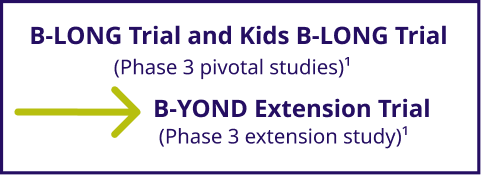
CLINICAL TRIAL DESIGN: ALPROLIX DEMONSTRATED EFFICACY ACROSS 4 TRIALS1,6,7:
Kids B-LONG was a phase 3 open-label study investigating the safety and efficacy of ALPROLIX in 30 PTPs aged ≤11 years with severe hemophilia. The number of patients 1 to 5 years of age was 15, and 6 to 11 years of age was 15. All 30 patients were treated with ALPROLIX on an individualized prophylactic regimen.1
B-LONG was a phase 3 open-label study investigating the safety and efficacy of ALPROLIX in 123 adult and adolescent PTPs with severe hemophilia B. Study arms included: fixed-interval (weekly) (n=63), fixed-dose (interval-adjusted) (n=29), on-demand (n=27), and surgical (n=12).1
B-YOND was an open-label extension trial that studied the long-term safety and efficacy of ALPROLIX over 5 years in 120 adult, adolescent, and pediatric patients previously treated in Kids B-LONG or B-LONG. Study arms included: fixed-interval (n=74), fixed-dose (n=36), modified prophylaxis (n=17), and on-demand (n=15).6
PUPs B-LONG was a phase 3 open-label study investigating the safety and efficacy of ALPROLIX in 33 PUPs aged <18 years with moderate or severe hemophilia B. At enrollment, the median age was 0.6 years (0.1-2 years). Study arms included: prophylaxis (n=28) and on-demand (n=5).7
Dosing simplicity for pediatric patients and their caregivers1
One single, simple starting dose: For children aged ≤11 years, the recommended prophylaxis starting regimen is 60 IU/kg once weekly
Flexibility for the unexpected: Dose and regimen can be adjusted based on patient response
Adjustments should be made based on treatment response, with the possibility of more frequent or higher doses, especially in children <6 years
~93% (n=25/27) of pediatric patients maintained or extended their dosing interval through the B-YOND trial.6
ALPROLIX on-demand: bleed control for pediatric PTPs and PUPs
ALPROLIX resolved most bleeds with 1 or 2 infusions1,7
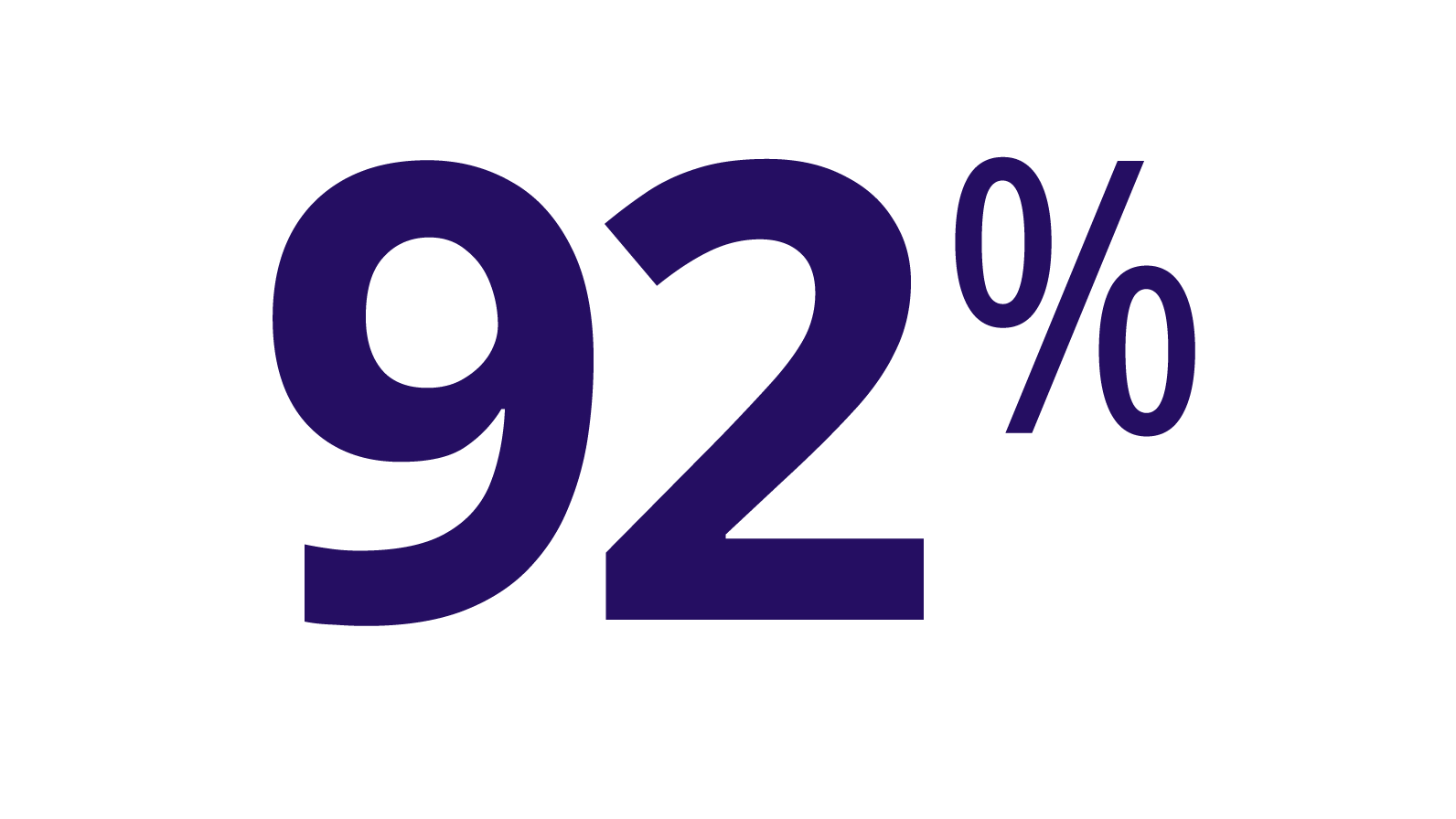
KIDS B-LONG TRIAL
(n=55/60)
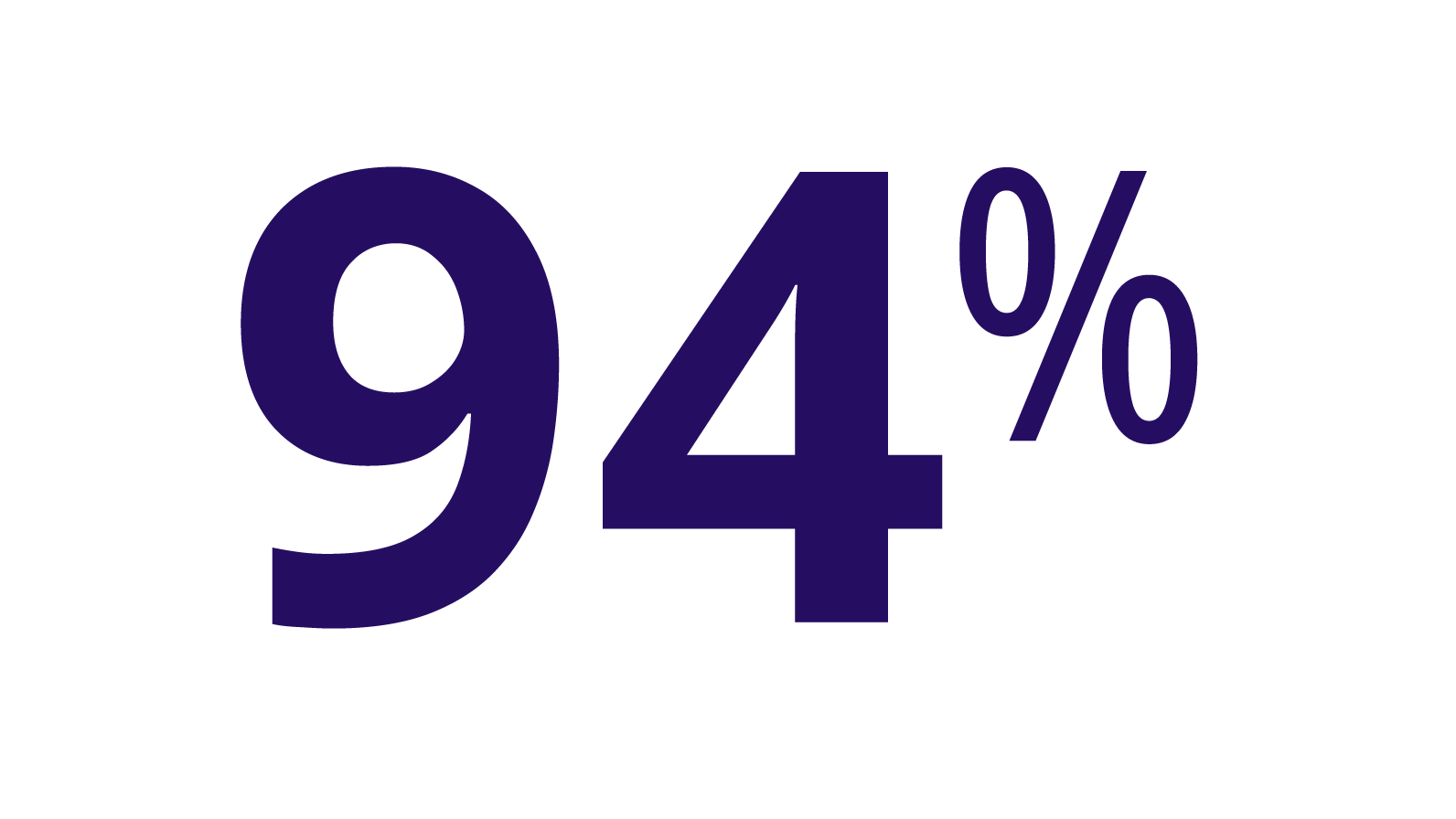
PUPs B-LONG TRIAL
(n=80/85)
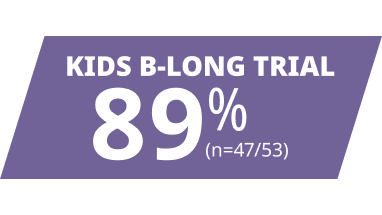
Response to first infusion was rated good or excellent1,7§
.2025-10-31-18-27-39.png)
KIDS B-LONG TRIAL
(n=47/53)
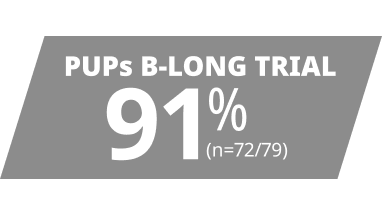
PUPs B-LONG TRIAL
(n=72/79)
§7 first injections for bleeding episodes in children were not evaluated for response and are excluded from this analysis. Excellent response was defined as abrupt pain relief and/or improvement in signs of bleeding. Good response was defined as definite pain relief and/or improvement in signs of bleeding but possibly requiring another injection in 1 or 2 days.1,7
PTP=previously treated patient; PUP=previously untreated patient.

ALPROLIX offers pediatric patients hemostatic control for both major and minor surgeries1
Pediatric surgical patients by the numbers1,8
While the ALPROLIX surgical data were pooled, here is how the pediatric subpopulation is reflected in these numbers:
- Major surgeries in pediatric PTPs: 1 (B-YOND Trial)
- Minor surgeries in pediatric PTPs: 3 (Kids B-LONG Trial) + 2 (B-YOND Trial)
Perioperative efficacy across all ages
|
35 MAJOR SURGERIES8 |
62 MINOR SURGERIES8 | ||
|
Joint replacement/revision (n=10) |
Tooth extraction (n=24) | ||
|
Abdominal (n=6) |
Eye surgery (n=5) | ||
|
Other orthopedic (n=5) |
Oral surgery (n=5) | ||
|
Fracture and fixation (n=3) |
Incision and drainage (n=5) | ||
|
Arthroscopy (n=2) |
Vascular procedure (n=5) | ||
|
Spinal surgery (n=2) |
Minor orthopedic (n=4) | ||
|
Cranial/brain (n=2) |
Other non-orthopedic (n=4) | ||
|
Other non-orthopedic (n=2) |
Other dental (n=4) | ||
|
Joint fusion (n=2) |
Port placement or removal (n=3) | ||
|
Dental (n=1) |
Minor skin procedure (n=2) | ||
|
|
Endoscopy with/without procedure (n=1) | ||
|
22 patients 1,8|| |
37 patients 1,8|| |
||Patients were classified by parent study. Data were derived from surgeries performed during the B-LONG trial, Kids B-LONG trial, and B-YOND extension trial. Those who underwent major and minor surgery were included in both cohorts. Eight subjects had more than one major surgery.1,8
PTP=previously treated patient.
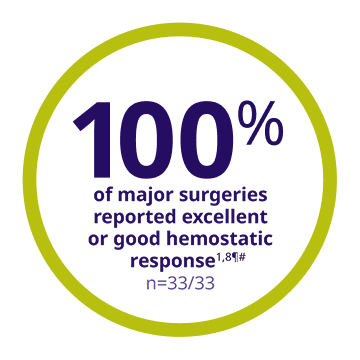
Patients undergoing major surgery had an excellent or good hemostatic response with ALPROLIX1
Perioperative efficacy across all ages
- The median average dose per injection to maintain hemostasis during surgery was 94.7 IU/kg (range: 49 to 152). Perioperative factor IX replacement with ALPROLIX was by bolus infusion only. The safety of continuous infusion was not evaluated1
- 80% (28 of 35) of the major surgeries required a single perioperative dose to maintain hemostasis during surgery1
- Hemostasis was assessed by the investigator after surgery1
MAJOR SURGERIES:
B-LONG, KIDS B-LONG, AND B-YOND TRIALS
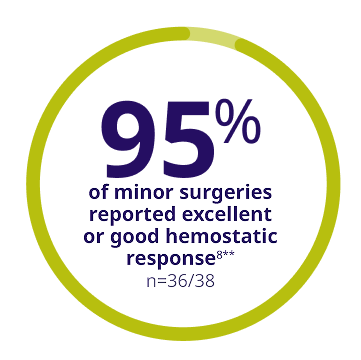
MINOR SURGERIES:
B-LONG, KIDS B-LONG, AND B-YOND TRIALS
¶Out of 35 major surgeries, 33 were assessed in 22 subjects.1,8
#8 subjects had more than 1 major surgery.1,8
**Out of 62 minor surgeries, 38 were assessed in 37 subjects.8

INDICATION:
References: 1. ALPROLIX. Package insert. Bioverativ Therapeutics Inc; 2023. 2. Idelvion. Package insert. CSL Behring GmbH; 2023. 3. Rebinyn. Package insert. Novo Nordisk Inc; 2022. 4. Fischer K, Kulkarni R, Nolan B, et al. Recombinant factor IX Fc fusion protein in children with haemophilia B (Kids B-LONG): results from a multicentre, non-randomised phase 3 study. Lancet Haematol. 2017;4(2):e75-e82. 5. Shapiro AD, Kulkarni RD, Ragni MV, et al. Post hoc longitudinal assessment of efficacy and safety of recombinant factor IX Fc fusion protein in hemophilia B. Blood Adv. 2023;7(13):3049-3057. 6. Pasi KJ, Fischer K, Ragni M, et al. Long-term safety and sustained efficacy for up to 5 years of treatment with recombinant factor IX Fc fusion protein in subjects with haemophilia B: results from the B-YOND extension study. Haemophilia. 2020;26(6):e262-e271. 7. Nolan B, Klukowska A, Shapiro A, et al. Final results of the PUPs B-LONG study: evaluating safety and efficacy of rFIXFc in previously untreated patients with hemophilia B. Blood Adv. 2021;5(13):2732-2739. 8. Chowdary P, Holmström M, Mahlangu JN, et al. Managing surgery in hemophilia with recombinant factor VIII Fc and factor IX Fc: Data on safety and effectiveness from phase 3 pivotal studies. Res Pract Thromb Haemost. 2022;6(5):e12760.
