

Flublok is a vaccine indicated for active immunization for the prevention of disease caused by influenza A virus subtypes and influenza type B virus represented by antigens contained in the vaccine. Flublok is approved for use in individuals 9 years of age and older.
On this page, you will learn:
-
Flublok was proven to help prevent more cases of the flu than Fluarix in adults aged 50+2,3
-
In adults aged 18-49 years, Flublok was associated with preventing culture-confirmed influenza despite significant antigenic mismatch between the vaccine antigens and circulating viruses2,4
-
About real-world evidence in preventing influenza associating Flublok with 15.3% greater relative vaccine effectiveness in preventing PCR-confirmed influenza vs standard dose1
-
About real-world evidence for Flublok in preventing flu-related hospitalization vs standard-dose vaccines5
Pivotal trial in adults aged 50+2:
In a randomized, controlled trial vs Fluarix: 30% relative reduction in PCR-confirmed flu in adults aged 50+2,3
Study Design
- Phase 3-4 randomized, controlled trial in adults aged 50+ (N≈9000) during the 2014-2015 influenza season in which A (H3N2) was predominant and antigenically mismatched2,3
- Patients were randomized 1:1 to receive Flublok or Fluarix2,3*
- Patients with comorbidities who received Flublok: insulin-dependent diabetes: 3.9% (170); non–insulin-dependent diabetes: 10.8% (469); atherosclerotic cardiovascular disease: 30.5% (1320); condition requiring statin lipid-lowering therapy: 27.6% (1194); condition requiring thiazide diuretic: 7.7% (332); chronic obstructive pulmonary disease: 3.3% (144); acid reflux or peptic ulcer disease: 14.5% (629); and depression: 18.2% (788)3
*Flublok (quadrivalent) was proven to prevent more flu in older adults than Fluarix (quadrivalent standard-dose vaccine). The efficacy of Flublok (quadrivalent) is relevant to Flublok (trivalent) because both vaccines are manufactured using the same process and have overlapping compositions.2
Proven to help prevent more cases of the flu than Fluarix in adults ages 50+2,3 |
Pivotal trial in patients aged 18-492:
Effective flu protection, even in a season with significant antigenic mismatch, in patients aged 18-49 years2,4
Study Design
- Randomized, observer-blind, placebo-controlled trial to evaluate the protective efficacy and safety of Flublok (trivalent) against influenza in 4648 adults aged 18-49 years2,4
- The study was undertaken during the 2007-2008 influenza season when there was significant mismatch between vaccine antigens and circulating viruses4
- Primary endpoint: CDC-defined influenza-like illness (ILI) defined by presence of documented fever ≥100°F plus either sore throat or cough with positive culture for an influenza virus strain antigenically resembling a strain represented in Flublok. Vaccine efficacy against antigenically matched culture-confirmed CDC-ILI could not be determined reliably because 96% of the influenza isolates obtained were not antigenically matched to the strains represented in the vaccine2
Additional Efficacy Endpoints | |||
|---|---|---|---|
44.6%(95% CI: 18.8, 62.6) |
Fewer flu cases with Flublok due to ANY culture-confirmed CDC-defined ILI strain, regardless of match to the vaccine2 |
44.8%(95% CI: 24.4, 60.0) |
Fewer flu cases with Flublok due to ANY culture-confirmed ILI strain, regardless of match to the vaccine2 |
Flublok was associated with preventing culture-confirmed influenza despite significant antigenic mismatch between the vaccine antigens and circulating viruses2 | |||
The technology in Flublok may contribute to cross-protection in seasons of significant antigenic mismatch6 |
Immunogenicity trial in children 9-172
Flublok demonstrated non-inferior immune response in patients aged 9-17 compared to adults aged 18-492
Study Design
- A Phase 3 non-randomized, open-label, uncontrolled, multicenter study of 1308 participants aged 9 to 49 years2
- Primary objective was to demonstrate that vaccination with Flublok induced an immune response in children and adolescents aged 9 to 17 that was non-inferior to responses induced by Flublok in adults aged 18 to 49 for 4 viral strains at Day 29 post-vaccination2
- Immune response was assessed by hemagglutination inhibition (HI), geometric mean titers (GMTs), and seroconversion (SCR) rates2
In patients aged 9-17, Flublok induced a level of immunogenicity non-inferior to that in adults aged 18-492 |
- The non-inferiority of HI immune responses induced by Flublok (quadrivalent) in patients aged 9 to 17 relative to patients aged 18 to 49 was demonstrated for all 4 strains (A/H1N1, A/H3N2, B/Victoria, and B/Yamagata)2*
- Non-inferiority was based on prespecified criteria (lower limit of the 2-sided 95% CIs of the ratios of GMTs between age groups [9-17 years/18-49 years] >0.667; lower limit of the 2-sided 95% CI of the difference in SCR rates > −10 at Day 29 post-vaccination)2
*Effectiveness of Flublok (quadrivalent) in children aged 9 to 17 is based on comparison to adults aged 18 to 49. The data for Flublok (quadrivalent) is relevant to Flublok (trivalent) because both vaccines are manufactured using the same process and have overlapping compositions.2
Real-world evidence
Flublok was studied against standard-dose vaccines in the largest randomized real-world flu effectiveness study to date1,7
Study Design
- Modified cluster randomized observational study to evaluate Flublok (quadrivalent) vs quadrivalent standard-dose influenza vaccines1
- Study population: 1,630,328 members of the Kaiser Permanente Northern California (KPNC) healthcare system aged 18-64 years1
- Evaluated over 2 flu seasons: 2018-2019 influenza season, when A (H1N1) was predominant until March 2019, when A (H3N2) viruses became predominant; and the 2019-2020 influenza season, when A (H1N1) was predominant with B cocirculation8-10
- Patients aged 50-64 with comorbid conditions: asthma: 14% (96,307); diabetes: 18% (119,430); chronic obstructive pulmonary disease: 2% (13,357); and coronary heart disease: 4% (25,496)1
- The efficacy of Flublok (quadrivalent) is relevant to Flublok (trivalent) because both vaccines are manufactured using the same process and have overlapping compositions2

Flublok was associated with greater protection vs standard-dose vaccines1
Primary endpoint: relative vaccine efficacy (rVE) against PCR-confirmed influenza compared with standard-dose flu vaccines; 559 patients (2.00 cases per 1000) had PCR-confirmed influenza in the Flublok cohort (N=279,400) vs 925 patients (2.34 cases per 1000) with standard-dose vaccines (N=395,852).
Study Limitations1
- Data was limited to two influenza seasons; relative vaccine effectiveness may vary across seasons depending on the vaccine match with circulating strains
- Primary outcome did not include infections in persons who did not undergo PCR testing, which limits generalizability
- Although KPNC has a diverse population, it may not be representative of other populations in the US
- Compliance with the weekly assigned vaccine schedule varied from time to time due to logistical constraints
- The study had limited power to detect a clinically meaningful benefit of Flublok vs standard-dose vaccines with less frequent outcomes, such as hospitalized, PCR-confirmed influenza
Flu vaccines typically prevent 40%-60% of flu cases in matched flu seasons. Could the extra protection of Flublok benefit your patients?1 |
Real-world safety evidence
Flublok was well tolerated with a consistently positive patient experience reported in those aged 18-6411
.png)
of Flublok patients found any adverse reactions to be very or totally tolerable and acceptable7,11
VAPI 2.0 results showed high patient-reported tolerability to local and systemic symptoms, with mean domain scores ≥4.5 on a 5-point scale (1=Not at all tolerable, 2=Slightly tolerable, 3=Moderately tolerable, 4=Very tolerable, 5=Totally tolerable)11
.png)
of patients said ‘yes’ they would be willing to receive Flublok again next year11*
The frequencies and proportions of factors driving the choice of Flublok was a secondary endpoint.11
Study Design
This study aimed to assess tolerability and participant experience among 439 working-age adults aged 18-64 years who were vaccinated with Flublok. Patients were stratified by two age groups: 18-49 and 50-64 years, and were recruited in US retail settings across 22 states in the 2025-2026 influenza season. Patients completed an online survey to provide self-reported data. Vaccination experiences were evaluated using two distinct instruments: VAPI 2.0 and Factors Driving Vaccine Choice.11
Study Strengths and Limitations
This was the first descriptive, real-world study assessing patient-reported experience following routine Flublok vaccination in a working-age adult population. As no comparator was included, tolerability was assessed descriptively and cannot be evaluated relative to alternative influenza vaccines.11
*Yes included both "Yes, definitely" and "Yes, probably.”11
Flublok was associated with fewer flu hospitalizations vs cell- and egg-based standard-dose vaccine comparators5
Study Design
- Retrospective test-negative case-control study in approximately 15,000 patients aged 18+ during the 2018-2019 and 2019-2020 flu seasons to investigate the rVE of Flublok vs standard-dose vaccines against influenza hospitalization5*
- In the primary analysis, Flublok was evaluated against standard-dose flu vaccines, including5,12:
- Cell-based: Flucelvax
- Egg-based: Fluarix, Afluria, FluLaval, and Fluzone
*Flublok (quadrivalent vaccine) was evaluated against quadrivalent standard-dose vaccines. The efficacy of Flublok (quadrivalent formulation) is relevant to Flublok (trivalent formation) because both vaccines are manufactured using the same process and have overlapping compositions.2,5
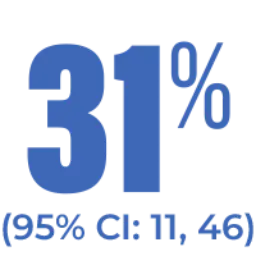
rVE of Flublok vs standard-dose vaccines against influenza hospitalization adjusted for propensity scores with inverse probability weights (IPWs)5:
Fewer flu hospitalizations with Flublok vs standard-dose vaccines in ~15,000 patients aged 18+ across multiple flu seasons5
Secondary Endpoints: When adjusted for propensity scores with IPWs5:
- Flublok was associated with providing greater protection against influenza hospitalization vs standard-dose vaccines for the following populations5:
- Female sex: 37% rVE (95% CI: 13, 54)
- Age 18-64 years: 28% rVE (95% CI: 3, 46)
- No high-risk condition: 60% rVE (95% CI: 29, 78)
- Flublok was associated with providing greater (non–statistically significant) protection against influenza hospitalization vs standard-dose vaccines for the following populations5:
- Male sex: 23% rVE (95% CI: -14, 48)
- Age ≥65 years: 17% rVE (95% CI: -36, 48)
- High-risk condition: 20% rVE (95% CI: -7, 40)
Study Strengths and Limitations5
- The demographics of the study population were representative of the adult population of Allegheny County, with 79% being white and 51% being female, which contributes to generalizability
- The University of Pittsburgh Medical Center hospitals in central and southwestern Pennsylvania are part of an integrated health system, with regular uploads of vaccination data from the state immunization registry; vaccination status was verified through the state registry with a specific data request
- Although the electronic medical records (EMR) system of University of Pittsburgh Medical Center hospitals in central and southwestern Pennsylvania is robust, if vaccinations were not captured in the EMRs or state registry, they were classified as unvaccinated
- Because data focused on hospitalizations, there may have been milder cases of influenza that were not captured in the EMRs because they didn’t require medical care
- There is a possibility of selection bias among those who received influenza testing; for instance, clinicians might preferentially test unvaccinated subjects, which would increase the proportion of unvaccinated cases
- While a relatively large cohort of adults is included in this study, the sample size of standard-dose flu vaccine recipients may have been inadequate to detect meaningful rVE estimates for specific subgroups
2019-2020 retrospective observational cohort study: Flublok was associated with significantly fewer influenza hospital encounters compared with standard-dose influenza vaccines13
Study Design
- Retrospective observational cohort study using real-world data (RWD) from Medicare claims to analyze the rVE of US-licensed influenza vaccines in preventing influenza hospital encounters among beneficiaries aged 65+; 12.7 million adults aged 65+ were eligible for analysis13
- The efficacy of Flublok (quadrivalent) is relevant to Flublok (trivalent) because both vaccines are manufactured using the same process and have overlapping compositions2
Relative vaccine effectiveness (rVE) against influenza hospital encounters (95% CI)13

Note: Bolding indicates statistical significance.
- The data above represents 1 of 3 primary analyses. Two additional primary analyses were conducted13:
- Cell-cultured standard-dose quadrivalent flu vaccine vs egg-based standard-dose quadrivalent flu vaccine
- Flublok vs egg-based standard-dose quadrivalent flu vaccine
2019-2020 Season Characteristics13
Influenza A (H1N1) and influenza B (Victoria) were predominating strains with no significant circulation of influenza A (H3N2).
An H1N1 strain with an amino acid change emerged late in the season and likely did not substantially affect the vaccine efficacy.
Trivalent vaccines contained the influenza B (Victoria) lineage.
Study Limitations13
- Lack of access to virological case confirmation may have led to underestimation of the magnitude of differences
- Residual confounding by unmeasured covariates could have affected results
- The observation period was cut off at the end of February to avoid potential bias from the overlap between influenza season and the escalation of the COVID-19 pandemic in the US
Pivotal trial in adults aged 50+2:
In a randomized, controlled trial vs Fluarix: 30% relative reduction in PCR-confirmed flu in adults aged 50+2,3
Study Design
- Phase 3-4 randomized, controlled trial in adults aged 50+ (N≈9000) during the 2014-2015 influenza season in which A (H3N2) was predominant and antigenically mismatched2,3
- Patients were randomized 1:1 to receive Flublok or Fluarix2,3*
- Patients with comorbidities who received Flublok: insulin-dependent diabetes: 3.9% (170); non–insulin-dependent diabetes: 10.8% (469); atherosclerotic cardiovascular disease: 30.5% (1320); condition requiring statin lipid-lowering therapy: 27.6% (1194); condition requiring thiazide diuretic: 7.7% (332); chronic obstructive pulmonary disease: 3.3% (144); acid reflux or peptic ulcer disease: 14.5% (629); and depression: 18.2% (788)3
*Flublok (quadrivalent) was proven to prevent more flu in older adults than Fluarix (quadrivalent standard-dose vaccine). The efficacy of Flublok (quadrivalent) is relevant to Flublok (trivalent) because both vaccines are manufactured using the same process and have overlapping compositions.2
Proven to help prevent more cases of the flu than Fluarix in adults ages 50+2,3 |
Pivotal trial in patients aged 18-492:
Effective flu protection, even in a season with significant antigenic mismatch, in patients aged 18-49 years2,4
Study Design
- Randomized, observer-blind, placebo-controlled trial to evaluate the protective efficacy and safety of Flublok (trivalent) against influenza in 4648 adults aged 18-49 years2,4
- The study was undertaken during the 2007-2008 influenza season when there was significant mismatch between vaccine antigens and circulating viruses4
- Primary endpoint: CDC-defined influenza-like illness (ILI) defined by presence of documented fever ≥100°F plus either sore throat or cough with positive culture for an influenza virus strain antigenically resembling a strain represented in Flublok. Vaccine efficacy against antigenically matched culture-confirmed CDC-ILI could not be determined reliably because 96% of the influenza isolates obtained were not antigenically matched to the strains represented in the vaccine2
Additional Efficacy Endpoints | |||
|---|---|---|---|
44.6%(95% CI: 18.8, 62.6) |
Fewer flu cases with Flublok due to ANY culture-confirmed CDC-defined ILI strain, regardless of match to the vaccine2 |
44.8%(95% CI: 24.4, 60.0) |
Fewer flu cases with Flublok due to ANY culture-confirmed ILI strain, regardless of match to the vaccine2 |
Flublok was associated with preventing culture-confirmed influenza despite significant antigenic mismatch between the vaccine antigens and circulating viruses2 | |||
The technology in Flublok may contribute to cross-protection in seasons of significant antigenic mismatch6 |
Immunogenicity trial in children 9-172
Flublok demonstrated non-inferior immune response in patients aged 9-17 compared to adults aged 18-492
Study Design
- A Phase 3 non-randomized, open-label, uncontrolled, multicenter study of 1308 participants aged 9 to 49 years2
- Primary objective was to demonstrate that vaccination with Flublok induced an immune response in children and adolescents aged 9 to 17 that was non-inferior to responses induced by Flublok in adults aged 18 to 49 for 4 viral strains at Day 29 post-vaccination2
- Immune response was assessed by hemagglutination inhibition (HI), geometric mean titers (GMTs), and seroconversion (SCR) rates2
In patients aged 9-17, Flublok induced a level of immunogenicity non-inferior to that in adults aged 18-492 |
- The non-inferiority of HI immune responses induced by Flublok (quadrivalent) in patients aged 9 to 17 relative to patients aged 18 to 49 was demonstrated for all 4 strains (A/H1N1, A/H3N2, B/Victoria, and B/Yamagata)2*
- Non-inferiority was based on prespecified criteria (lower limit of the 2-sided 95% CIs of the ratios of GMTs between age groups [9-17 years/18-49 years] >0.667; lower limit of the 2-sided 95% CI of the difference in SCR rates > −10 at Day 29 post-vaccination)2
*Effectiveness of Flublok (quadrivalent) in children aged 9 to 17 is based on comparison to adults aged 18 to 49. The data for Flublok (quadrivalent) is relevant to Flublok (trivalent) because both vaccines are manufactured using the same process and have overlapping compositions.2
Real-world evidence
Flublok was studied against standard-dose vaccines in the largest randomized real-world flu effectiveness study to date1,7
Study Design
- Modified cluster randomized observational study to evaluate Flublok (quadrivalent) vs quadrivalent standard-dose influenza vaccines1
- Study population: 1,630,328 members of the Kaiser Permanente Northern California (KPNC) healthcare system aged 18-64 years1
- Evaluated over 2 flu seasons: 2018-2019 influenza season, when A (H1N1) was predominant until March 2019, when A (H3N2) viruses became predominant; and the 2019-2020 influenza season, when A (H1N1) was predominant with B cocirculation8-10
- Patients aged 50-64 with comorbid conditions: asthma: 14% (96,307); diabetes: 18% (119,430); chronic obstructive pulmonary disease: 2% (13,357); and coronary heart disease: 4% (25,496)1
- The efficacy of Flublok (quadrivalent) is relevant to Flublok (trivalent) because both vaccines are manufactured using the same process and have overlapping compositions2
Flublok was associated with greater protection vs standard-dose vaccines1
Primary endpoint: relative vaccine efficacy (rVE) against PCR-confirmed influenza compared with standard-dose flu vaccines; 559 patients (2.00 cases per 1000) had PCR-confirmed influenza in the Flublok cohort (N=279,400) vs 925 patients (2.34 cases per 1000) with standard-dose vaccines (N=395,852).
Study Limitations1
- Data was limited to two influenza seasons; relative vaccine effectiveness may vary across seasons depending on the vaccine match with circulating strains
- Primary outcome did not include infections in persons who did not undergo PCR testing, which limits generalizability
- Although KPNC has a diverse population, it may not be representative of other populations in the US
- Compliance with the weekly assigned vaccine schedule varied from time to time due to logistical constraints
- The study had limited power to detect a clinically meaningful benefit of Flublok vs standard-dose vaccines with less frequent outcomes, such as hospitalized, PCR-confirmed influenza
Flu vaccines typically prevent 40%-60% of flu cases in matched flu seasons. Could the extra protection of Flublok benefit your patients?1 |
Real-world safety evidence
Flublok was well tolerated with a consistently positive patient experience reported in those aged 18-6411
of Flublok patients found any adverse reactions to be very or totally tolerable and acceptable7,11
VAPI 2.0 results showed high patient-reported tolerability to local and systemic symptoms, with mean domain scores ≥4.5 on a 5-point scale (1=Not at all tolerable, 2=Slightly tolerable, 3=Moderately tolerable, 4=Very tolerable, 5=Totally tolerable)11
of patients said ‘yes’ they would be willing to receive Flublok again next year11*
The frequencies and proportions of factors driving the choice of Flublok was a secondary endpoint.11
Study Design
This study aimed to assess tolerability and participant experience among 439 working-age adults aged 18-64 years who were vaccinated with Flublok. Patients were stratified by two age groups: 18-49 and 50-64 years, and were recruited in US retail settings across 22 states in the 2025-2026 influenza season. Patients completed an online survey to provide self-reported data. Vaccination experiences were evaluated using two distinct instruments: VAPI 2.0 and Factors Driving Vaccine Choice.11
Study Strengths and Limitations
This was the first descriptive, real-world study assessing patient-reported experience following routine Flublok vaccination in a working-age adult population. As no comparator was included, tolerability was assessed descriptively and cannot be evaluated relative to alternative influenza vaccines.11
*Yes included both "Yes, definitely" and "Yes, probably.”11
Flublok was associated with fewer flu hospitalizations vs cell- and egg-based standard-dose vaccine comparators5
Study Design
- Retrospective test-negative case-control study in approximately 15,000 patients aged 18+ during the 2018-2019 and 2019-2020 flu seasons to investigate the rVE of Flublok vs standard-dose vaccines against influenza hospitalization5*
- In the primary analysis, Flublok was evaluated against standard-dose flu vaccines, including5,12:
- Cell-based: Flucelvax
- Egg-based: Fluarix, Afluria, FluLaval, and Fluzone
*Flublok (quadrivalent vaccine) was evaluated against quadrivalent standard-dose vaccines. The efficacy of Flublok (quadrivalent formulation) is relevant to Flublok (trivalent formation) because both vaccines are manufactured using the same process and have overlapping compositions.2,5
rVE of Flublok vs standard-dose vaccines against influenza hospitalization adjusted for propensity scores with inverse probability weights (IPWs)5:
Fewer flu hospitalizations with Flublok vs standard-dose vaccines in ~15,000 patients aged 18+ across multiple flu seasons5
Secondary Endpoints: When adjusted for propensity scores with IPWs5:
- Flublok was associated with providing greater protection against influenza hospitalization vs standard-dose vaccines for the following populations5:
- Female sex: 37% rVE (95% CI: 13, 54)
- Age 18-64 years: 28% rVE (95% CI: 3, 46)
- No high-risk condition: 60% rVE (95% CI: 29, 78)
- Flublok was associated with providing greater (non–statistically significant) protection against influenza hospitalization vs standard-dose vaccines for the following populations5:
- Male sex: 23% rVE (95% CI: -14, 48)
- Age ≥65 years: 17% rVE (95% CI: -36, 48)
- High-risk condition: 20% rVE (95% CI: -7, 40)
Study Strengths and Limitations5
- The demographics of the study population were representative of the adult population of Allegheny County, with 79% being white and 51% being female, which contributes to generalizability
- The University of Pittsburgh Medical Center hospitals in central and southwestern Pennsylvania are part of an integrated health system, with regular uploads of vaccination data from the state immunization registry; vaccination status was verified through the state registry with a specific data request
- Although the electronic medical records (EMR) system of University of Pittsburgh Medical Center hospitals in central and southwestern Pennsylvania is robust, if vaccinations were not captured in the EMRs or state registry, they were classified as unvaccinated
- Because data focused on hospitalizations, there may have been milder cases of influenza that were not captured in the EMRs because they didn’t require medical care
- There is a possibility of selection bias among those who received influenza testing; for instance, clinicians might preferentially test unvaccinated subjects, which would increase the proportion of unvaccinated cases
- While a relatively large cohort of adults is included in this study, the sample size of standard-dose flu vaccine recipients may have been inadequate to detect meaningful rVE estimates for specific subgroups
2019-2020 retrospective observational cohort study: Flublok was associated with significantly fewer influenza hospital encounters compared with standard-dose influenza vaccines13
Study Design
- Retrospective observational cohort study using real-world data (RWD) from Medicare claims to analyze the rVE of US-licensed influenza vaccines in preventing influenza hospital encounters among beneficiaries aged 65+; 12.7 million adults aged 65+ were eligible for analysis13
- The efficacy of Flublok (quadrivalent) is relevant to Flublok (trivalent) because both vaccines are manufactured using the same process and have overlapping compositions2
Relative vaccine effectiveness (rVE) against influenza hospital encounters (95% CI)13
Note: Bolding indicates statistical significance.
- The data above represents 1 of 3 primary analyses. Two additional primary analyses were conducted13:
- Cell-cultured standard-dose quadrivalent flu vaccine vs egg-based standard-dose quadrivalent flu vaccine
- Flublok vs egg-based standard-dose quadrivalent flu vaccine
2019-2020 Season Characteristics13
Influenza A (H1N1) and influenza B (Victoria) were predominating strains with no significant circulation of influenza A (H3N2).
An H1N1 strain with an amino acid change emerged late in the season and likely did not substantially affect the vaccine efficacy.
Trivalent vaccines contained the influenza B (Victoria) lineage.
Study Limitations13
- Lack of access to virological case confirmation may have led to underestimation of the magnitude of differences
- Residual confounding by unmeasured covariates could have affected results
- The observation period was cut off at the end of February to avoid potential bias from the overlap between influenza season and the escalation of the COVID-19 pandemic in the US
Frequently asked questions

Order Flublok
To order Flublok, call 1-800-VACCINE (1-800-822-2463) or click below to order on VaccineShop

Safety Profile
Flublok is generally well-tolerated2

Resources
Find leave behinds and patient brochures for the Sanofi flu vaccines here
Important Safety Information
References: 1. Hsiao A, Yee A, Fireman B, et al. Recombinant or Standard-Dose Influenza Vaccine in Adults under 65 Years of Age. N Engl J Med. 2023 Dec 14;389(24):2245-2255. doi:10.1056/NEJMoa2302099 2. Flublok. Prescribing Information. Protein Sciences Corporation. 3. Dunkle LM, Izikson R, Patriarca P, et al; PSC12 Study Team. N Engl J Med. 2017;376(25):2427-2436. doi:10.1056/NEJMoa1607762 4. Treanor JJ, El Sahly H, King J, et al. Protective efficacy of a trivalent recombinant hemagglutinin protein vaccine (FluBlok®) against influenza in healthy adults: a randomized, placebo-controlled trial. Vaccine. 2011 Oct 13;29(44):7733-9. doi:10.1016/j.vaccine.2011.07.128 5. Zimmerman RK, Patricia Nowalk M, Dauer K, Clarke L, Raviotta JM, Balasubramani GK. Vaccine effectiveness of recombinant and standard dose influenza vaccines against influenza related hospitalization using a retrospective test-negative design. Vaccine. 2023 Aug 7;41(35):5134-5140. doi:10.1016/j.vaccine.2023.06.056 6. Arunachalam AB, Post P, Rudin D. NPJ Vaccines. 2021;6:144. doi:10.1038/s41541-021-00403-7 7. Sanofi. Data on file. 8. Centers for Disease Control and Prevention. Estimated flu-related illness, medical visits, hospitalizations, and deaths in the United States—2019-2020 flu season. October 7, 2022. Accessed June 5, 2024. https://archive.cdc.gov/www_cdc_gov/flu/about/burden/2019-2020/archive-09292021.html 9. California Department of Public Health. Influenza surveillance report 2018-2019 season. December 2019. Accessed June 5, 2024. https://www.cdph.ca.gov/Programs/CID/DCDC/CDPH%20Document%20Library/Immunization/Annual2018-19.pdf 10. California Department of Public Health. Influenza surveillance report 2019-2020 season. June 2021. Accessed June 5, 2024. https://www.cdph.ca.gov/Programs/CID/DCDC/CDPH%20Document%20Library/Immunization/Annual2019-20_FluReport.pdf 11. Bartelt-Hofer J, Torcel-Pagnon L, Gonzales L, et al. Favorable tolerability and willingness for repeat vaccination with recombinant influenza vaccine: patient-reported experience from working-age adults vaccinated in US retail settings. Poster presented at: National Adult and Influenza Immunization Summit; May 19-21, 2026; Atlanta, GA. 12. Rhodes RT. BioSupply Trends Quarterly. July 2013. Accessed June 5, 2024. https://www.bstquarterly.com/assets/downloads/BSTQ/Articles/BSTQ_2013-07_AR_Choosing-Influenza-Vaccines.pdf 13. Izurieta HS, Lu M, Kelman J, et al. Comparative Effectiveness of Influenza Vaccines Among US Medicare Beneficiaries Ages 65 Years and Older During the 2019-2020 Season. Clin Infect Dis. 2021 Dec 6;73(11):e4251-e4259. doi:10.1093/cid/ciaa1727
